Martínez-Sánchez Noelia, Seoane-Collazo Patricia, Contreras Cristina, Varela Luis, Villarroya Joan, Rial-Pensado Eva, Buqué Xabier, Aurrekoetxea Igor, Delgado Teresa C, Vázquez-Martínez Rafael, González-García Ismael, Roa Juan, Whittle Andrew J, Gomez-Santos Beatriz, Velagapudi Vidya, Tung Y C Loraine, Morgan Donald A, Voshol Peter J, Martínez de Morentin Pablo B, López-González Tania, Liñares-Pose Laura, Gonzalez Francisco, Chatterjee Krishna, Sobrino Tomás, Medina-Gómez Gema, Davis Roger J, Casals Núria, Orešič Matej, Coll Anthony P, Vidal-Puig Antonio, Mittag Jens, Tena-Sempere Manuel, Malagón María M, Diéguez Carlos, Martínez-Chantar María Luz, Aspichueta Patricia, Rahmouni Kamal, Nogueiras Rubén, Sabio Guadalupe, Villarroya Francesc, López Miguel
Department of Physiology, CiMUS, University of Santiago de Compostela-Instituto de Investigación Sanitaria, Santiago de Compostela 15782, Spain; CIBER Fisiopatología de la Obesidad y Nutrición (CIBERobn), Santiago de Compostela 15706, Spain.
CIBER Fisiopatología de la Obesidad y Nutrición (CIBERobn), Santiago de Compostela 15706, Spain; Departament de Bioquímica i Biomedicina Molecular, Institut de Biomedicina, Universitat de Barcelona (IBUB), Barcelona 08028, Spain; Hospital de la Santa Creu i Sant Pau, Barcelona 08026, Spain.
Cell Metab. 2017 Jul 5;26(1):212-229.e12. doi: 10.1016/j.cmet.2017.06.014.
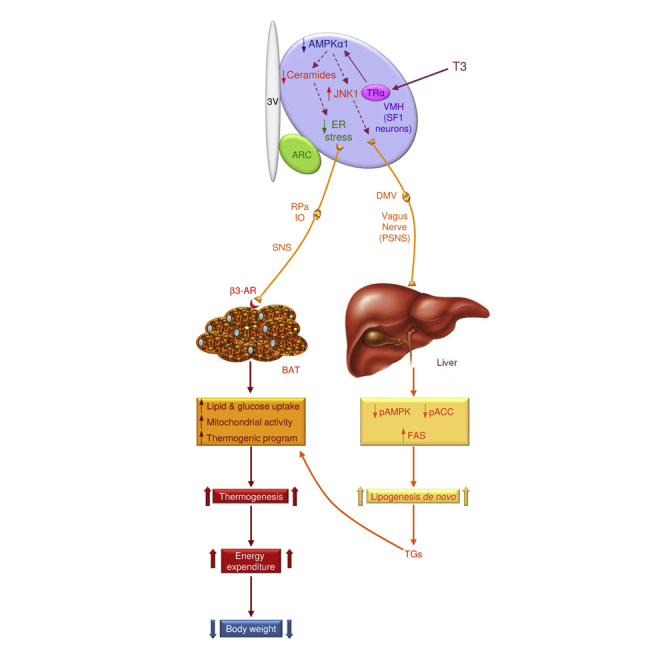
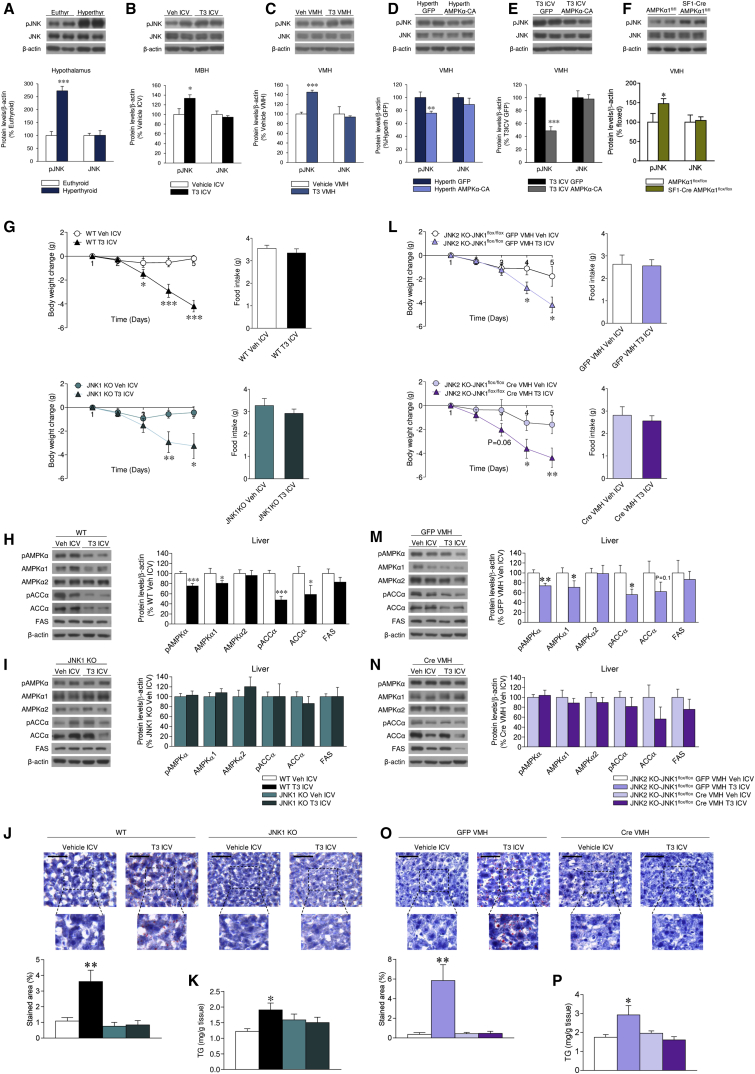
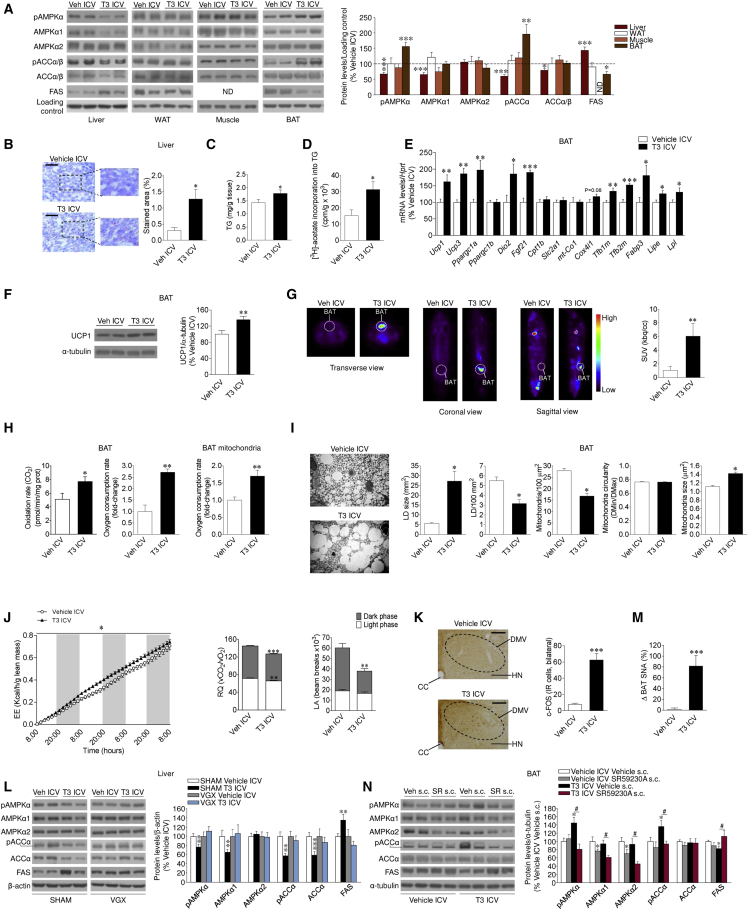
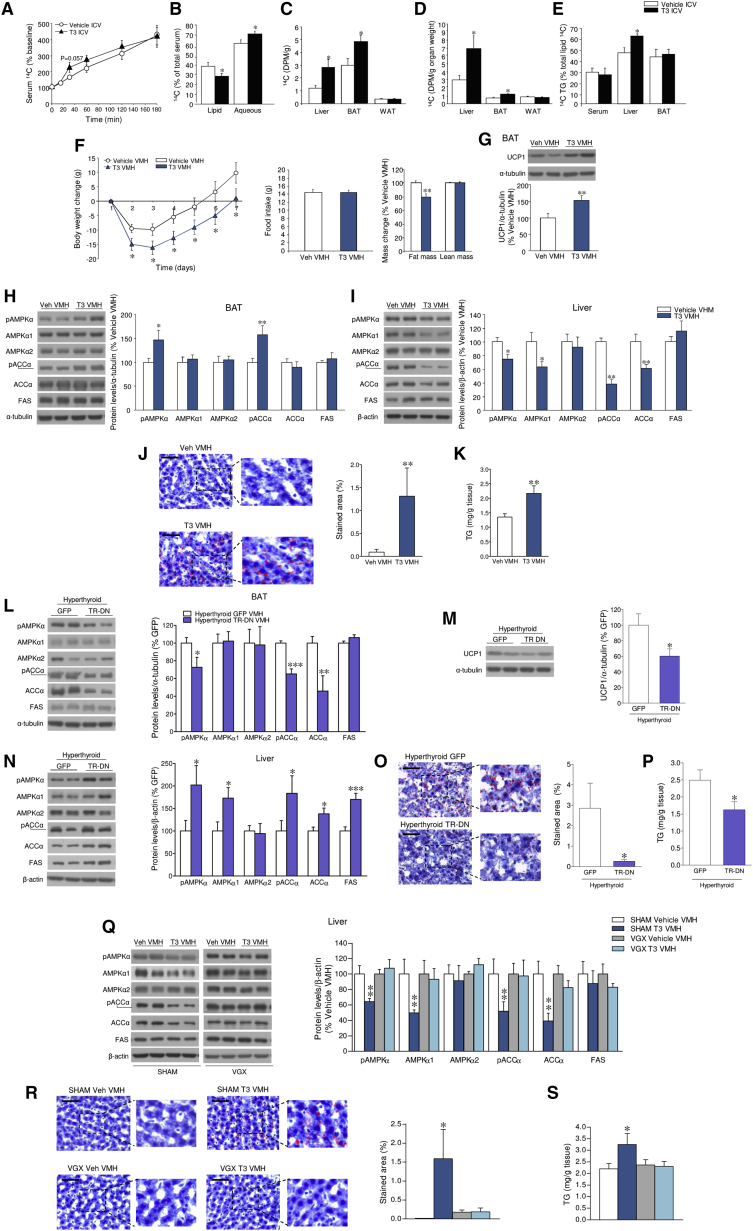
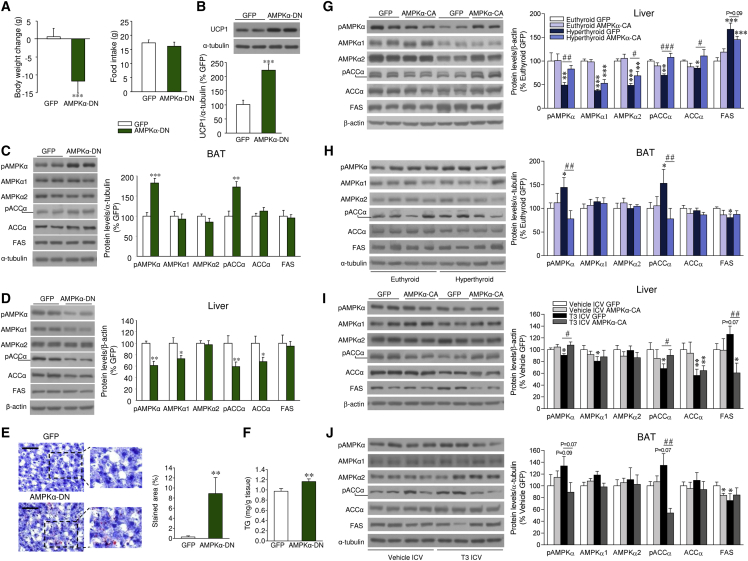
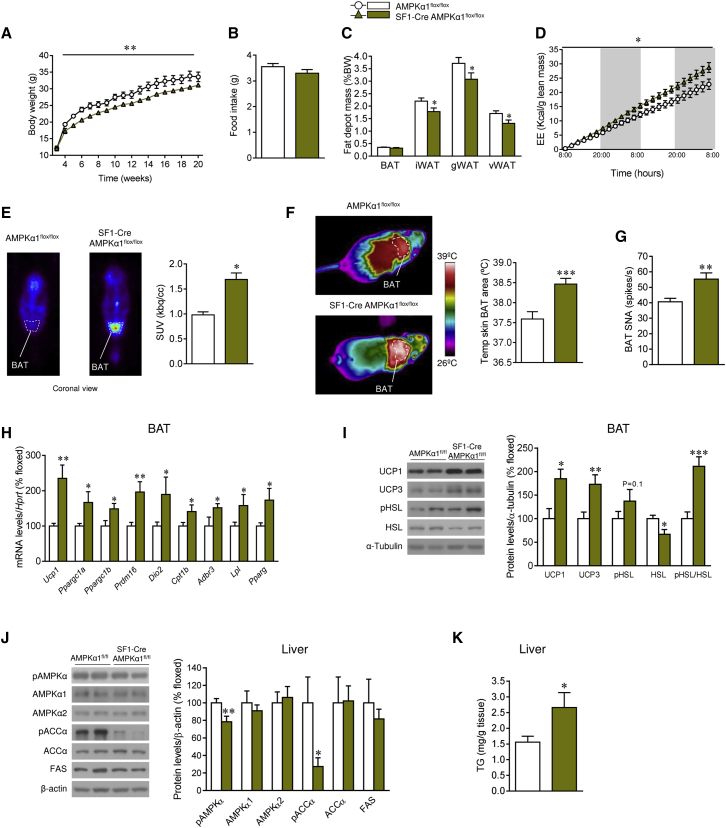
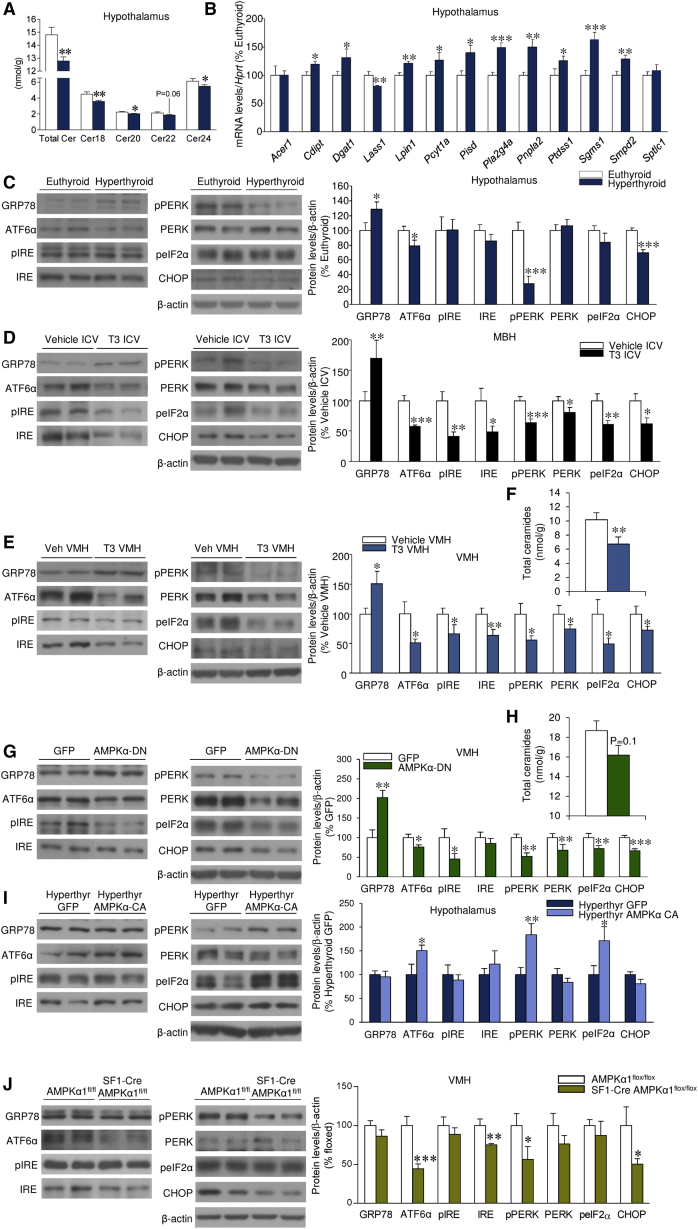
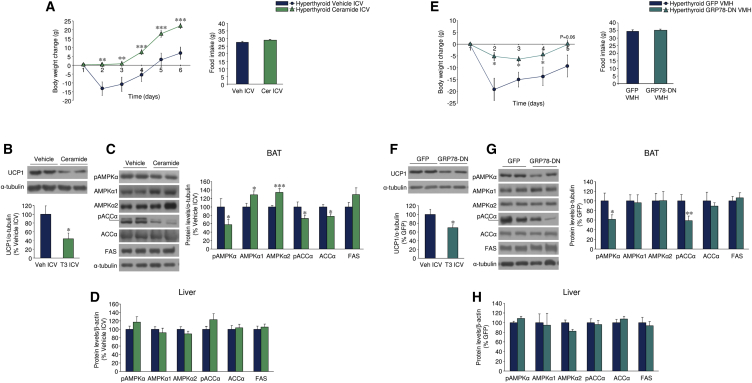
Thyroid hormones (THs) act in the brain to modulate energy balance. We show that central triiodothyronine (T3) regulates de novo lipogenesis in liver and lipid oxidation in brown adipose tissue (BAT) through the parasympathetic (PSNS) and sympathetic nervous system (SNS), respectively. Central T3 promotes hepatic lipogenesis with parallel stimulation of the thermogenic program in BAT. The action of T3 depends on AMP-activated protein kinase (AMPK)-induced regulation of two signaling pathways in the ventromedial nucleus of the hypothalamus (VMH): decreased ceramide-induced endoplasmic reticulum (ER) stress, which promotes BAT thermogenesis, and increased c-Jun N-terminal kinase (JNK) activation, which controls hepatic lipid metabolism. Of note, ablation of AMPKα1 in steroidogenic factor 1 (SF1) neurons of the VMH fully recapitulated the effect of central T3, pointing to this population in mediating the effect of central THs on metabolism. Overall, these findings uncover the underlying pathways through which central T3 modulates peripheral metabolism.
甲状腺激素(THs)在大脑中发挥作用,调节能量平衡。我们发现,中枢三碘甲状腺原氨酸(T3)分别通过副交感神经系统(PSNS)和交感神经系统(SNS)调节肝脏中的从头脂肪生成和棕色脂肪组织(BAT)中的脂质氧化。中枢T3促进肝脏脂肪生成,同时刺激BAT中的产热程序。T3的作用取决于下丘脑腹内侧核(VMH)中AMP激活的蛋白激酶(AMPK)诱导的两条信号通路的调节:减少神经酰胺诱导的内质网(ER)应激,促进BAT产热;增加c-Jun氨基末端激酶(JNK)激活,控制肝脏脂质代谢。值得注意的是,VMH中类固醇生成因子1(SF1)神经元中AMPKα1的缺失完全重现了中枢T3的作用,表明该群体介导了中枢THs对代谢的影响。总体而言,这些发现揭示了中枢T3调节外周代谢的潜在途径。