Veniaminova Ekaterina, Cespuglio Raymond, Cheung Chi Wai, Umriukhin Alexei, Markova Nataliia, Shevtsova Elena, Lesch Klaus-Peter, Anthony Daniel C, Strekalova Tatyana
Department of Neuroscience, School for Mental Health and Neuroscience, Maastricht University, Universiteitssingel 40, 6200 MD Maastricht, Netherlands.
Institute of Molecular Medicine, Sechenov First Moscow State Medical University, Moscow 119991, Russia.
Neural Plast. 2017;2017:9498247. doi: 10.1155/2017/9498247. Epub 2017 Jun 8.
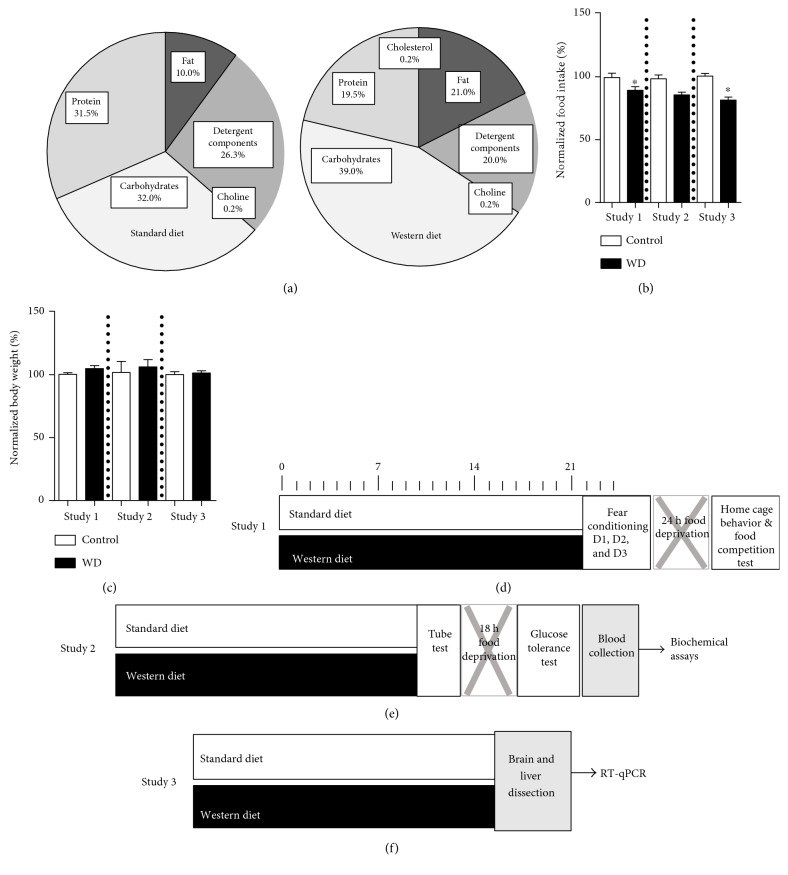
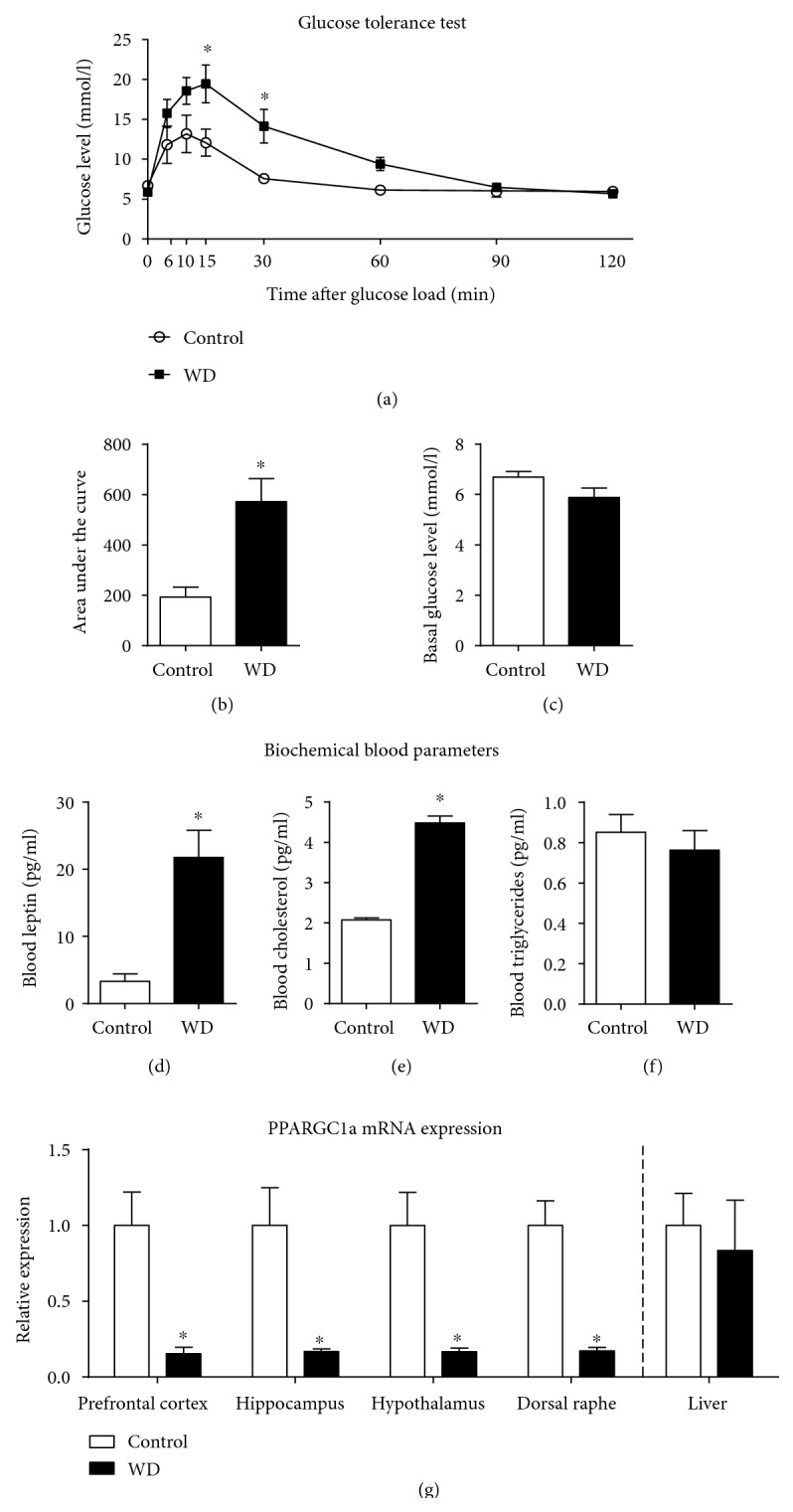
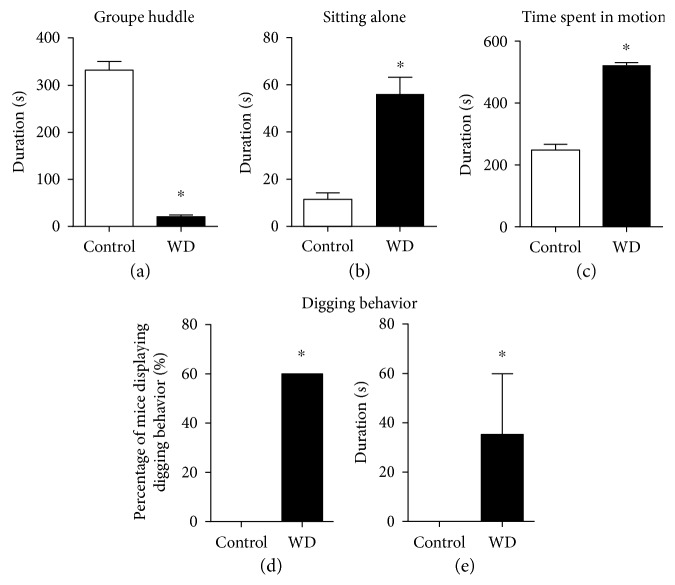
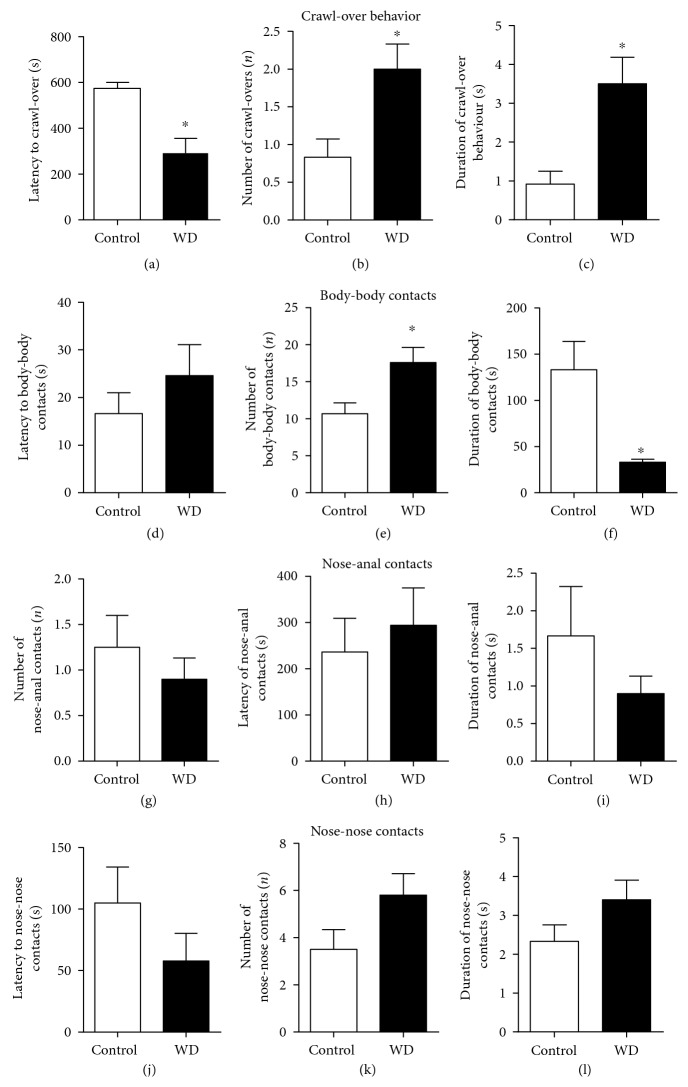
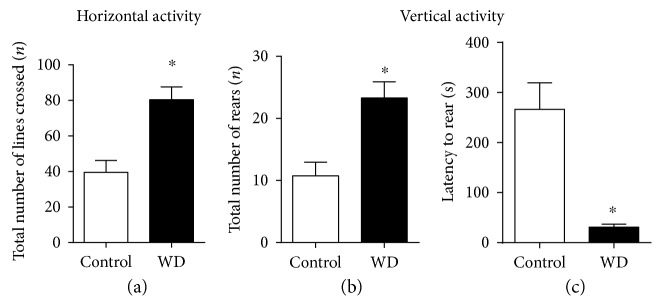
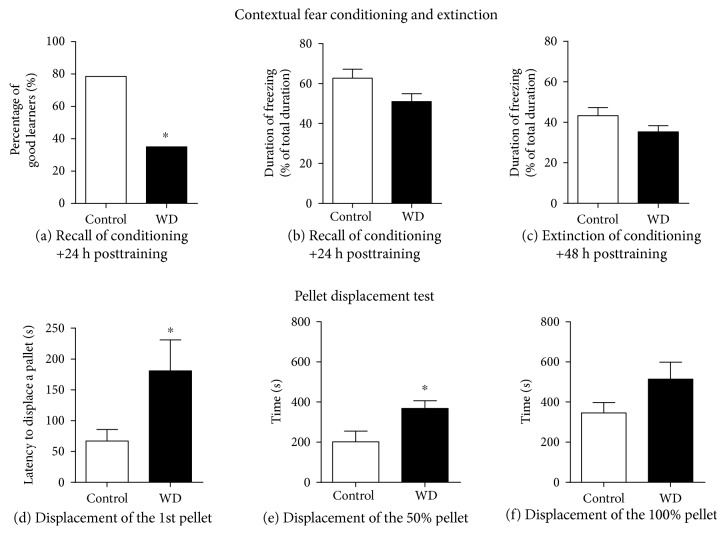
Nonalcoholic fatty liver disease, induced by a Western diet (WD), evokes central and peripheral inflammation that is accompanied by altered emotionality. These changes can be associated with abnormalities in social behaviour, hippocampus-dependent cognitive functions, and metabolism. Female C57BL/6J mice were fed with a regular chow or with a WD containing 0.2% of cholesterol and 21% of saturated fat for three weeks. WD-treated mice exhibited increased social avoidance, crawl-over and digging behaviours, decreased body-body contacts, and hyperlocomotion. The WD-fed group also displayed deficits in hippocampal-dependent performance such as contextual memory in a fear conditioning and pellet displacement paradigms. A reduction in glucose tolerance and elevated levels of serum cholesterol and leptin were also associated with the WD. The peroxisome proliferator-activated receptor gamma coactivator 1-alpha (PPARGC1a) mRNA, a marker of mitochondrial activity, was decreased in the prefrontal cortex, hippocampus, hypothalamus, and dorsal raphe, suggesting suppressed brain mitochondrial functions, but not in the liver. This is the first report to show that a WD can profoundly suppress social interactions and induce dominant-like behaviours in naïve adult mice. The spectrum of behaviours that were found to be induced are reminiscent of symptoms associated with autism, and, if paralleled in humans, suggest that a WD might exacerbate autism spectrum disorder.
西方饮食(WD)诱发的非酒精性脂肪性肝病会引发中枢和外周炎症,并伴有情绪改变。这些变化可能与社会行为、海马体依赖的认知功能和新陈代谢异常有关。将雌性C57BL/6J小鼠分为两组,一组喂食常规食物,另一组喂食含有0.2%胆固醇和21%饱和脂肪的西方饮食,持续三周。接受西方饮食处理的小鼠表现出社交回避增加、爬行和挖掘行为增多、身体接触减少以及活动过度。喂食西方饮食的组在海马体依赖的行为表现上也存在缺陷,如在恐惧条件反射和颗粒位移范式中的情境记忆。葡萄糖耐量降低以及血清胆固醇和瘦素水平升高也与西方饮食有关。线粒体活性标志物过氧化物酶体增殖物激活受体γ共激活因子1α(PPARGC1a)的mRNA在前额叶皮质、海马体、下丘脑和中缝背核中减少,表明脑线粒体功能受到抑制,但在肝脏中未出现这种情况。这是第一份表明西方饮食可在未接触过该饮食的成年小鼠中显著抑制社交互动并诱发类似主导行为的报告。所发现的诱发行为谱让人联想到与自闭症相关的症状,如果在人类中也存在类似情况,则表明西方饮食可能会加重自闭症谱系障碍。