Yerly Daniel, Pompeu Yuri Andreiw, Schutte Ryan J, Eriksson Klara K, Strhyn Anette, Bracey Austin W, Buus Soren, Ostrov David A
Department of Rheumatology, Immunology and Allergology, University Hospital of Bern, 3010 Bern, Switzerland.
Harvard Medical School, Cambridge, MA 02138, USA.
Int J Mol Sci. 2017 Jul 7;18(7):1464. doi: 10.3390/ijms18071464.
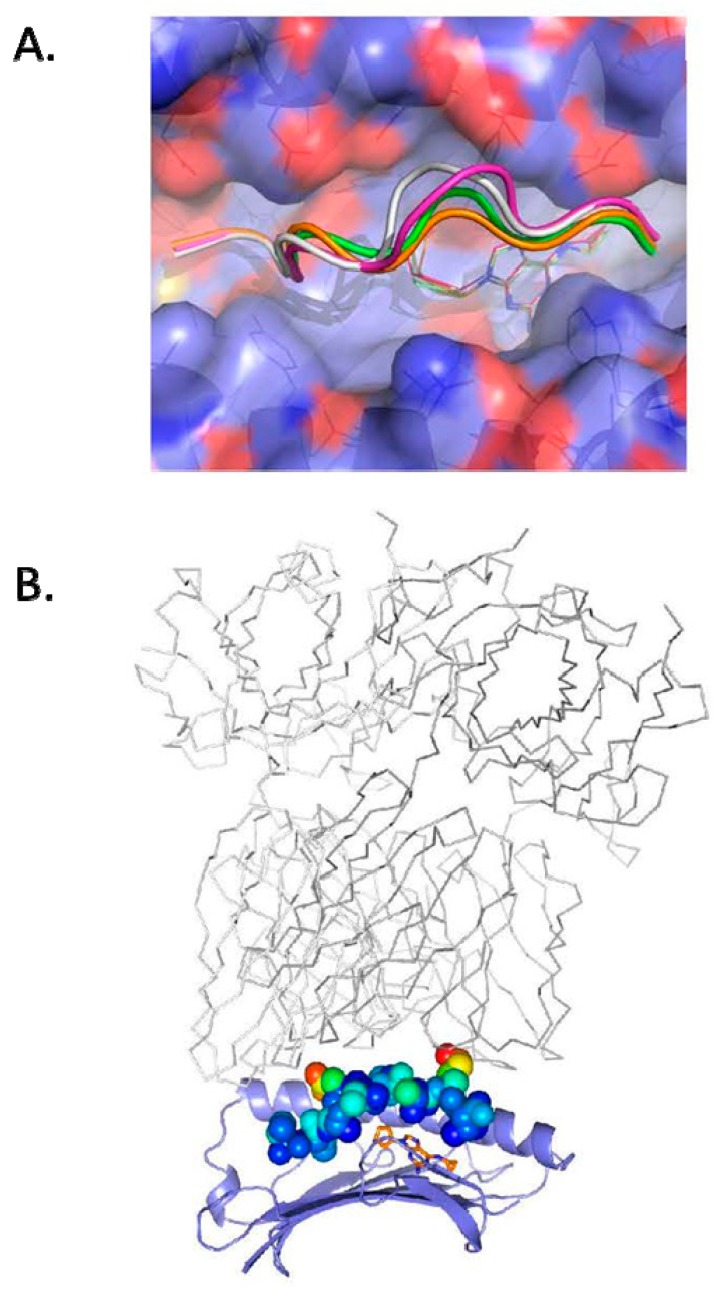
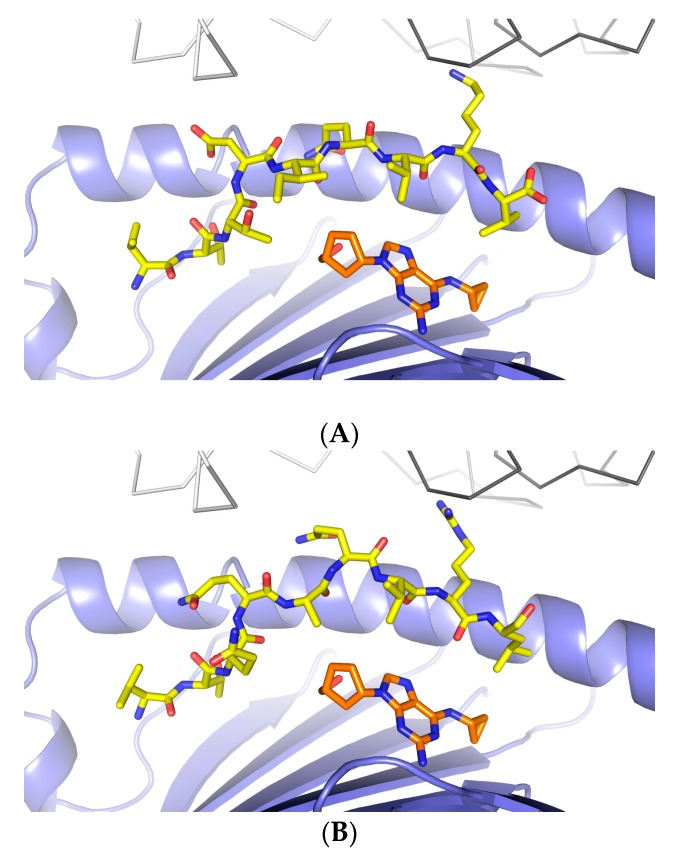
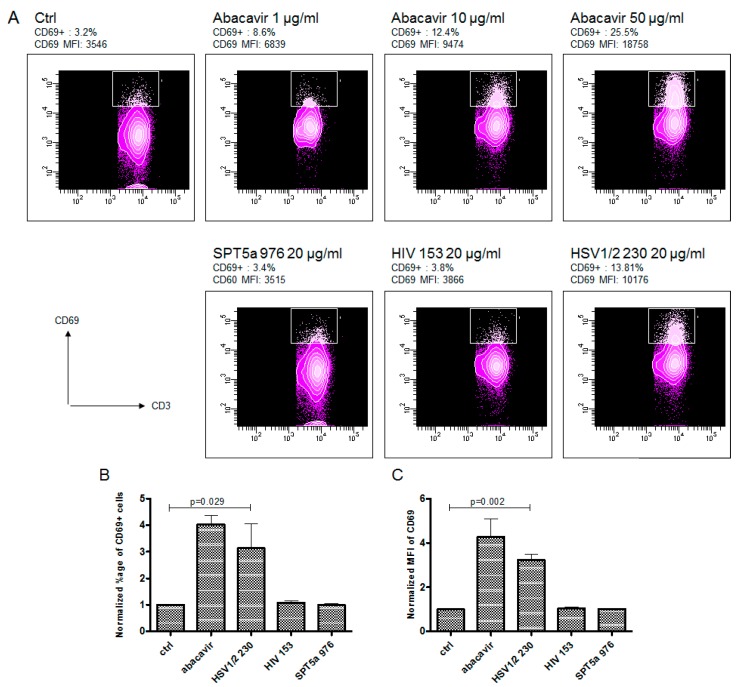
Adverse drug reactions are one of the leading causes of morbidity and mortality in health care worldwide. Human leukocyte antigen (HLA) alleles have been strongly associated with drug hypersensitivities, and the causative drugs have been shown to stimulate specific T cells at the sites of autoimmune destruction. The structural elements recognized by drug-specific T cell receptors (TCRs) in vivo are poorly defined. Drug-stimulated T cells express TCRs specific for peptide/HLA complexes, but the characteristics of peptides (sequence, or endogenous or exogenous origin) presented in the context of small molecule drugs are not well studied. Using HLA-B57:01 mediated hypersensitivity to abacavir as a model system, this study examines structural similarities of HLA presented peptides recognized by drug-specific TCRs. Using the crystal structure of HLA-B57:01 complexed with abacavir and an immunogenic self peptide, VTTDIQVKV SPT5a 976-984, peptide side chains exhibiting flexibility and solvent exposure were identified as potential drug-specific T cell recognition motifs. Viral sequences with structural motifs similar to the immunogenic self peptide were identified. Abacavir-specific T cell clones were used to determine if virus peptides presented in the context of abacavir stimulate T cell responsiveness. An abacavir-specific T cell clone was stimulated by VTQQAQVRL, corresponding to HSV1/2 230-238, in the context of HLA-B57:01. These data suggest the T cell polyclonal response to abacavir consists of multiple subsets, including T cells that recognize self peptide/HLA-B57:01 complexes and crossreact with viral peptide/HLA-B*57:01 complexes due to similarity in TCR contact residues.
药物不良反应是全球医疗卫生领域发病和死亡的主要原因之一。人类白细胞抗原(HLA)等位基因与药物超敏反应密切相关,并且已证明致病药物会在自身免疫破坏部位刺激特定的T细胞。体内药物特异性T细胞受体(TCR)识别的结构元件定义不明确。药物刺激的T细胞表达对肽/HLA复合物具有特异性的TCR,但在小分子药物背景下呈现的肽的特征(序列、内源性或外源性来源)尚未得到充分研究。本研究以HLA-B57:01介导的对阿巴卡韦的超敏反应作为模型系统,研究了药物特异性TCR识别的HLA呈递肽的结构相似性。利用与阿巴卡韦和免疫原性自身肽VTTDIQVKV SPT5a 976 - 984复合的HLA-B57:01的晶体结构,鉴定出表现出灵活性和溶剂暴露的肽侧链作为潜在的药物特异性T细胞识别基序。鉴定出具有与免疫原性自身肽相似结构基序的病毒序列。使用阿巴卡韦特异性T细胞克隆来确定在阿巴卡韦背景下呈现的病毒肽是否刺激T细胞反应性。在HLA-B57:01背景下,对应于HSV1/2 230 - 238的VTQQAQVRL刺激了阿巴卡韦特异性T细胞克隆。这些数据表明,对阿巴卡韦的T细胞多克隆反应由多个亚群组成,包括识别自身肽/HLA-B57:01复合物并由于TCR接触残基的相似性而与病毒肽/HLA-B*57:01复合物发生交叉反应的T细胞。