Division of Pharmaceutics and Pharmaceutical Chemistry, College of Pharmacy and Comprehensive Cancer Center, Ohio State University, Columbus, Ohio, USA.
Department of Pathology, St. Jude Children's Research Hospital, Memphis, Tennessee, USA.
Clin Transl Sci. 2017 Sep;10(5):412-420. doi: 10.1111/cts.12480. Epub 2017 Jul 8.
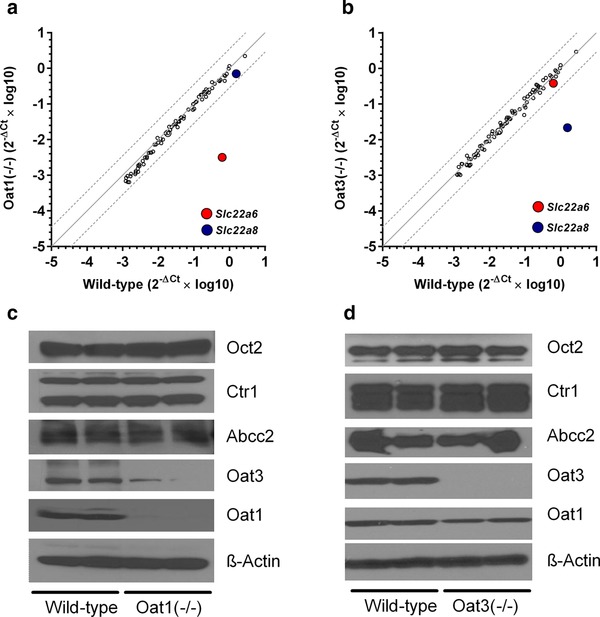
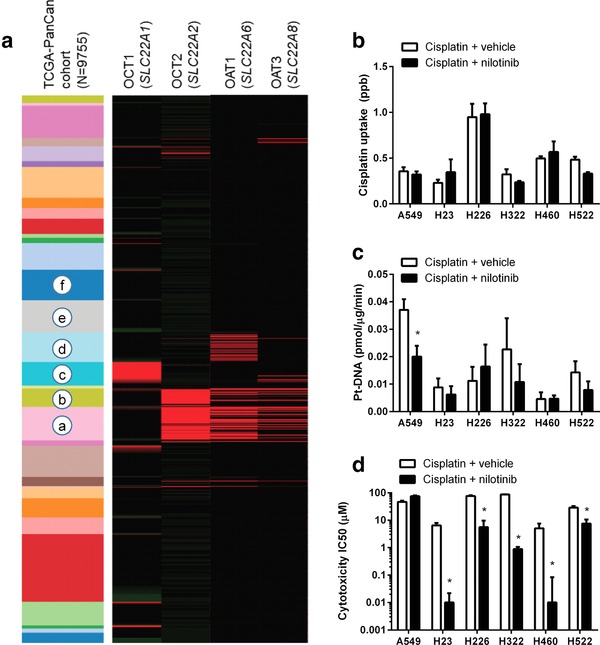
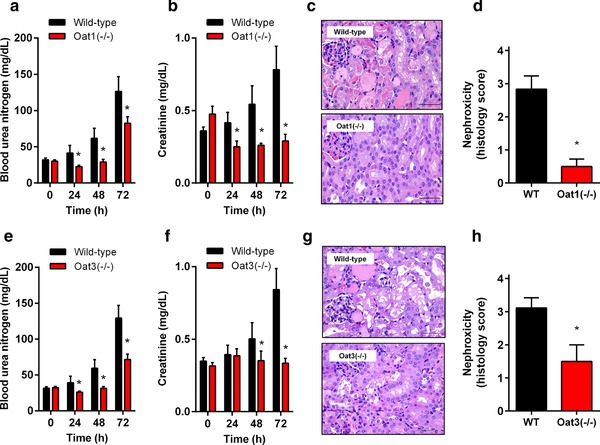
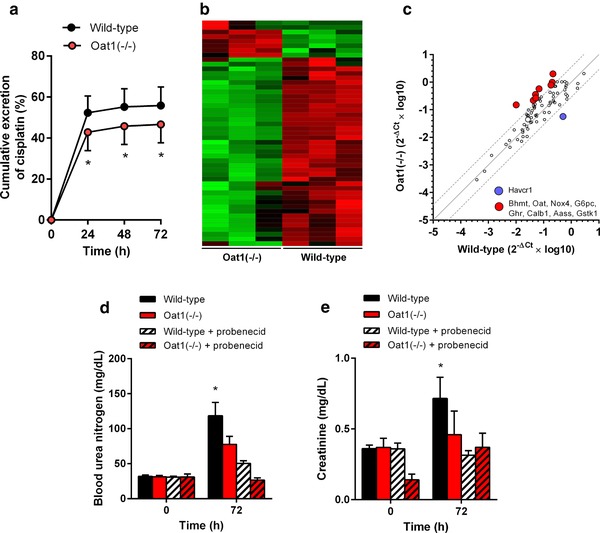
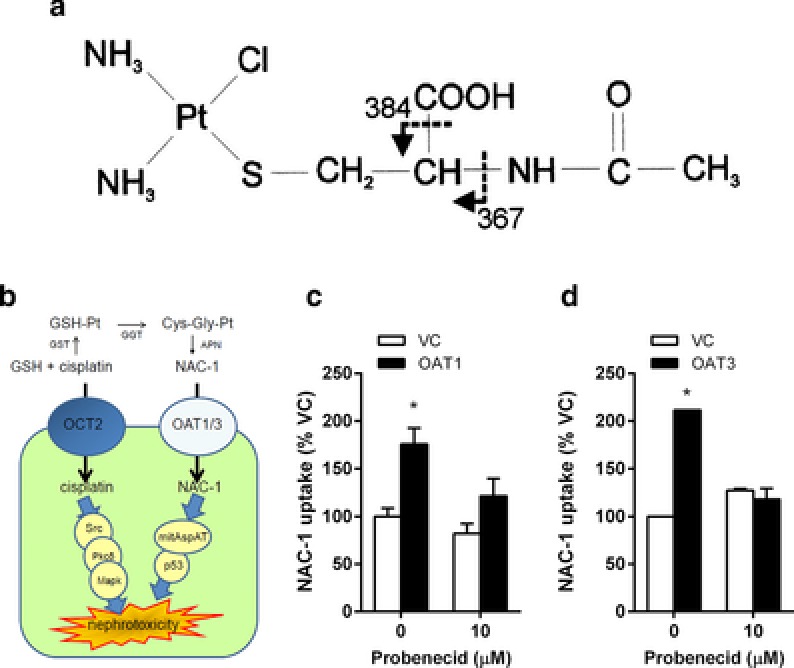
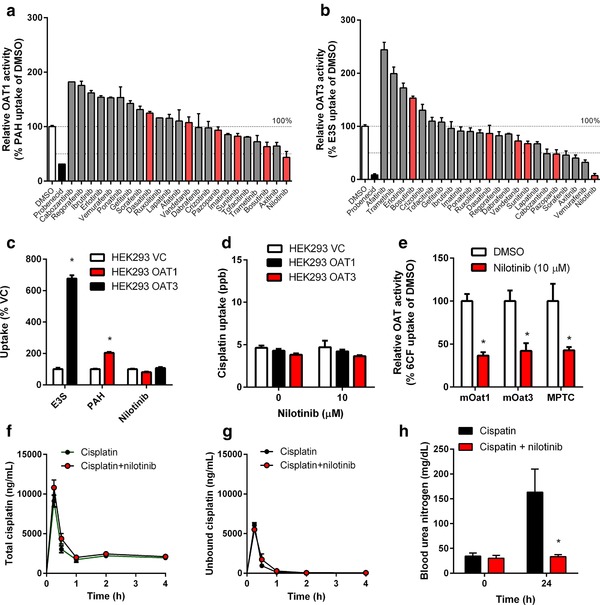
Cisplatin is among the most widely used anticancer drugs and known to cause a dose-limiting nephrotoxicity, which is partially dependent on the renal uptake carrier OCT2. We here report a previously unrecognized, OCT2-independent pathway of cisplatin-induced renal injury that is mediated by the organic anion transporters OAT1 and OAT3. Using transporter-deficient mouse models, we found that this mechanism regulates renal uptake of a mercapturic acid metabolite of cisplatin that acts as a precursor of a potent nephrotoxin. The function of these two transport systems can be simultaneously inhibited by the tyrosine kinase inhibitor nilotinib through noncompetitive mechanisms, without compromising the anticancer properties of cisplatin. Collectively, our findings reveal a novel pathway that explains the fundamental basis of cisplatin-induced nephrotoxicity, with potential implications for its therapeutic management.
顺铂是应用最广泛的抗癌药物之一,已知其具有剂量限制性的肾毒性,部分取决于肾脏摄取载体 OCT2。我们在此报告了一种先前未被认识到的顺铂诱导肾损伤的 OCT2 非依赖性途径,该途径由有机阴离子转运体 OAT1 和 OAT3 介导。使用转运体缺陷型小鼠模型,我们发现该机制调节顺铂的巯基尿酸代谢物的肾脏摄取,该代谢物作为一种强效肾毒素的前体。这两种转运系统的功能可以通过非竞争性机制被酪氨酸激酶抑制剂尼罗替尼同时抑制,而不会损害顺铂的抗癌特性。总的来说,我们的研究结果揭示了一种新的途径,解释了顺铂诱导肾毒性的基本基础,对其治疗管理具有潜在意义。