Dong Yue-Zhi, Zhou Fei-Jing, Sun Ying-Pu
Reproductive Medicine Center, The First Affiliated Hospital of Zhengzhou University, 1 Jianshedong Road, Erqi District, Zhengzhou, Henan Province, 450052, China.
Reprod Biol Endocrinol. 2017 Jul 11;15(1):51. doi: 10.1186/s12958-017-0271-4.
Stress exposure has been proved to be linked to reproductive failure. The reproductive potential of women depends on the ovarian reserve. Anti-müllerian hormone (AMH) has been proved a reliable clinical marker of ovarian reserve. However, the correlation between psychological stress and AMH level is not clear.
A cross-sectional study including 576 women was conducted. AMH concentration was tested to reflect the ovarian reserve. Salivary alpha-amylase (SAA) level was measured to assess the stress of patients objectively.
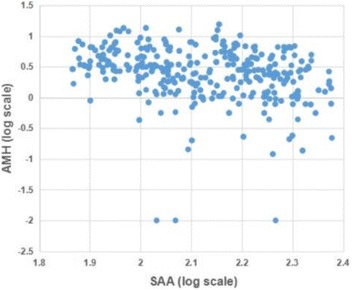
The SAA level was significantly, and negatively correlated with AMH levels in infertile women (r = -0.315, P = 0.000; adjusted for age, r = -0.336, P = 0.000).
Higher psychological stress was related to a decreased AMH level in infertile women and psychological stress may affect ovarian reserve.
应激暴露已被证明与生殖功能衰竭有关。女性的生殖潜力取决于卵巢储备。抗苗勒管激素(AMH)已被证明是卵巢储备的可靠临床标志物。然而,心理应激与AMH水平之间的相关性尚不清楚。
进行了一项包括576名女性的横断面研究。检测AMH浓度以反映卵巢储备。测量唾液α淀粉酶(SAA)水平以客观评估患者的应激状态。
不育女性的SAA水平与AMH水平呈显著负相关(r = -0.315,P = 0.000;校正年龄后,r = -0.336,P = 0.000)。
不育女性心理应激水平较高与AMH水平降低有关,心理应激可能影响卵巢储备。