Long Thavy, Rojo-Arreola Liliana, Shi Da, El-Sakkary Nelly, Jarnagin Kurt, Rock Fernando, Meewan Maliwan, Rascón Alberto A, Lin Lin, Cunningham Katherine A, Lemieux George A, Podust Larissa, Abagyan Ruben, Ashrafi Kaveh, McKerrow James H, Caffrey Conor R
Center for Discovery and Innovation in Parasitic Diseases, University of California San Francisco, San Francisco, California, United States of America.
Department of Pathology, University of California San Francisco, San Francisco, California, United States of America.
PLoS Negl Trop Dis. 2017 Jul 13;11(7):e0005680. doi: 10.1371/journal.pntd.0005680. eCollection 2017 Jul.
Reliance on just one drug to treat the prevalent tropical disease, schistosomiasis, spurs the search for new drugs and drug targets. Inhibitors of human cyclic nucleotide phosphodiesterases (huPDEs), including PDE4, are under development as novel drugs to treat a range of chronic indications including asthma, chronic obstructive pulmonary disease and Alzheimer's disease. One class of huPDE4 inhibitors that has yielded marketed drugs is the benzoxaboroles (Anacor Pharmaceuticals).
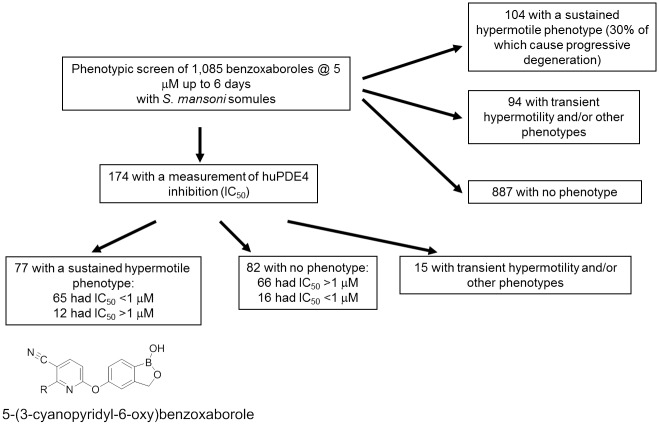
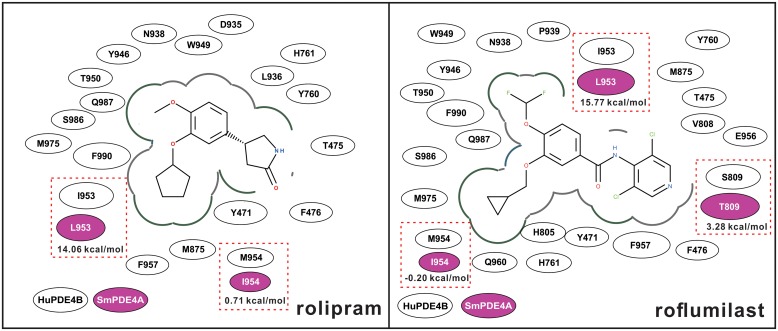
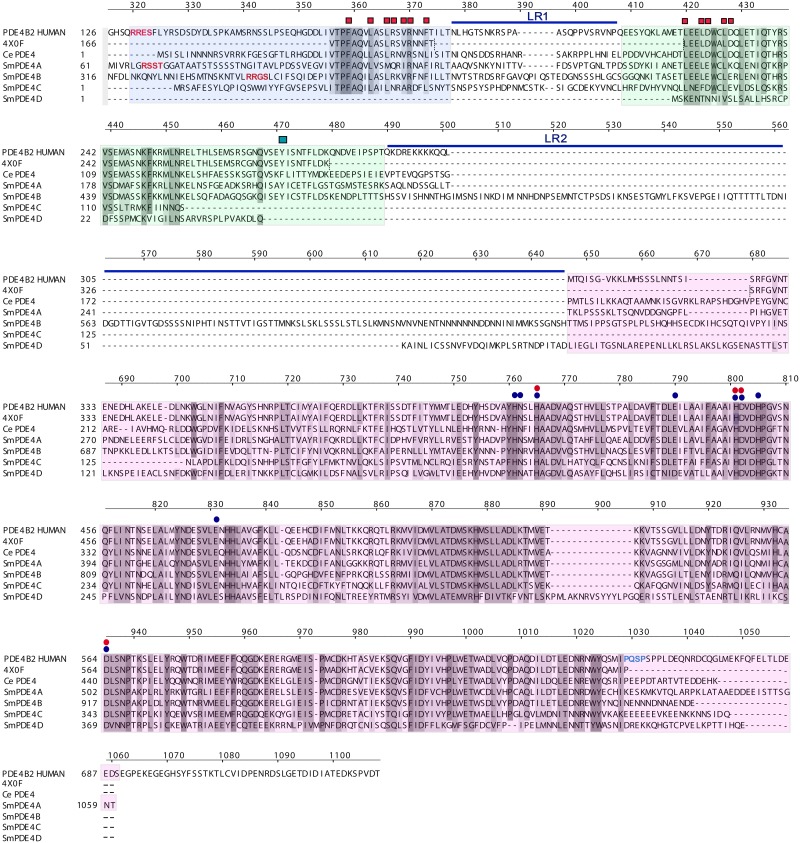
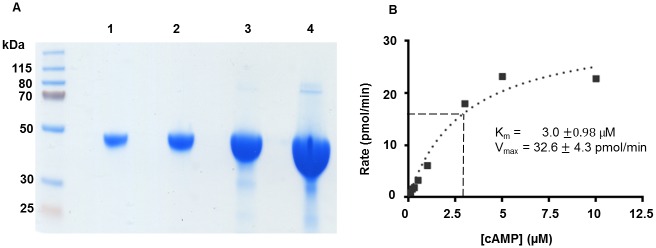
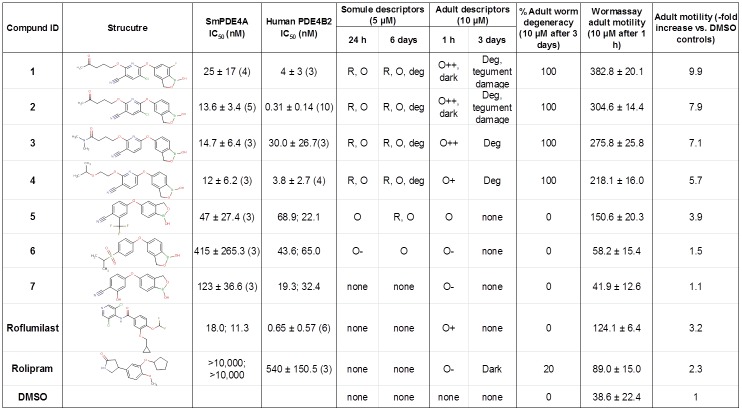
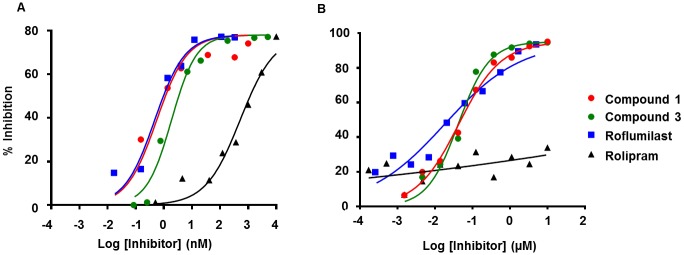
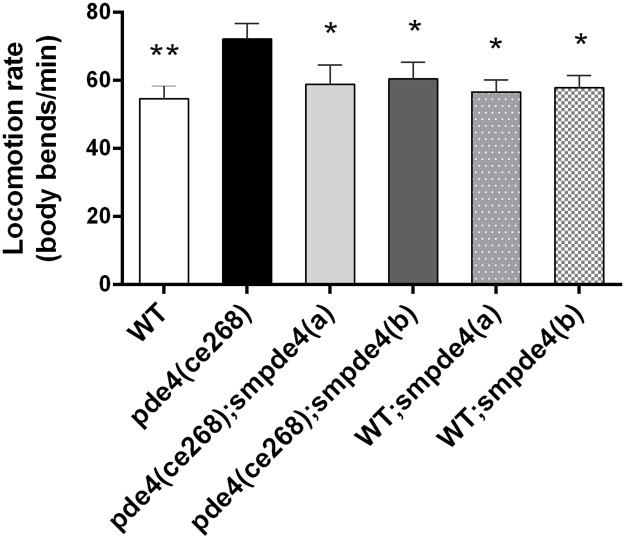
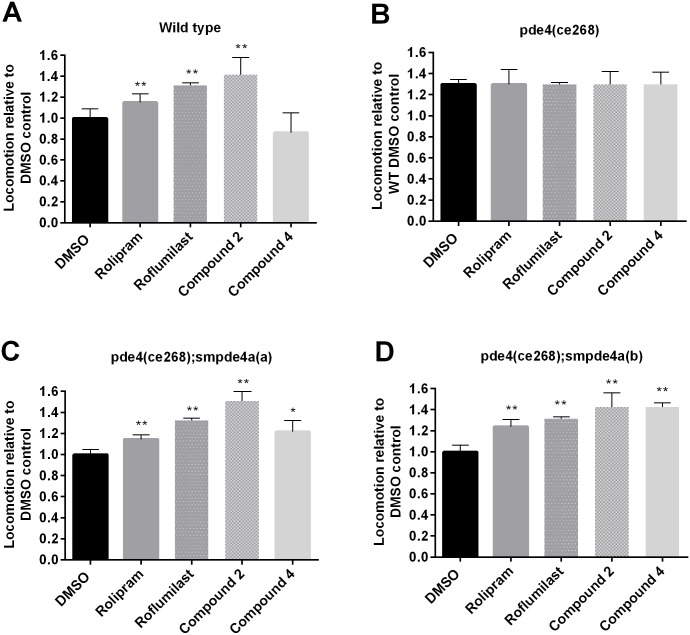
METHODOLOGY/PRINCIPAL FINDINGS: A phenotypic screen involving Schistosoma mansoni and 1,085 benzoxaboroles identified a subset of huPDE4 inhibitors that induced parasite hypermotility and degeneration. To uncover the putative schistosome PDE4 target, we characterized four PDE4 sequences (SmPDE4A-D) in the parasite's genome and transcriptome, and cloned and recombinantly expressed the catalytic domain of SmPDE4A. Among a set of benzoxaboroles and catechol inhibitors that differentially inhibit huPDE4, a relationship between the inhibition of SmPDE4A, and parasite hypermotility and degeneration, was measured. To validate SmPDE4A as the benzoxaborole molecular target, we first generated Caenorhabditis elegans lines that express a cDNA for smpde4a on a pde4(ce268) mutant (hypermotile) background: the smpde4a transgene restored mutant worm motility to that of the wild type. We then showed that benzoxaborole inhibitors of SmPDE4A that induce hypermotility in the schistosome also elicit a hypermotile response in the C. elegans lines that express the smpde4a transgene, thereby confirming SmPDE4A as the relevant target.
CONCLUSIONS/SIGNIFICANCE: The orthogonal chemical, biological and genetic strategies employed identify SmPDE4A's contribution to parasite motility and degeneration, and its potential as a drug target. Transgenic C. elegans is highlighted as a potential screening tool to optimize small molecule chemistries to flatworm molecular drug targets.
仅依赖一种药物来治疗流行的热带疾病血吸虫病,促使人们寻找新的药物和药物靶点。包括磷酸二酯酶4(PDE4)在内的人类环核苷酸磷酸二酯酶(huPDEs)抑制剂正作为新型药物进行研发,用于治疗一系列慢性疾病,如哮喘、慢性阻塞性肺疾病和阿尔茨海默病。一类已产生上市药物的huPDE4抑制剂是苯并氧杂硼烷(Anacor制药公司)。
方法/主要发现:一项涉及曼氏血吸虫和1085种苯并氧杂硼烷的表型筛选,确定了一组能诱导寄生虫过度运动和退化的huPDE4抑制剂。为了揭示推定的血吸虫PDE4靶点,我们对寄生虫基因组和转录组中的四个PDE4序列(SmPDE4A - D)进行了表征,并克隆和重组表达了SmPDE4A的催化结构域。在一组能差异抑制huPDE4的苯并氧杂硼烷和儿茶酚抑制剂中,测定了SmPDE4A的抑制与寄生虫过度运动和退化之间的关系。为了验证SmPDE4A是苯并氧杂硼烷的分子靶点,我们首先构建了秀丽隐杆线虫品系,该品系在pde4(ce268)突变体(过度运动)背景下表达smpde4a的cDNA:smpde4a转基因使突变体蠕虫的运动恢复到野生型水平。然后我们表明,在血吸虫中诱导过度运动的SmPDE4A苯并氧杂硼烷抑制剂,在表达smpde4a转基因的秀丽隐杆线虫品系中也引发过度运动反应,从而证实SmPDE4A是相关靶点。
结论/意义:所采用的正交化学、生物学和遗传学策略确定了SmPDE4A对寄生虫运动和退化的作用及其作为药物靶点的潜力。转基因秀丽隐杆线虫被强调为一种潜在的筛选工具,可用于优化针对扁虫分子药物靶点的小分子化学结构。