• 文献检索
  • 文档翻译
  • 深度研究
  • 学术资讯
  • Suppr Zotero 插件Zotero 插件
  • 邀请有礼
  • 套餐&价格
  • 历史记录
应用&插件
Suppr Zotero 插件Zotero 插件浏览器插件Mac 客户端Windows 客户端微信小程序
定价
高级版会员购买积分包购买API积分包
服务
文献检索文档翻译深度研究API 文档MCP 服务
关于我们
关于 Suppr公司介绍联系我们用户协议隐私条款
关注我们

Suppr 超能文献

核心技术专利:CN118964589B侵权必究
粤ICP备2023148730 号-1Suppr @ 2026

文献检索

告别复杂PubMed语法,用中文像聊天一样搜索,搜遍4000万医学文献。AI智能推荐,让科研检索更轻松。

立即免费搜索

文件翻译

保留排版,准确专业,支持PDF/Word/PPT等文件格式,支持 12+语言互译。

免费翻译文档

深度研究

AI帮你快速写综述,25分钟生成高质量综述,智能提取关键信息,辅助科研写作。

立即免费体验

单侧经胫骨截肢者的运动适应性

Locomotor adaptability in persons with unilateral transtibial amputation.

作者信息

Darter Benjamin J, Bastian Amy J, Wolf Erik J, Husson Elizabeth M, Labrecque Bethany A, Hendershot Brad D

机构信息

Department of Physical Therapy, Virginia Commonwealth University, Richmond, Virginia, United States of America.

Department of Research, Hunter Holmes McGuire Veteran Affairs Medical Center, Richmond, Virginia, United States of America.

出版信息

PLoS One. 2017 Jul 12;12(7):e0181120. doi: 10.1371/journal.pone.0181120. eCollection 2017.

DOI:10.1371/journal.pone.0181120
PMID:28704467
原文链接:https://pmc.ncbi.nlm.nih.gov/articles/PMC5507533/
Abstract

BACKGROUND

Locomotor adaptation enables walkers to modify strategies when faced with challenging walking conditions. While a variety of neurological injuries can impair locomotor adaptability, the effect of a lower extremity amputation on adaptability is poorly understood.

OBJECTIVE

Determine if locomotor adaptability is impaired in persons with unilateral transtibial amputation (TTA).

METHODS

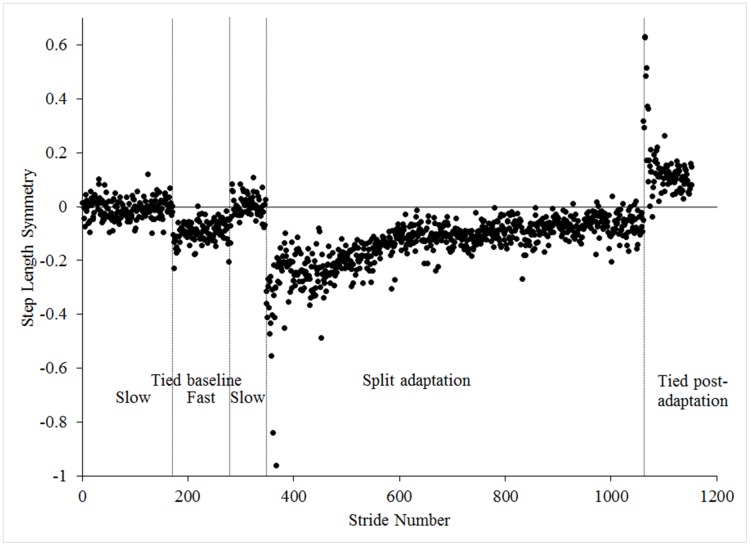
The locomotor adaptability of 10 persons with a TTA and 8 persons without an amputation was tested while walking on a split-belt treadmill with the parallel belts running at the same (tied) or different (split) speeds. In the split condition, participants walked for 15 minutes with the respective belts moving at 0.5 m/s and 1.5 m/s. Temporal spatial symmetry measures were used to evaluate reactive accommodations to the perturbation, and the adaptive/de-adaptive response.

RESULTS

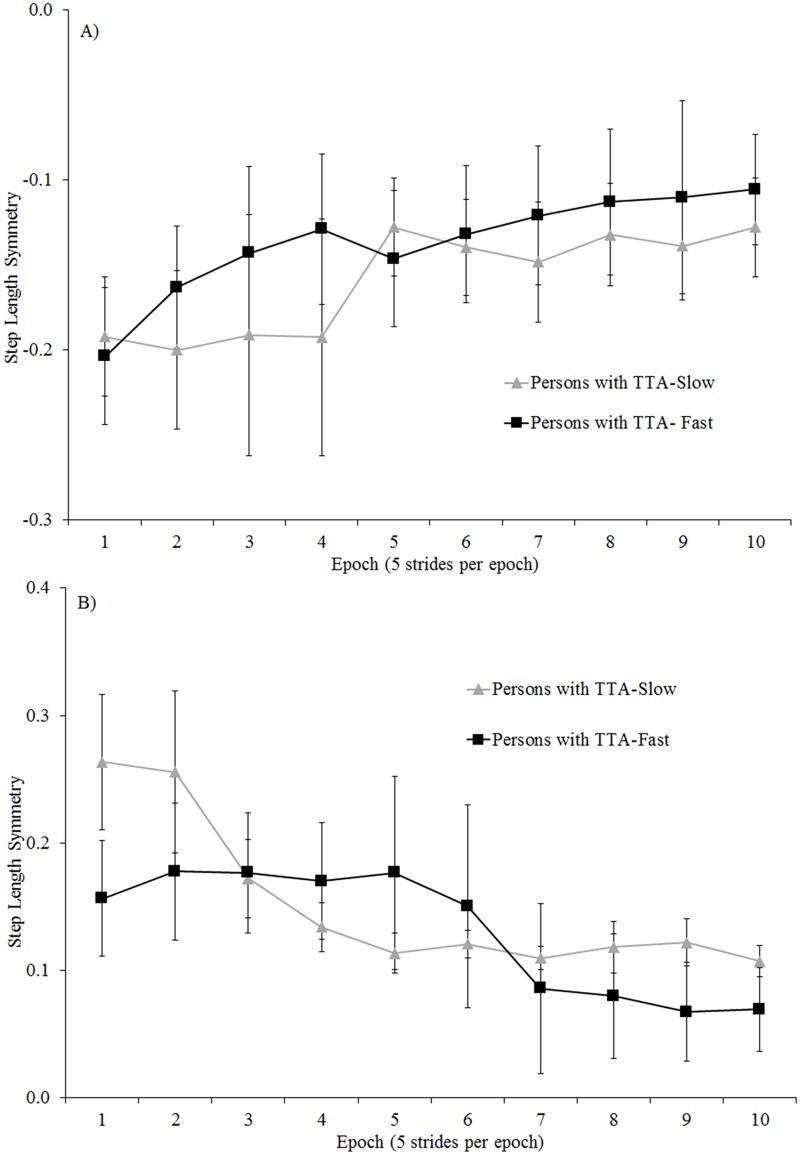
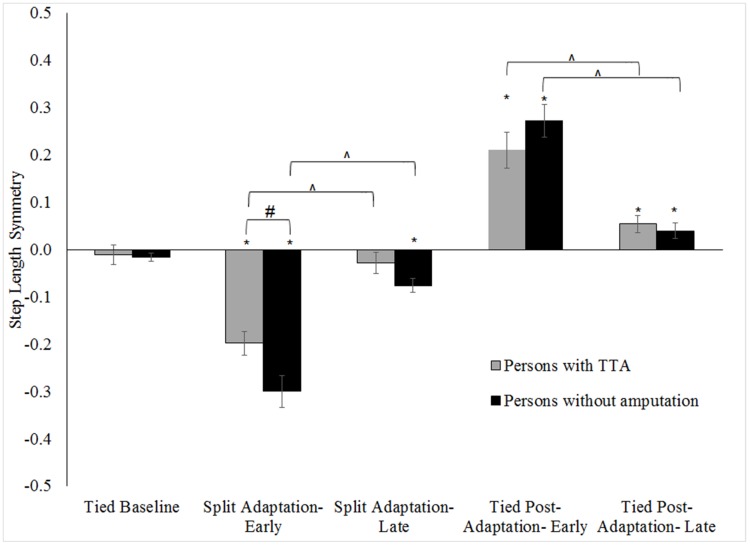
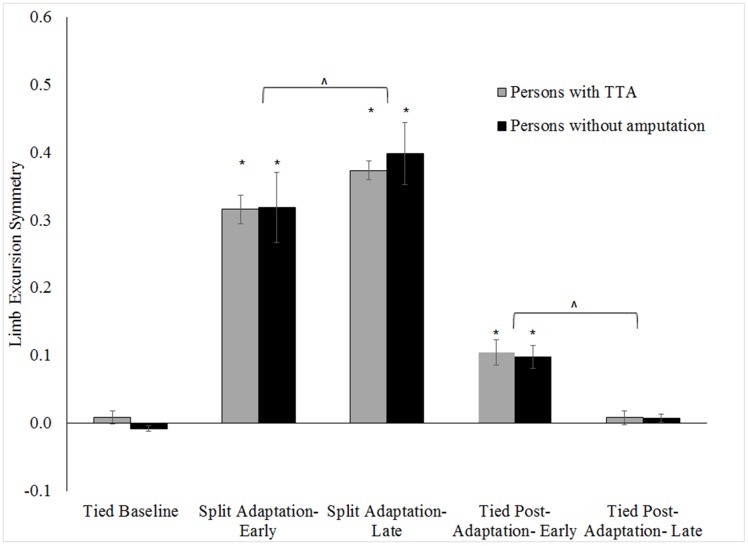
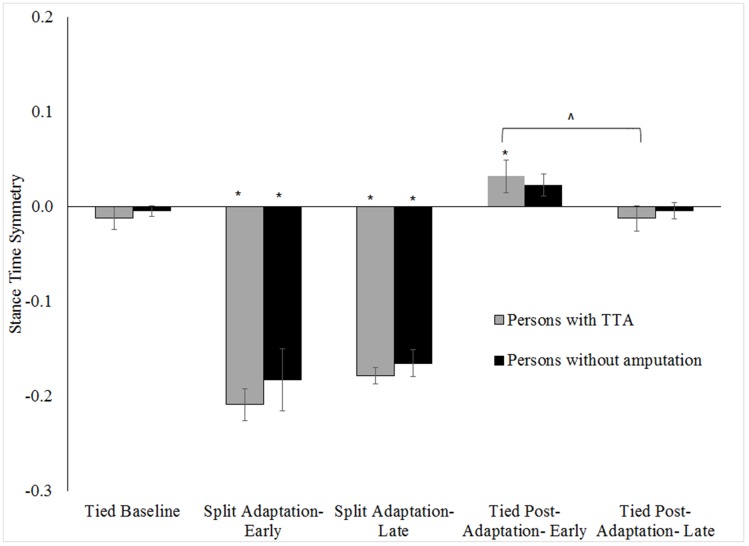
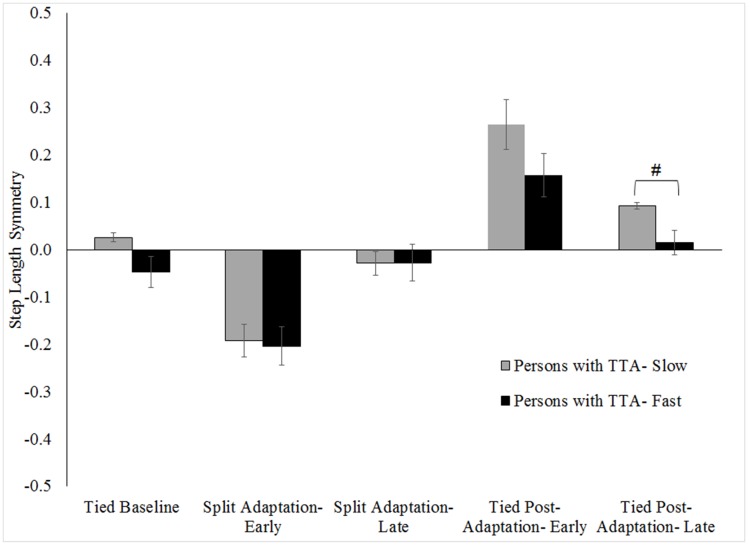
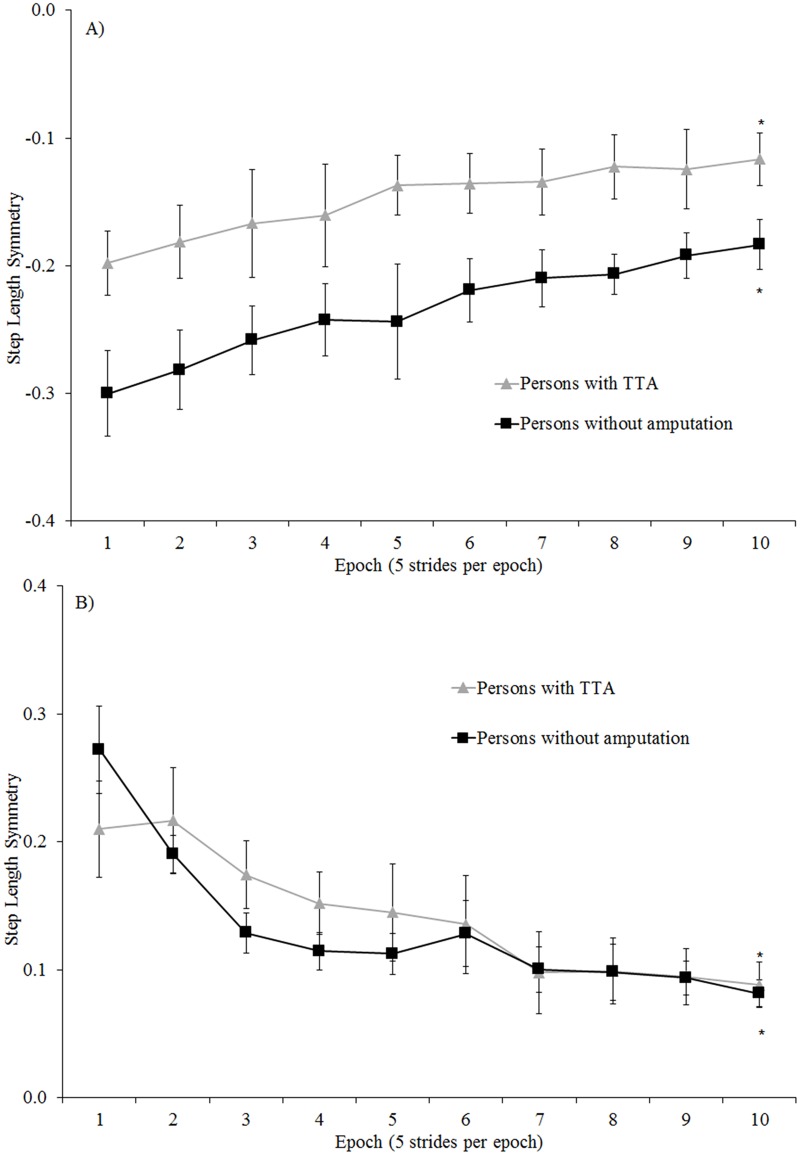
Persons with TTA and the reference group of persons without amputation both demonstrated highly symmetric walking at baseline. During the split adaptation and tied post-adaptation walking both groups responded with the expected reactive accommodations. Likewise, adaptive and de-adaptive responses were observed. The magnitude and rate of change in the adaptive and de-adaptive responses were similar for persons with TTA and those without an amputation. Furthermore, adaptability was no different based on belt assignment for the prosthetic limb during split adaptation walking.

CONCLUSIONS

Reactive changes and locomotor adaptation in response to a challenging and novel walking condition were similar in persons with TTA to those without an amputation. Results suggest persons with TTA have the capacity to modify locomotor strategies to meet the demands of most walking conditions despite challenges imposed by an amputation and use of a prosthetic limb.

摘要

背景

运动适应性使步行者在面对具有挑战性的步行条件时能够调整策略。虽然多种神经损伤会损害运动适应性,但下肢截肢对适应性的影响却知之甚少。

目的

确定单侧经胫骨截肢(TTA)患者的运动适应性是否受损。

方法

对10名TTA患者和8名未截肢者在分体式跑步机上行走时的运动适应性进行测试,跑步机的平行皮带以相同(系紧)或不同(分开)速度运行。在分开条件下,参与者在各自皮带分别以0.5米/秒和1.5米/秒的速度移动的情况下行走15分钟。使用时空对称性测量来评估对扰动的反应性调节以及适应性/去适应性反应。

结果

TTA患者和未截肢的参照组在基线时均表现出高度对称的行走。在分开适应和系紧的适应后行走过程中,两组均做出了预期的反应性调节。同样,观察到了适应性和去适应性反应。TTA患者和未截肢者的适应性和去适应性反应的变化幅度和速率相似。此外,在分开适应行走期间,基于假肢肢体的皮带分配,适应性没有差异。

结论

TTA患者对具有挑战性的新步行条件的反应性变化和运动适应性与未截肢者相似。结果表明,尽管截肢和使用假肢带来了挑战,但TTA患者有能力调整运动策略以满足大多数步行条件的需求。
https://cdn.ncbi.nlm.nih.gov/pmc/blobs/c37c/5507533/be7e90f5b1d6/pone.0181120.g007.jpg
https://cdn.ncbi.nlm.nih.gov/pmc/blobs/c37c/5507533/860663e90e91/pone.0181120.g001.jpg
https://cdn.ncbi.nlm.nih.gov/pmc/blobs/c37c/5507533/f76474d37a4a/pone.0181120.g002.jpg
https://cdn.ncbi.nlm.nih.gov/pmc/blobs/c37c/5507533/9bcfbafaaef2/pone.0181120.g003.jpg
https://cdn.ncbi.nlm.nih.gov/pmc/blobs/c37c/5507533/814fab1b8ad9/pone.0181120.g004.jpg
https://cdn.ncbi.nlm.nih.gov/pmc/blobs/c37c/5507533/7c485731b931/pone.0181120.g005.jpg
https://cdn.ncbi.nlm.nih.gov/pmc/blobs/c37c/5507533/b35872d57aa2/pone.0181120.g006.jpg
https://cdn.ncbi.nlm.nih.gov/pmc/blobs/c37c/5507533/be7e90f5b1d6/pone.0181120.g007.jpg
https://cdn.ncbi.nlm.nih.gov/pmc/blobs/c37c/5507533/860663e90e91/pone.0181120.g001.jpg
https://cdn.ncbi.nlm.nih.gov/pmc/blobs/c37c/5507533/f76474d37a4a/pone.0181120.g002.jpg
https://cdn.ncbi.nlm.nih.gov/pmc/blobs/c37c/5507533/9bcfbafaaef2/pone.0181120.g003.jpg
https://cdn.ncbi.nlm.nih.gov/pmc/blobs/c37c/5507533/814fab1b8ad9/pone.0181120.g004.jpg
https://cdn.ncbi.nlm.nih.gov/pmc/blobs/c37c/5507533/7c485731b931/pone.0181120.g005.jpg
https://cdn.ncbi.nlm.nih.gov/pmc/blobs/c37c/5507533/b35872d57aa2/pone.0181120.g006.jpg
https://cdn.ncbi.nlm.nih.gov/pmc/blobs/c37c/5507533/be7e90f5b1d6/pone.0181120.g007.jpg

相似文献

1
Locomotor adaptability in persons with unilateral transtibial amputation.单侧经胫骨截肢者的运动适应性
PLoS One. 2017 Jul 12;12(7):e0181120. doi: 10.1371/journal.pone.0181120. eCollection 2017.
2
Step length symmetry adaptation to split-belt treadmill walking after acquired non-traumatic transtibial amputation.适应分割带跑步机行走的步长对称性,用于后天非创伤性的胫骨截肢。
Gait Posture. 2020 Jul;80:162-167. doi: 10.1016/j.gaitpost.2020.05.043. Epub 2020 May 31.
3
Dynamic stability of superior vs. inferior body segments in individuals with transtibial amputation walking in destabilizing environments.在不稳定环境中行走的经胫骨截肢个体上半身与下半身节段的动态稳定性。
J Biomech. 2014 Sep 22;47(12):3072-9. doi: 10.1016/j.jbiomech.2014.06.041. Epub 2014 Jul 10.
4
Two biomechanical strategies for locomotor adaptation to split-belt treadmill walking in subjects with and without transtibial amputation.在有和没有经胫骨截肢的受试者中,用于运动适应分带跑步机行走的两种生物力学策略。
J Biomech. 2017 Feb 28;53:136-143. doi: 10.1016/j.jbiomech.2017.01.012. Epub 2017 Jan 14.
5
Lower Extremity Joint Contributions to Trunk Control During Walking in Persons with Transtibial Amputation.下肢关节对小腿截肢患者行走时躯干控制的贡献。
Sci Rep. 2019 Aug 22;9(1):12267. doi: 10.1038/s41598-019-47796-z.
6
How persons with transtibial amputation regulate lateral stepping while walking in laterally destabilizing environments.小腿截肢者在侧向不稳定环境中行走时如何调节侧向跨步。
Gait Posture. 2021 Jan;83:88-95. doi: 10.1016/j.gaitpost.2020.09.031. Epub 2020 Oct 5.
7
Kinematic analysis of males with transtibial amputation carrying military loads.携带军事负荷的经胫骨截肢男性的运动学分析。
J Rehabil Res Dev. 2014;51(10):1505-14. doi: 10.1682/JRRD.2014.01.0022.
8
Do Gait and Functional Parameters Change After Transtibial Amputation Following Attempted Limb Preservation in a Military Population?胫骨截肢后,在试图保留肢体的军事人群中,步态和功能参数是否会改变?
Clin Orthop Relat Res. 2019 Apr;477(4):829-835. doi: 10.1097/CORR.0000000000000409.
9
Does unilateral transtibial amputation lead to greater metabolic demand during walking?单侧经胫骨截肢会导致行走过程中代谢需求增加吗?
J Rehabil Res Dev. 2014;51(8):1287-96. doi: 10.1682/JRRD.2014.06.0141.
10
Assessing gait adaptability in people with a unilateral amputation on an instrumented treadmill with a projected visual context.在配备有投影视觉环境的仪器化跑步机上评估单侧截肢者的步态适应性。
Phys Ther. 2012 Nov;92(11):1452-60. doi: 10.2522/ptj.20110362. Epub 2012 Jul 26.

引用本文的文献

1
Changes in inter-limb coordination and kinetics due to gradually introduced locomotor adaptation in people with trans-tibial amputation.经胫骨截肢患者因逐渐引入运动适应而导致的肢体间协调性和动力学变化。
medRxiv. 2025 Jul 21:2025.07.18.25331783. doi: 10.1101/2025.07.18.25331783.
2
Health implications of lower extremity amputations in Jordan: A retrospective analysis of demographic patterns and causes.约旦下肢截肢的健康影响:人口模式与病因的回顾性分析
PLoS One. 2025 Jul 24;20(7):e0329149. doi: 10.1371/journal.pone.0329149. eCollection 2025.
3
Normalized kinematic walking symmetry data for individuals who use lower-limb prostheses: considerations for clinical practice and future research.

本文引用的文献

1
Split-belt adaptation and gait symmetry in transtibial amputees walking with a hybrid EMG controlled ankle-foot prosthesis.经胫截肢者使用混合肌电控制的踝足假肢行走时的分带适应与步态对称性
Annu Int Conf IEEE Eng Med Biol Soc. 2016 Aug;2016:5469-5472. doi: 10.1109/EMBC.2016.7591964.
2
Two biomechanical strategies for locomotor adaptation to split-belt treadmill walking in subjects with and without transtibial amputation.在有和没有经胫骨截肢的受试者中,用于运动适应分带跑步机行走的两种生物力学策略。
J Biomech. 2017 Feb 28;53:136-143. doi: 10.1016/j.jbiomech.2017.01.012. Epub 2017 Jan 14.
3
Seeing the Errors You Feel Enhances Locomotor Performance but Not Learning.
使用下肢假肢个体的标准化运动学步行对称性数据:临床实践与未来研究的考量
J Prosthet Orthot. 2023 Jan;35(1):e1-e17. doi: 10.1097/jpo.0000000000000435.
4
Acquisition of bipedal locomotion in a neuromusculoskeletal model with unilateral transtibial amputation.在单侧胫骨截肢的神经肌肉骨骼模型中获得双足运动能力。
Front Bioeng Biotechnol. 2023 Mar 1;11:1130353. doi: 10.3389/fbioe.2023.1130353. eCollection 2023.
5
Human movement in simulated hypogravity-Bridging the gap between space research and terrestrial rehabilitation.模拟微重力环境下的人体运动——弥合空间研究与地面康复之间的差距
Front Neurol. 2023 Feb 6;14:1062349. doi: 10.3389/fneur.2023.1062349. eCollection 2023.
6
Error-Manipulation Gait Training for Veterans With Nontraumatic Lower Limb Amputation: A Randomized Controlled Trial Protocol.非创伤性下肢截肢退伍军人的错误操作步态训练:一项随机对照试验方案。
Phys Ther. 2021 Nov 1;101(11). doi: 10.1093/ptj/pzab192.
7
Unilateral step training can drive faster learning of novel gait patterns.单侧步训练可以促进新步态模式更快的学习。
Sci Rep. 2020 Oct 29;10(1):18628. doi: 10.1038/s41598-020-75839-3.
8
Step length symmetry adaptation to split-belt treadmill walking after acquired non-traumatic transtibial amputation.适应分割带跑步机行走的步长对称性,用于后天非创伤性的胫骨截肢。
Gait Posture. 2020 Jul;80:162-167. doi: 10.1016/j.gaitpost.2020.05.043. Epub 2020 May 31.
9
Error-augmentation gait training to improve gait symmetry in patients with non-traumatic lower limb amputation: A proof-of-concept study.错误增强步态训练改善非创伤性下肢截肢患者的步态对称性:一项概念验证研究。
Prosthet Orthot Int. 2019 Aug;43(4):426-433. doi: 10.1177/0309364619843777. Epub 2019 Apr 24.
10
The Relationship Between Gait Symmetry and Metabolic Demand in Individuals With Unilateral Transfemoral Amputation: A Preliminary Study.单侧股骨截肢患者步态对称性与代谢需求之间的关系:一项初步研究。
Mil Med. 2019 Jul 1;184(7-8):e281-e287. doi: 10.1093/milmed/usy424.
看到你感觉到的错误会增强运动表现,但不会促进学习。
Curr Biol. 2016 Oct 24;26(20):2707-2716. doi: 10.1016/j.cub.2016.08.012. Epub 2016 Sep 22.
4
Age-related forgetting in locomotor adaptation.运动适应中与年龄相关的遗忘
Neurobiol Learn Mem. 2016 Feb;128:1-6. doi: 10.1016/j.nlm.2015.11.003. Epub 2015 Nov 14.
5
Effects of handrail hold and light touch on energetics, step parameters, and neuromuscular activity during walking after stroke.中风后行走过程中扶手握持和轻触对能量消耗、步幅参数及神经肌肉活动的影响。
J Neuroeng Rehabil. 2015 Aug 23;12:70. doi: 10.1186/s12984-015-0051-3.
6
Gait asymmetry during early split-belt walking is related to perception of belt speed difference.早期分带步行时的步态不对称与带速差异感知有关。
J Neurophysiol. 2015 Sep;114(3):1705-12. doi: 10.1152/jn.00937.2014. Epub 2015 Jul 22.
7
Does unilateral transtibial amputation lead to greater metabolic demand during walking?单侧经胫骨截肢会导致行走过程中代谢需求增加吗?
J Rehabil Res Dev. 2014;51(8):1287-96. doi: 10.1682/JRRD.2014.06.0141.
8
Motor switching and motor adaptation deficits contribute to freezing of gait in Parkinson's disease.运动转换和运动适应缺陷导致帕金森病步态冻结。
Neurorehabil Neural Repair. 2015 Feb;29(2):132-42. doi: 10.1177/1545968314545175. Epub 2014 Nov 21.
9
Impact of altered lower limb proprioception produced by tendon vibration on adaptation to split-belt treadmill walking.肌腱振动引起的下肢本体感觉改变对适应分带式跑步机行走的影响。
Somatosens Mot Res. 2015;32(1):31-8. doi: 10.3109/08990220.2014.949007. Epub 2014 Aug 27.
10
Stepping asymmetry among individuals with unilateral transtibial limb loss might be functional in terms of gait stability.单侧经胫骨截肢个体之间的步幅不对称在步态稳定性方面可能具有功能性。
Phys Ther. 2014 Oct;94(10):1480-8. doi: 10.2522/ptj.20130431. Epub 2014 Jun 5.