a Seattle Genetics, Inc. , Bothell , WA , USA.
MAbs. 2017 Oct;9(7):1065-1075. doi: 10.1080/19420862.2017.1349586. Epub 2017 Jul 14.
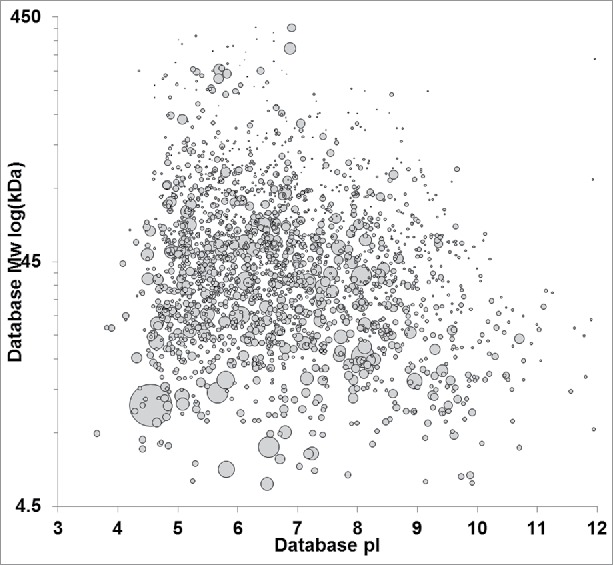
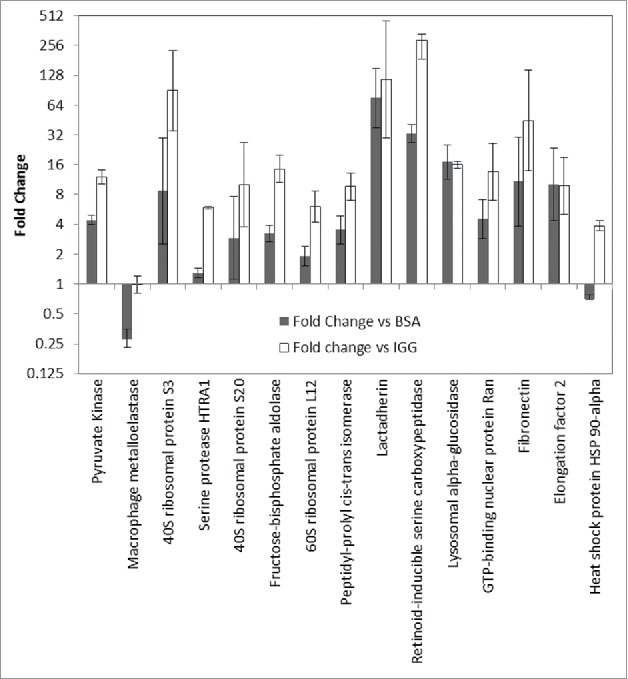
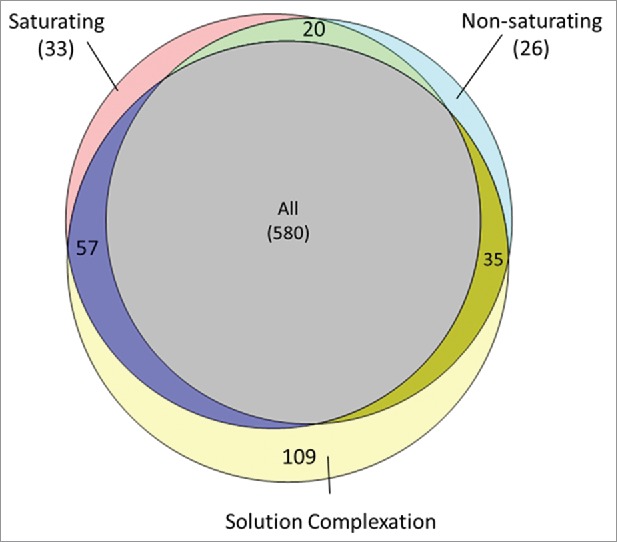
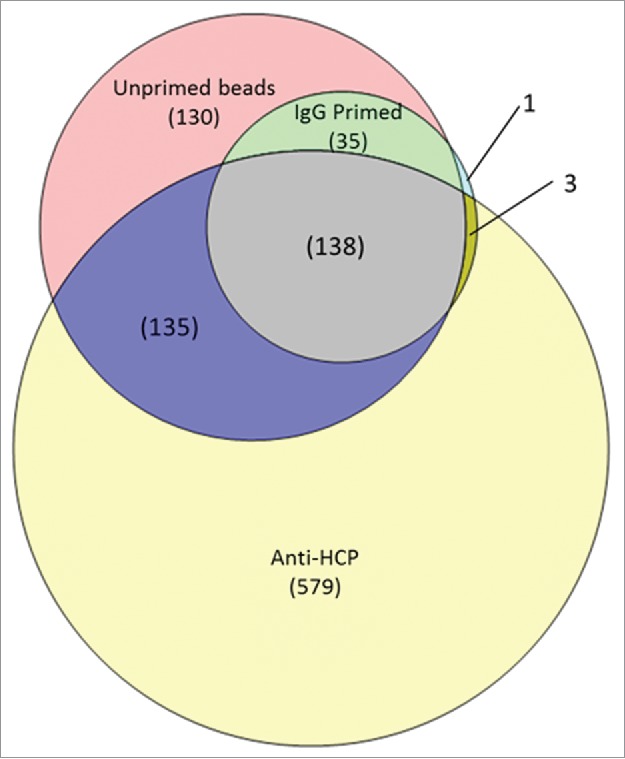
Host cell proteins (HCPs) must be adequately removed from recombinant therapeutics by downstream processing to ensure patient safety, product quality, and regulatory compliance. HCP process clearance is typically monitored by enzyme-linked immunosorbent assay (ELISA) using a polyclonal reagent. Recently, mass spectrometry (MS) has been used to identify specific HCP process impurities and monitor their clearance. Despite this capability, ELISA remains the preferred analytical approach due to its simplicity and throughput. There are, however, inherent difficulties reconciling the protein-centric results of MS characterization with ELISA, or providing assurance that ELISA has acceptable coverage against all process-specific HCP impurities that could pose safety or efficacy risks. Here, we describe efficient determination of ELISA reagent coverage by proteomic analysis following affinity purification with a polyclonal anti-HCP reagent (AP-MS). The resulting HCP identifications can be compared with the actual downstream process impurities for a given process to enable a highly focused assessment of ELISA reagent suitability. We illustrate the utility of this approach by performing coverage evaluation of an anti-HCP polyclonal against both an HCP immunogen and the downstream HCP impurities identified in a therapeutic monoclonal antibody after Protein A purification. The overall goal is to strategically implement affinity-based mass spectrometry as part of a holistic framework for evaluating HCP process clearance, ELISA reagent coverage, and process clearance risks. We envision coverage analysis by AP-MS will further enable a framework for HCP impurity analysis driven by characterization of actual product-specific process impurities, complimenting analytical methods centered on consideration of the total host cell proteome.
宿主细胞蛋白(HCPs)必须通过下游处理从重组治疗剂中充分去除,以确保患者安全、产品质量和法规遵从性。HCP 工艺清除通常通过酶联免疫吸附测定(ELISA)使用多克隆试剂进行监测。最近,质谱(MS)已被用于鉴定特定的 HCP 工艺杂质并监测其清除。尽管具有这种能力,但 ELISA 仍然是首选的分析方法,因为它简单且具有高通量。然而,将 MS 特征的以蛋白质为中心的结果与 ELISA 进行协调,或者提供保证 ELISA 对所有可能构成安全性或疗效风险的特定于工艺的 HCP 杂质具有可接受的覆盖范围,存在固有困难。在这里,我们描述了通过使用多克隆抗 HCP 试剂(AP-MS)进行亲和纯化后的蛋白质组学分析来有效确定 ELISA 试剂的覆盖范围。可以将得到的 HCP 鉴定结果与给定工艺的实际下游工艺杂质进行比较,以便对 ELISA 试剂的适用性进行高度集中的评估。我们通过对 HCP 免疫原和 Protein A 纯化后治疗性单克隆抗体中鉴定的下游 HCP 杂质进行抗 HCP 多克隆的覆盖评估,说明了这种方法的实用性。总体目标是战略性地实施基于亲和力的质谱作为评估 HCP 工艺清除、ELISA 试剂覆盖范围和工艺清除风险的整体框架的一部分。我们设想通过 AP-MS 进行的覆盖分析将进一步实现由实际产品特定工艺杂质的特征描述驱动的 HCP 杂质分析框架,补充以考虑总宿主细胞蛋白质组为中心的分析方法。