Rohrs Jennifer A, Sulistio Christopher D, Finley Stacey D
Department of Biomedical Engineering, University of Southern California, Los Angeles, CA.
Mork Family Department of Chemical Engineering and Materials Science, University of Southern California, Los Angeles, CA.
NPJ Syst Biol Appl. 2016;2:16030-. doi: 10.1038/npjsba.2016.30. Epub 2016 Oct 20.
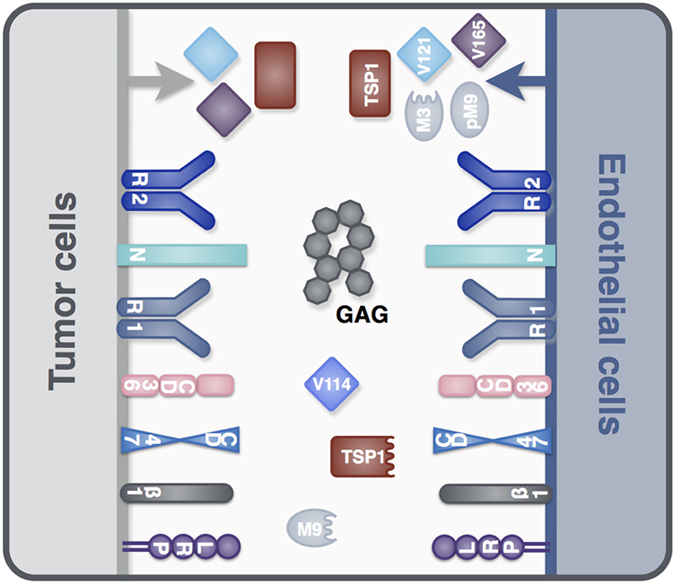
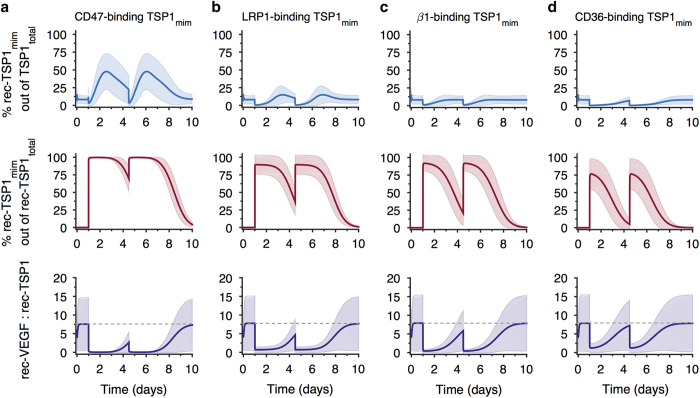
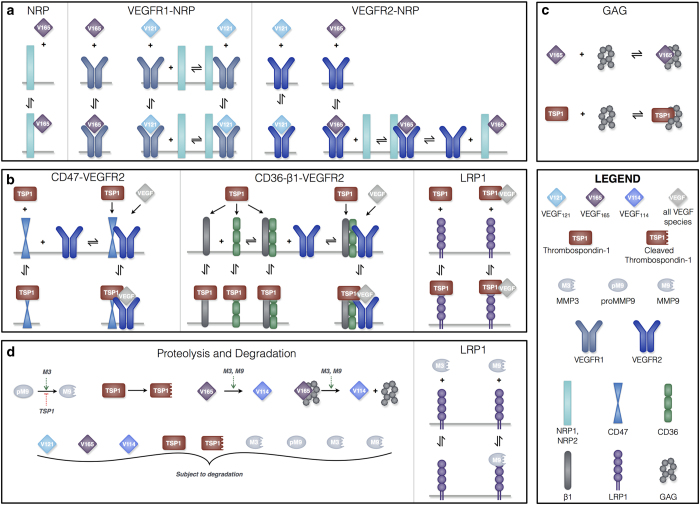
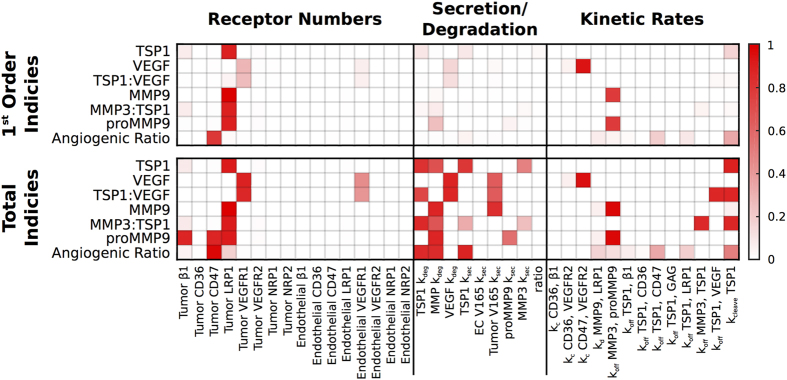
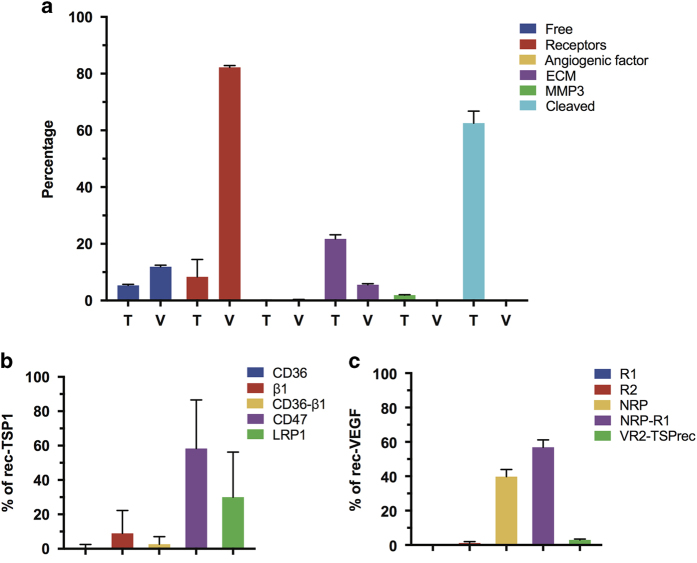
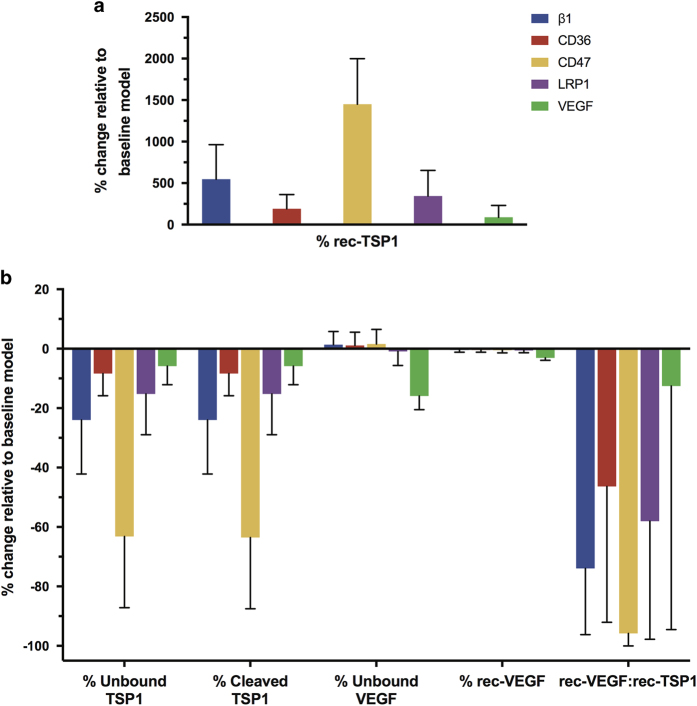
Angiogenesis, the formation of new blood capillaries from pre-existing vessels, is a hallmark of cancer. Thus far, strategies for reducing tumor angiogenesis have focused on inhibiting pro-angiogenic factors, while less is known about the therapeutic effects of mimicking the actions of angiogenesis inhibitors. Thrombospondin-1 (TSP1) is an important endogenous inhibitor of angiogenesis that has been investigated as an anti-angiogenic agent. TSP1 impedes the growth of new blood vessels in many ways, including crosstalk with pro-angiogenic factors. Due to the complexity of TSP1 signaling, a predictive systems biology model would provide quantitative understanding of the angiogenic balance in tumor tissue. Therefore, we have developed a molecular-detailed, mechanistic model of TSP1 and vascular endothelial growth factor (VEGF), a promoter of angiogenesis, in breast tumor tissue. The model predicts the distribution of the angiogenic factors in tumor tissue, revealing that TSP1 is primarily in an inactive, cleaved form due to the action of proteases, rather than bound to its cellular receptors or to VEGF. The model also predicts the effects of enhancing TSP1's interactions with its receptors and with VEGF. To provide additional predictions that can guide the development of new anti-angiogenic drugs, we simulate administration of exogenous TSP1 mimetics that bind specific targets. The model predicts that the CD47-binding TSP1 mimetic dramatically decreases the ratio of receptor-bound VEGF to receptor-bound TSP1, in favor of anti-angiogenesis. Thus, we have established a model that provides a quantitative framework to study the response to TSP1 mimetics.
血管生成是指从已有的血管形成新的毛细血管,是癌症的一个标志。到目前为止,减少肿瘤血管生成的策略主要集中在抑制促血管生成因子上,而对于模拟血管生成抑制剂作用的治疗效果了解较少。血小板反应蛋白-1(TSP1)是一种重要的内源性血管生成抑制剂,已被作为一种抗血管生成药物进行研究。TSP1通过多种方式阻碍新血管的生长,包括与促血管生成因子的相互作用。由于TSP1信号传导的复杂性,一个预测性的系统生物学模型将有助于定量理解肿瘤组织中的血管生成平衡。因此,我们建立了一个分子细节的、机制性的模型,用于研究乳腺肿瘤组织中TSP1和血管内皮生长因子(VEGF,一种血管生成促进因子)的相互作用。该模型预测了肿瘤组织中血管生成因子的分布,结果显示由于蛋白酶的作用,TSP1主要以无活性的裂解形式存在,而不是与细胞受体或VEGF结合。该模型还预测了增强TSP1与受体以及与VEGF相互作用的效果。为了提供更多能够指导新型抗血管生成药物研发的预测信息,我们模拟了结合特定靶点的外源性TSP1模拟物的给药情况。该模型预测,与CD47结合的TSP1模拟物会显著降低受体结合的VEGF与受体结合的TSP1的比例,从而有利于抗血管生成。因此,我们建立了一个模型,为研究对TSP1模拟物的反应提供了一个定量框架。