Institute of Population Health Sciences, National Health Research Institutes, Zhunan, Miaoli County 350, Taiwan, Republic of China.
Genome Res. 2017 Sep;27(9):1513-1524. doi: 10.1101/gr.221739.117. Epub 2017 Jul 18.
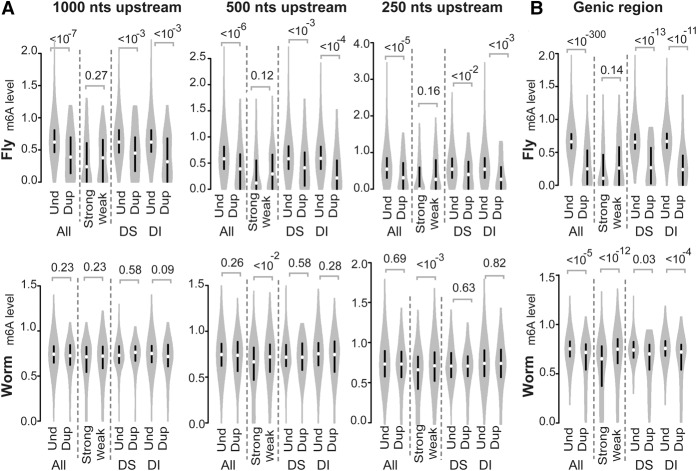
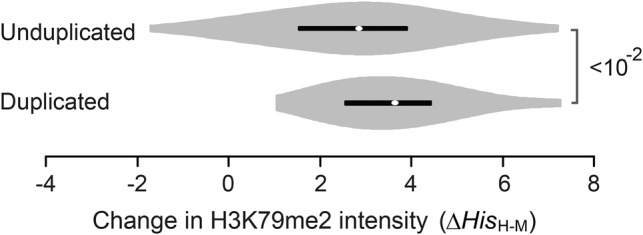
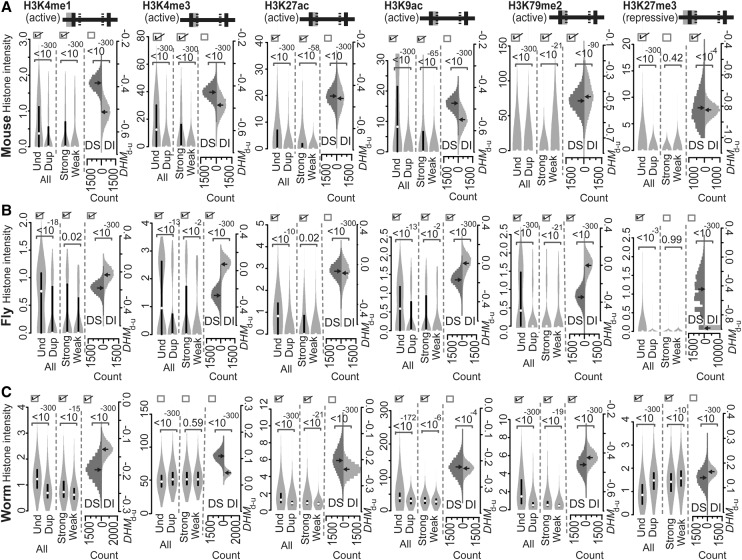
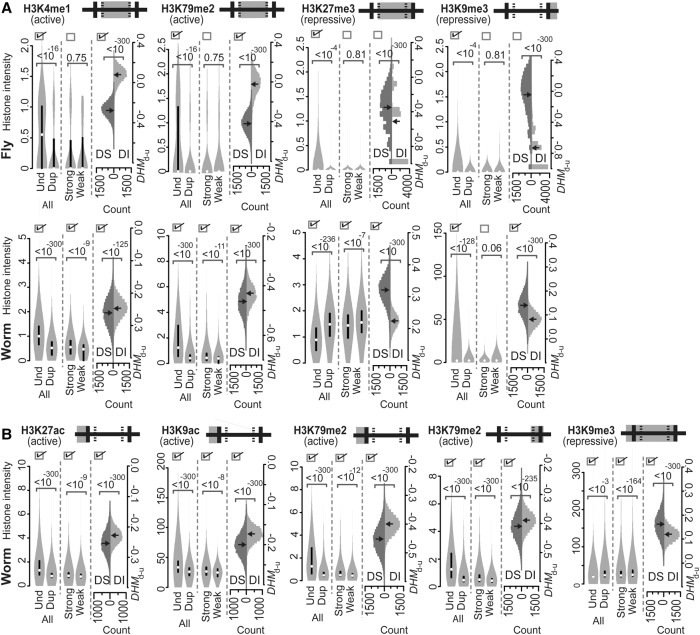
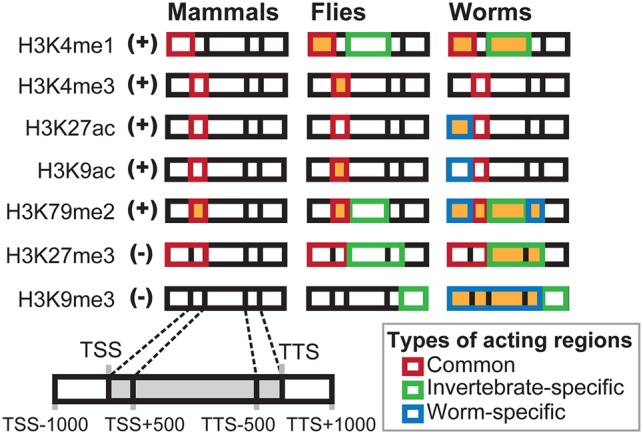
Following gene duplication, mRNA expression of the duplicated gene is reduced to maintain mRNA dosage. In mammals, this process is achieved with increased cytosine DNA methylation of the promoters of duplicated genes to suppress transcriptional initiation. However, not all animal species possess a full apparatus for cytosine DNA methylation. For such species, such as the roundworm (, "worm" hereafter) or fruit fly (, "fly" hereafter), it is unclear how reduced expression of duplicated genes has been achieved evolutionarily. Here, we hypothesize that in the absence of a classical cytosine DNA methylation pathway, histone modifications play an increasing role in maintaining mRNA dosage following gene duplication. We initially verified that reduced gene expression of duplicated genes had occurred in the worm, fly, and mouse (). Next, several histone marks, with the capacity to control mRNA abundance in the models studied, were examined. In the worm and fly, but not in the mouse, multiple histone modifications were found to assist mRNA dosage maintenance following gene duplication events and the possible involvement of adenine DNA methylation in this process was excluded. Furthermore, the histone marks and acting regions that mediated the reduction in duplicated gene expression were found to be largely organism specific. Thus, it appears that many of the histone marks that maintain mRNA dosage were independently recruited during the evolution of worms and flies to compensate for the loss of cytosine DNA methylation machinery from their genomes.
基因复制后,为了维持 mRNA 剂量,复制基因的 mRNA 表达会减少。在哺乳动物中,这一过程通过增加复制基因启动子的胞嘧啶 DNA 甲基化来抑制转录起始来实现。然而,并非所有动物物种都拥有完整的胞嘧啶 DNA 甲基化装置。对于这些物种,如蛔虫(以下简称“蠕虫”)或果蝇(以下简称“果蝇”),尚不清楚复制基因的表达减少是如何在进化过程中实现的。在这里,我们假设在缺乏经典的胞嘧啶 DNA 甲基化途径的情况下,组蛋白修饰在基因复制后维持 mRNA 剂量方面发挥着越来越重要的作用。我们最初验证了蠕虫、果蝇和小鼠中复制基因的表达减少()。接下来,研究了几种具有在研究模型中控制 mRNA 丰度能力的组蛋白标记。在蠕虫和果蝇中,但在小鼠中,发现多种组蛋白修饰有助于基因复制事件后的 mRNA 剂量维持,并且排除了腺嘌呤 DNA 甲基化在该过程中的可能参与。此外,介导复制基因表达减少的组蛋白标记和作用区域在很大程度上是特定于生物体的。因此,似乎在蠕虫和果蝇的进化过程中,有许多维持 mRNA 剂量的组蛋白标记被独立招募,以弥补它们基因组中失去的胞嘧啶 DNA 甲基化机制。