Kamimura Naomi, Ichimiya Harumi, Iuchi Katsuya, Ohta Shigeo
Department of Biochemistry and Cell Biology, Institute of Development and Aging Sciences, Graduate School of Medicine, Nippon Medical School, Kawasaki-city, Japan.
Department of Neuroregenerative Medicine, Juntendo University Graduate School of Medicine, Tokyo, Japan.
NPJ Aging Mech Dis. 2016 Apr 28;2:16008. doi: 10.1038/npjamd.2016.8. eCollection 2016.
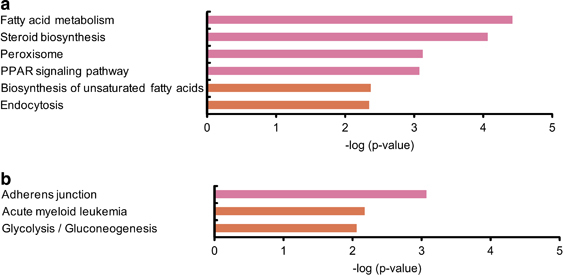
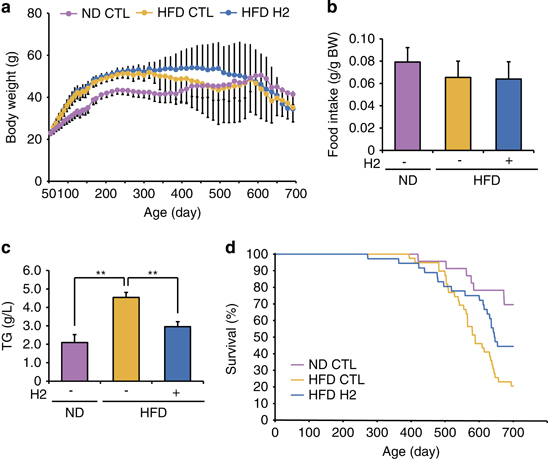
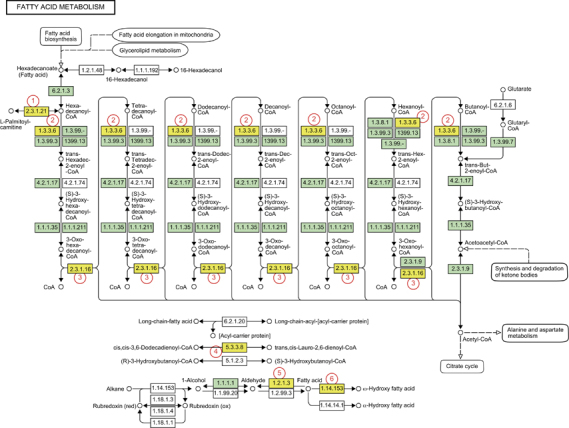
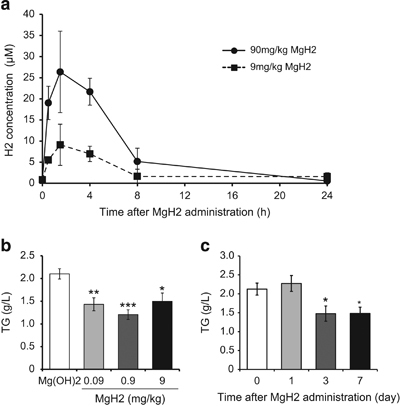
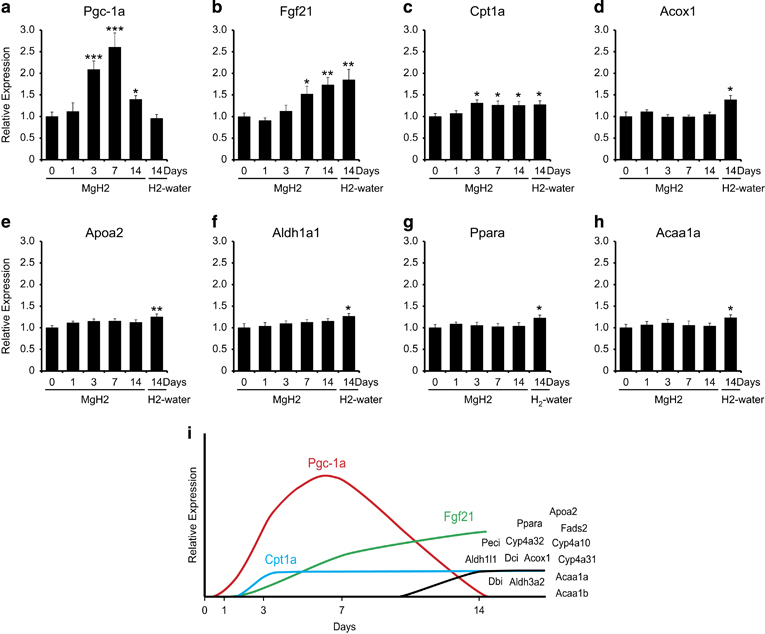
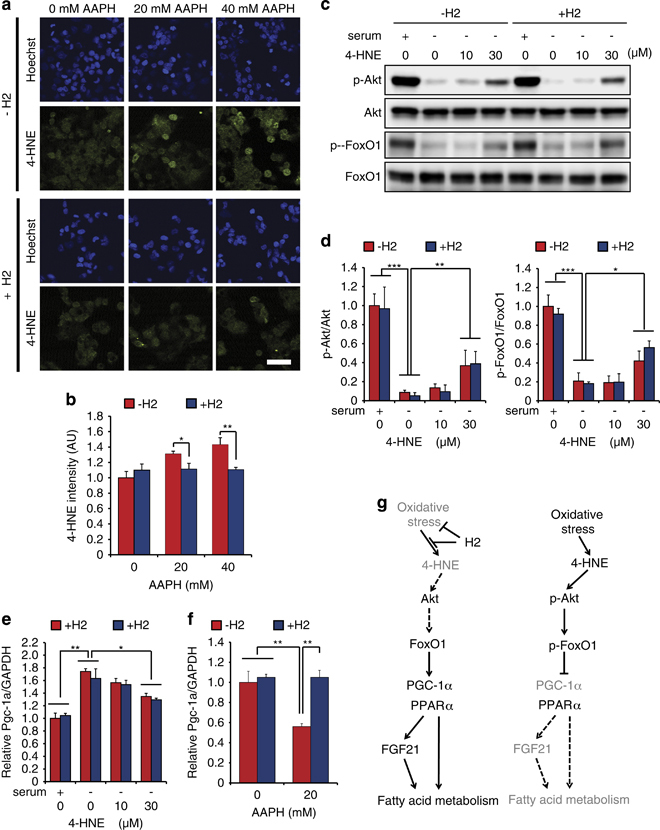
We previously reported that molecular hydrogen (H) acts as a novel antioxidant to exhibit multiple functions. Moreover, long-term drinking of H-water (water infused with H) enhanced energy expenditure to improve obesity and diabetes in / mice accompanied by the increased expression of fibroblast growth factor 21 (FGF21) by an unknown mechanism. H was ingested by drinking of H-water or by oral administration of an H-producing material, MgH. The comprehensive gene expression profile in the liver of / mice was analyzed by DNA microarray. The molecular mechanisms underlying the gene expression profile was investigated using cultured HepG2 cells. Moreover, the effects on lifespan of drinking H-water were examined using wild-type mice that were fed a fatty diet. Pathway analyses based on comprehensive gene expression revealed the increased expression of various genes involved in fatty acid and steroid metabolism. As a transcription pathway, the PPARα signaling pathway was identified to upregulate their genes by ingesting H. As an early event, the gene expression of PGC-1α was transiently increased, followed by increased expression of . The expression of might be regulated indirectly through sequential regulation by H, 4-hydroxy-2-nonenal, and Akt/FoxO1 signaling, as suggested in cultured cell experiments. In wild-type mice fed the fatty diet, H-water improved the level of plasma triglycerides and extended their average of lifespan. H induces expression of the gene, followed by stimulation of the PPARα pathway that regulates FGF21, and the fatty acid and steroid metabolism.
我们之前报道过,分子氢(H₂)作为一种新型抗氧化剂具有多种功能。此外,长期饮用富氢水(溶有H₂的水)可增加能量消耗,改善肥胖症和糖尿病小鼠的症状,同时成纤维细胞生长因子21(FGF21)的表达增加,但其机制尚不清楚。通过饮用富氢水或口服产氢物质氢化镁(MgH₂)摄入H₂。利用DNA微阵列分析了肥胖症和糖尿病小鼠肝脏中的综合基因表达谱。使用培养的HepG2细胞研究了基因表达谱背后的分子机制。此外,使用喂食高脂饮食的野生型小鼠研究了饮用富氢水对寿命的影响。基于综合基因表达的通路分析显示,参与脂肪酸和类固醇代谢的各种基因表达增加。作为一种转录途径,PPARα信号通路被确定为通过摄入H₂上调其基因。作为早期事件,PGC-1α的基因表达短暂增加,随后[此处原文缺失相关基因名称]的表达增加。如培养细胞实验所示,[此处原文缺失相关基因名称]的表达可能通过H₂、4-羟基-2-壬烯醛和Akt/FoxO1信号的顺序调节而间接受到调控。在喂食高脂饮食的野生型小鼠中,富氢水改善了血浆甘油三酯水平并延长了平均寿命。H₂诱导[此处原文缺失相关基因名称]基因的表达,随后刺激调节FGF21以及脂肪酸和类固醇代谢的PPARα途径。