Hinkula J, Petkov S, Ljungberg K, Hallengärd D, Bråve A, Isaguliants M, Falkeborn T, Sharma S, Liakina V, Robb M, Eller M, Moss B, Biberfeld G, Sandström E, Nilsson C, Markland K, Blomberg P, Wahren B
Department of Clinical and Experimental Medicine, Linköping University, 58183 Linköping, Sweden.
Department of Microbiology Tumor and Cell Biology, Karolinska Institutet, 17177 Stockholm, Sweden.
Heliyon. 2017 Jun 29;3(6):e00339. doi: 10.1016/j.heliyon.2017.e00339. eCollection 2017 Jun.
In order to develop a more effective prophylactic HIV-1 vaccine it is important optimize the components, improve Envelope glycoprotein immunogenicity as well as to explore prime-boost immunization schedules. It is also valuable to include several HIV-1 subtype antigens representing the world-wide epidemic.
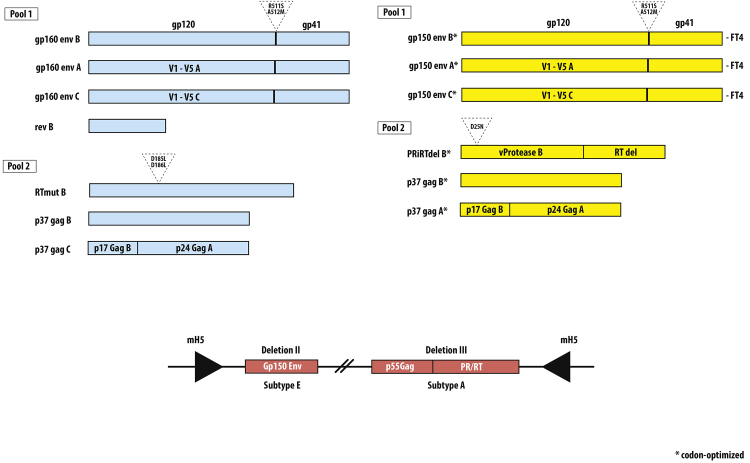
HIVIS-DNA plasmids which include Env genes of subtypes A, B and C together with Gag subtypes A and B and RTmut/Rev of subtype B were modified as follows: the Envelope sequences were shortened, codon optimized, provided with an FT4 sequence and an immunodominant region mutated. The reverse transcriptase (RT) gene was shortened to contain the most immunogenic N-terminal fragment and fused with an inactivated viral protease vPR gene. HIVISopt-DNA thus contains fewer plasmids but additional PR epitopes compared to the native HIVIS-DNA. DNA components were delivered intradermally to young Balb/c mice once, using a needle-free Biojector® immediately followed by dermal electroporation. Vaccinia-based MVA-CMDR boosts including Env gene E and Gag-RT genes A were delivered intramuscularly by needle, once or twice.
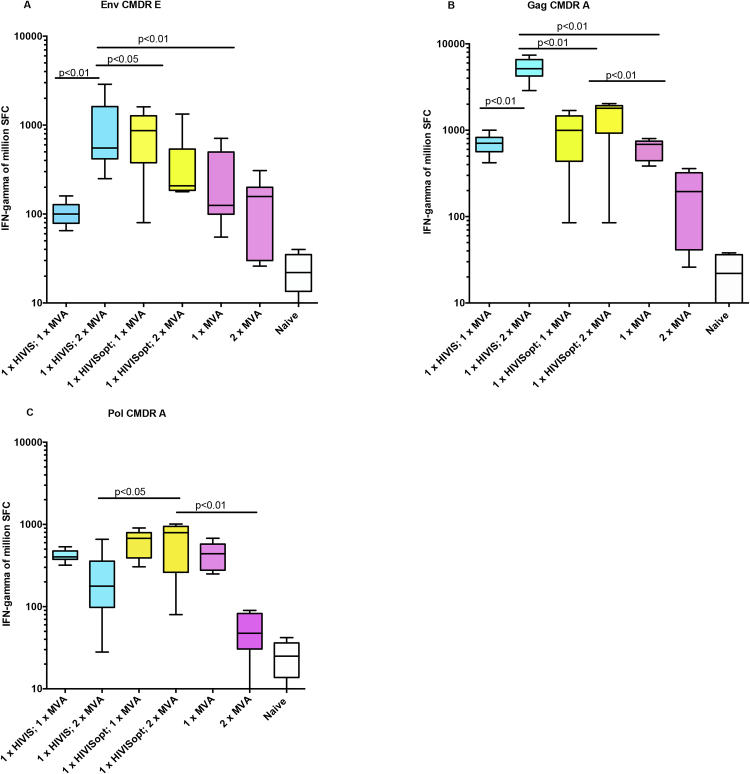
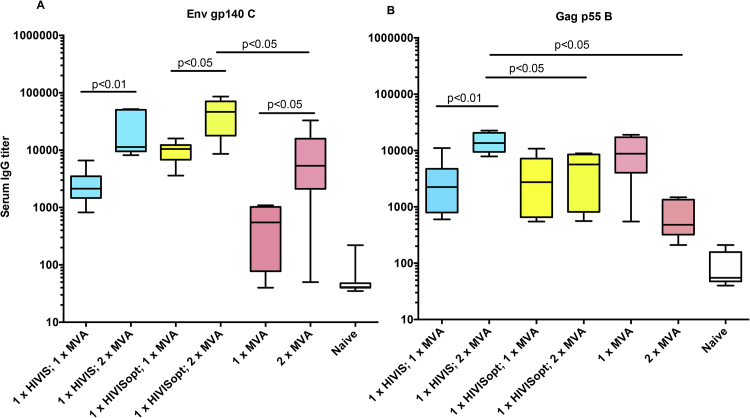
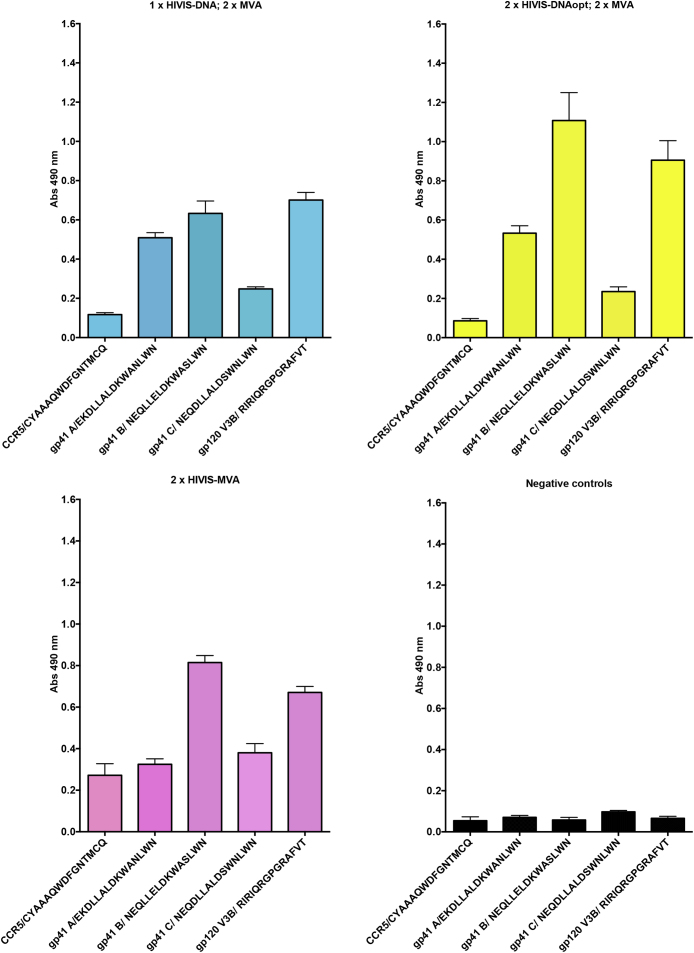
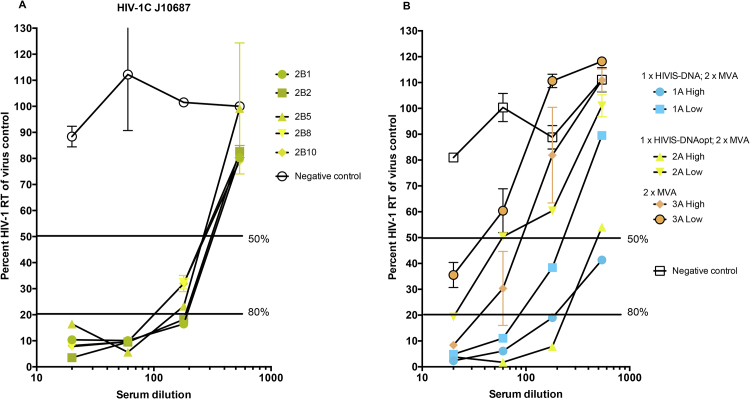
Both HIVIS-DNA and HIVISopt-DNA primed humoral and cell mediated responses well. When boosted with heterologous MVA-CMDR (subtypes A and E) virus inhibitory neutralizing antibodies were obtained to HIV-1 subtypes A, B, C and AE. Both plasmid compositions boosted with MVA-CMDR generated HIV-1 specific cellular responses directed against HIV-1 Env, Gag and Pol, as measured by IFNγ ELISpot. It was shown that DNA priming augmented the vector MVA immunological boosting effects, the HIVISopt-DNA with a trend to improved (Env) neutralization, the HIVIS-DNA with a trend to better (Gag) cell mediated immune reponses.
HIVIS-DNA was modified to obtain HIVISopt-DNA that had fewer plasmids, and additional epitopes. Even with one DNA prime followed by two MVA-CMDR boosts, humoral and cell-mediated immune responses were readily induced by priming with either DNA construct composition. Priming by HIV-DNA augmented neutralizing antibody responses revealed by boosting with the vaccinia-based heterologous sequences. Cellular and antibody responses covered selected strains representing HIV-1 subtypes A, B, C and CRF01_AE. We assume this is related to the inclusion of heterologous full genes in the vaccine schedule.
为研发更有效的预防性HIV-1疫苗,优化疫苗成分、提高包膜糖蛋白免疫原性以及探索初免-加强免疫方案至关重要。纳入代表全球流行情况的多种HIV-1亚型抗原也很有价值。
对包含A、B和C亚型Env基因以及A亚型Gag和B亚型RTmut/Rev的HIVIS-DNA质粒进行如下修饰:缩短包膜序列、优化密码子、添加FT4序列并使免疫显性区域发生突变。将逆转录酶(RT)基因缩短至仅包含免疫原性最强的N端片段,并与失活的病毒蛋白酶vPR基因融合。因此,与天然HIVIS-DNA相比,HIVISopt-DNA质粒数量减少但增加了PR表位。使用无针Biojector®将DNA成分皮内注射给年幼的Balb/c小鼠一次,随后立即进行皮肤电穿孔。基于痘苗病毒的MVA-CMDR加强免疫包括Env基因E和Gag-RT基因A,通过针头肌肉注射一次或两次。
HIVIS-DNA和HIVISopt-DNA均能很好地引发体液免疫和细胞介导免疫反应。当用异源MVA-CMDR(A和E亚型)加强免疫时,可获得针对HIV-1 A、B、C和AE亚型的病毒抑制性中和抗体。通过IFNγ ELISpot检测发现,两种质粒组合物用MVA-CMDR加强免疫后均产生了针对HIV-1 Env、Gag和Pol的HIV-1特异性细胞反应。结果表明,DNA初免增强了载体MVA的免疫加强效果,HIVISopt-DNA有提高(Env)中和作用的趋势,HIVIS-DNA有增强(Gag)细胞介导免疫反应的趋势。
对HIVIS-DNA进行修饰以获得质粒数量减少且有额外表位的HIVISopt-DNA。即使采用一次DNA初免随后两次MVA-CMDR加强免疫的方案,两种DNA构建体组合物初免均能轻易诱导体液免疫和细胞介导免疫反应。用基于痘苗病毒的异源序列加强免疫所揭示的HIV-DNA初免增强了中和抗体反应。细胞免疫和抗体反应覆盖了代表HIV-1 A、B、C和CRF01_AE亚型的选定毒株。我们认为这与疫苗方案中纳入异源全基因有关。