Falk Bryan G, Snow Ray W, Reed Robert N
U.S. Geological Survey, Fort Collins Science Center, Fort Collins, Colorado, United States of America.
National Park Service, Everglades National Park, Homestead, Florida, United States of America.
PLoS One. 2017 Jul 19;12(7):e0180791. doi: 10.1371/journal.pone.0180791. eCollection 2017.
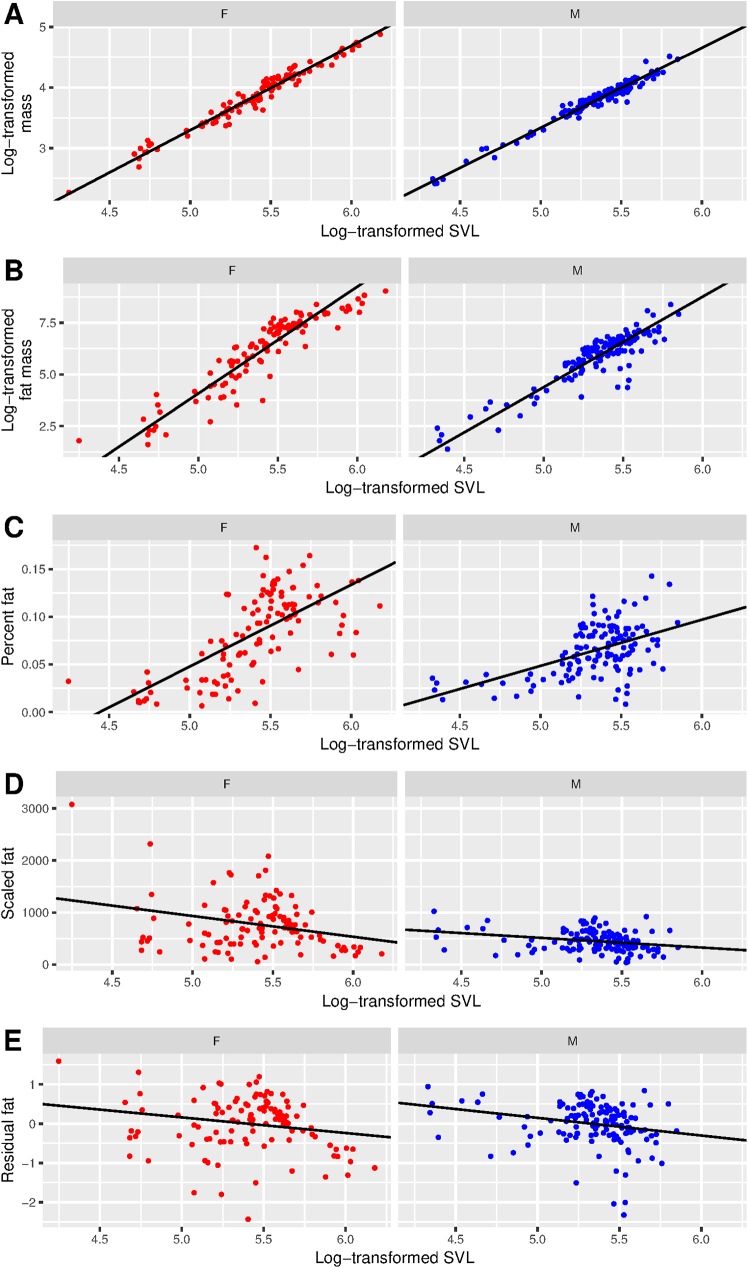
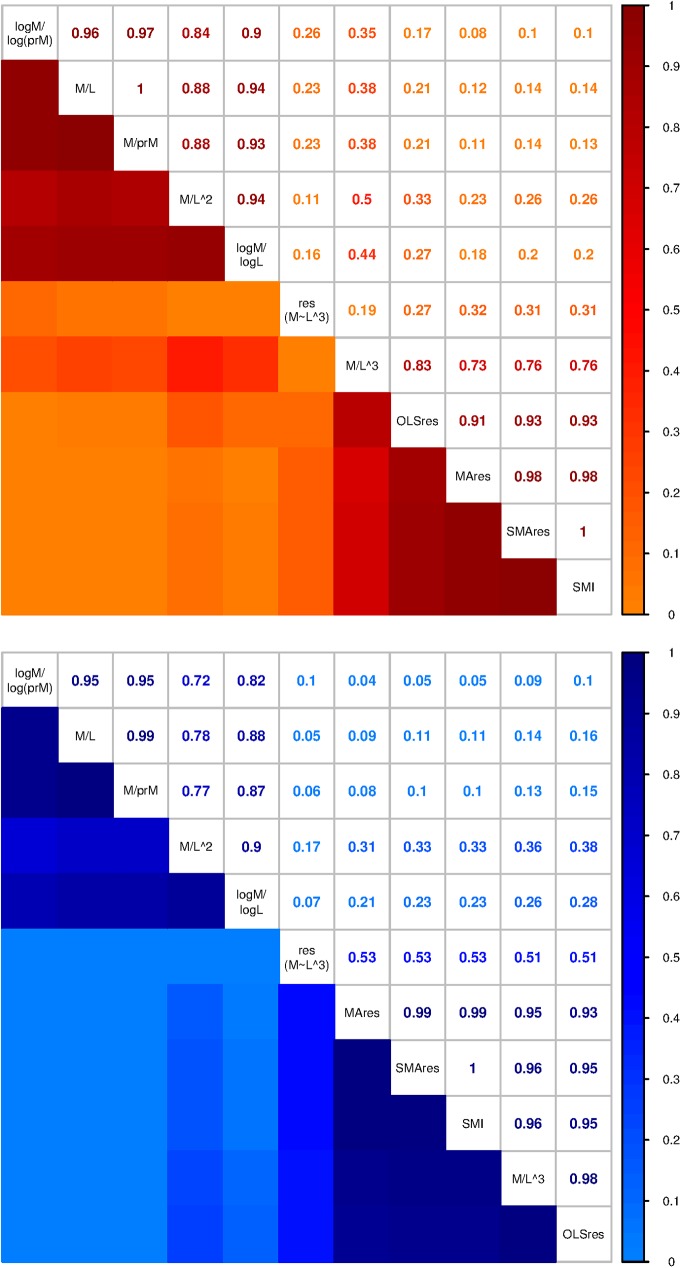
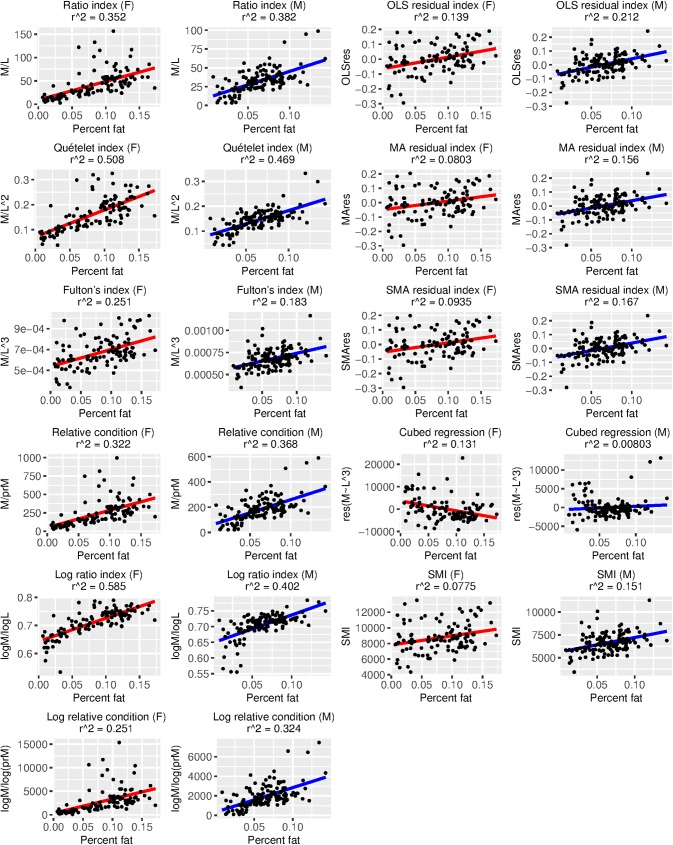
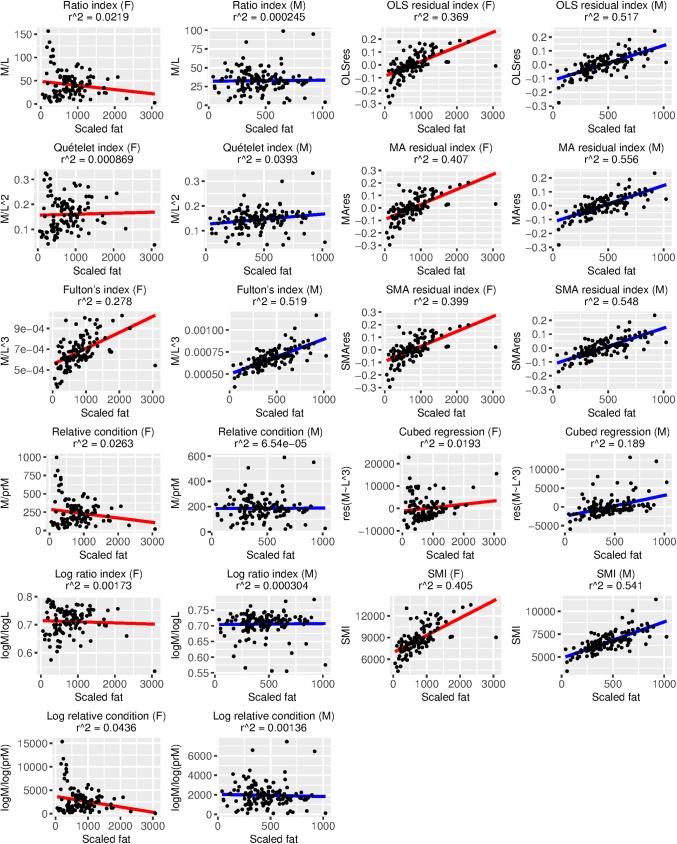
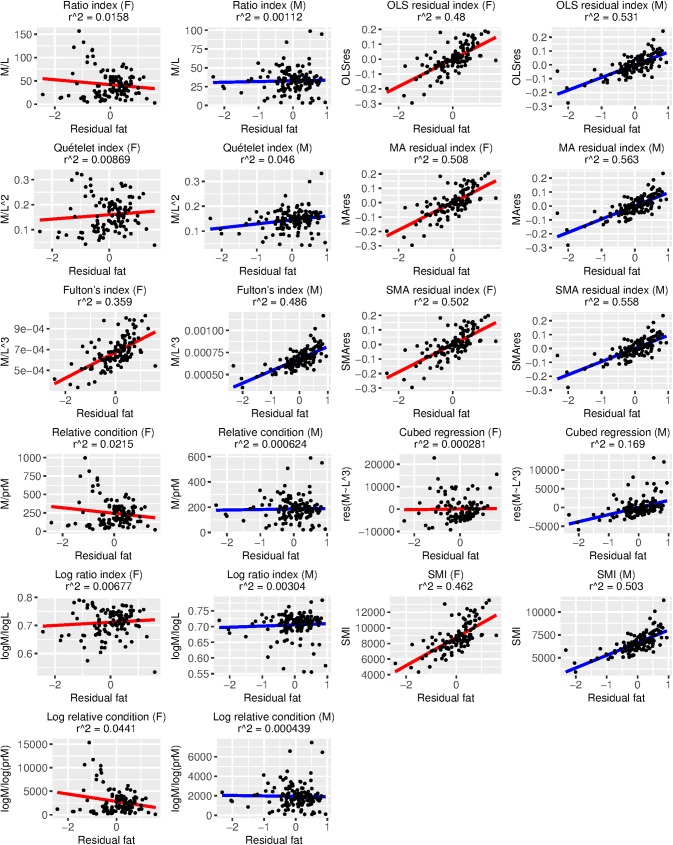
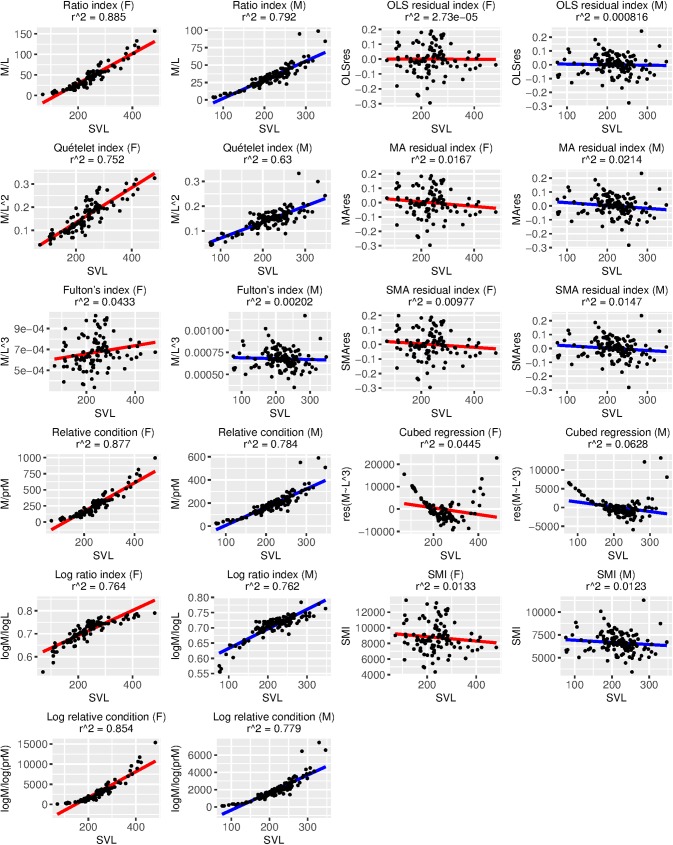
Body condition is a gauge of the energy stores of an animal, and though it has important implications for fitness, survival, competition, and disease, it is difficult to measure directly. Instead, body condition is frequently estimated as a body condition index (BCI) using length and mass measurements. A desirable BCI should accurately reflect true body condition and be unbiased with respect to size (i.e., mean BCI estimates should not change across different length or mass ranges), and choosing the most-appropriate BCI is not straightforward. We evaluated 11 different BCIs in 248 Burmese pythons (Python bivittatus), organisms that, like other snakes, exhibit simple body plans well characterized by length and mass. We found that the length-mass relationship in Burmese pythons is positively allometric, where mass increases rapidly with respect to length, and this allowed us to explore the effects of allometry on BCI verification. We employed three alternative measures of 'true' body condition: percent fat, scaled fat, and residual fat. The latter two measures mostly accommodated allometry in true body condition, but percent fat did not. Our inferences of the best-performing BCIs depended heavily on our measure of true body condition, with most BCIs falling into one of two groups. The first group contained most BCIs based on ratios, and these were associated with percent fat and body length (i.e., were biased). The second group contained the scaled mass index and most of the BCIs based on linear regressions, and these were associated with both scaled and residual fat but not body length (i.e., were unbiased). Our results show that potential differences in measures of true body condition should be explored in BCI verification studies, particularly in organisms undergoing allometric growth. Furthermore, the caveats of each BCI and similarities to other BCIs are important to consider when determining which BCI is appropriate for any particular taxon.
身体状况是衡量动物能量储备的一个指标,尽管它对健康、生存、竞争和疾病有重要影响,但却难以直接测量。相反,身体状况通常通过使用体长和体重测量值来估算为身体状况指数(BCI)。理想的BCI应准确反映真实的身体状况,并且在大小方面无偏差(即BCI的平均估计值在不同的体长或体重范围内不应改变),而选择最合适的BCI并非易事。我们对248条缅甸蟒(Python bivittatus)评估了11种不同的BCI,缅甸蟒与其他蛇类一样,具有简单的身体结构,很好地以体长和体重来表征。我们发现缅甸蟒的体长-体重关系呈正异速生长,即体重相对于体长迅速增加,这使我们能够探究异速生长对BCI验证的影响。我们采用了三种“真实”身体状况的替代测量方法:脂肪百分比、缩放脂肪和残余脂肪。后两种测量方法在很大程度上考虑了真实身体状况中的异速生长,但脂肪百分比没有。我们对表现最佳的BCI的推断在很大程度上取决于我们对真实身体状况的测量方法,大多数BCI分为两组。第一组包含大多数基于比率的BCI,这些与脂肪百分比和体长相关(即有偏差)。第二组包含缩放质量指数和大多数基于线性回归的BCI,这些与缩放脂肪和残余脂肪都相关,但与体长无关(即无偏差)。我们的结果表明,在BCI验证研究中应探究真实身体状况测量方法中的潜在差异,特别是在经历异速生长的生物中。此外,在确定哪种BCI适用于任何特定分类群时,考虑每种BCI的注意事项以及与其他BCI的相似性很重要。