Keating Jessica, Affleck-Brodie Caitlin, Wiegand Ronny, Morcom Alexa M
School of Psychology, Philosophy and Language Sciences, University of Edinburgh, Edinburgh, United Kingdom.
Centre for Cognitive Ageing and Cognitive Epidemiology, University of Edinburgh, Edinburgh, United Kingdom.
PLoS One. 2017 Jul 20;12(7):e0180367. doi: 10.1371/journal.pone.0180367. eCollection 2017.
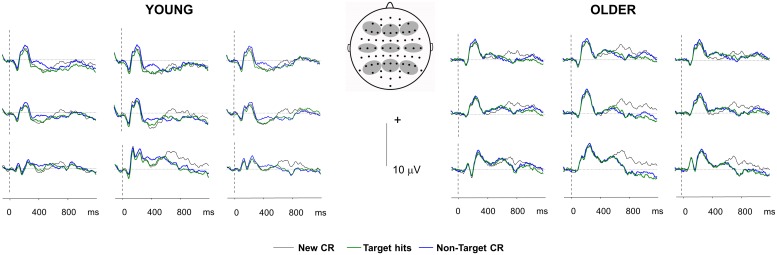
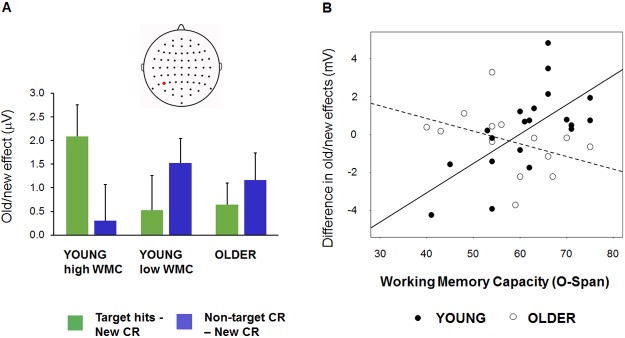
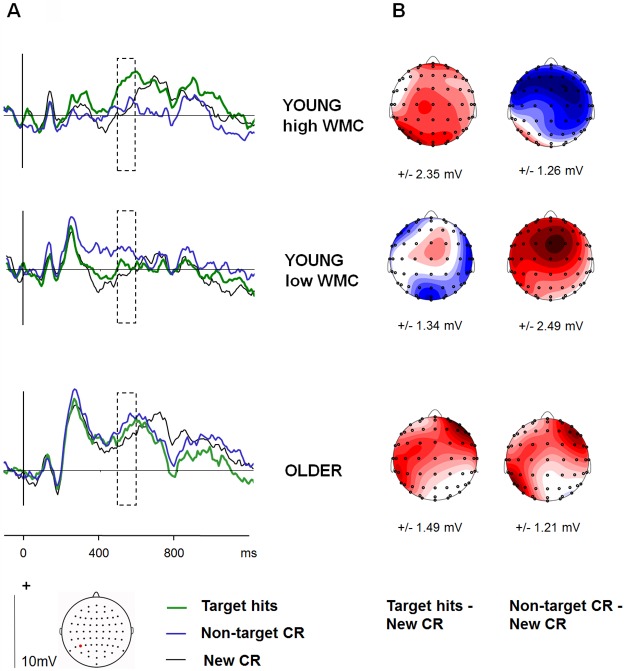
The present study investigated the role of working memory capacity (WMC) in the control of recollection in young and older adults. We used electroencephalographic event-related potentials (ERPs) to examine the effects of age and of individual differences in WMC on the ability to prioritize recollection according to current goals. Targets in a recognition exclusion task were words encoded using two alternative decisions. The left parietal ERP old/new effect was used as an electrophysiological index of recollection, and the selectivity of recollection measured in terms of the difference in its magnitude according to whether recognized items were targets or non-targets. Young adults with higher WMC showed greater recollection selectivity than those with lower WMC, while older adults showed nonselective recollection which did not vary with WMC. The data suggest that aging impairs the ability to engage cognitive control effectively to prioritize what will be recollected.
本研究调查了工作记忆容量(WMC)在年轻人和老年人记忆控制中的作用。我们使用脑电图事件相关电位(ERP)来检验年龄和WMC个体差异对根据当前目标对记忆进行优先排序能力的影响。识别排除任务中的目标是使用两种替代决策编码的单词。左顶叶ERP新旧效应被用作记忆的电生理指标,记忆的选择性通过根据识别项目是目标还是非目标来衡量其幅度差异。WMC较高的年轻人比WMC较低的年轻人表现出更高的记忆选择性,而老年人则表现出与WMC无关的非选择性记忆。数据表明,衰老会损害有效进行认知控制以对要回忆的内容进行优先排序的能力。