Department of Translational Molecular Pathology, The University of Texas MD Anderson Cancer Center, Houston, Texas.
Department of Thoracic/Head and Neck Medical Oncology, The University of Texas MD Anderson Cancer Center, Houston, Texas.
Mol Cancer Ther. 2017 Oct;16(10):2234-2245. doi: 10.1158/1535-7163.MCT-17-0148. Epub 2017 Jul 20.
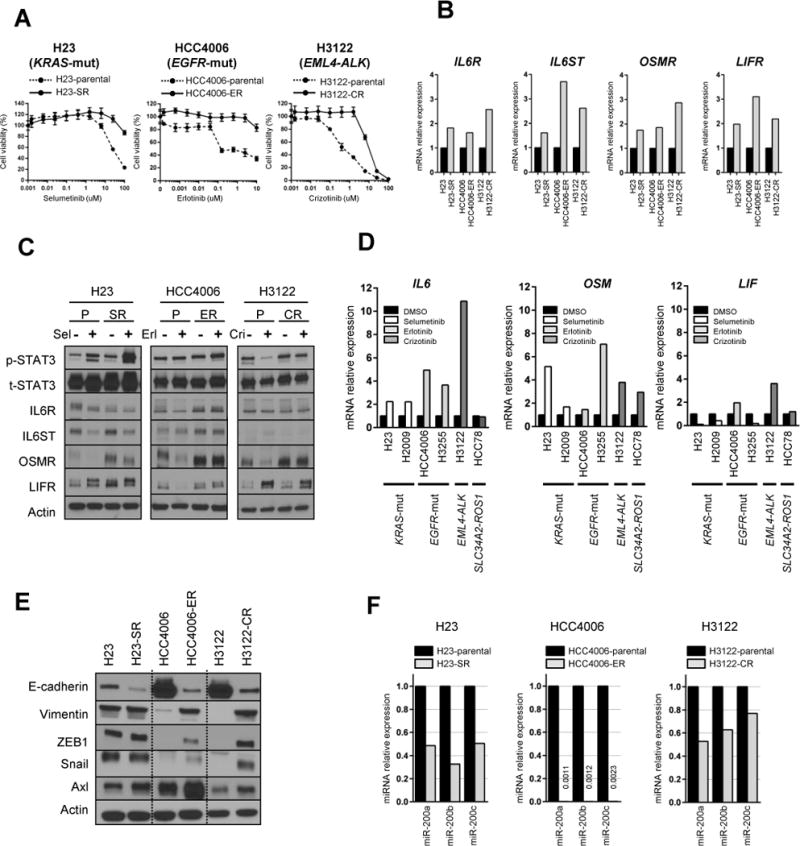
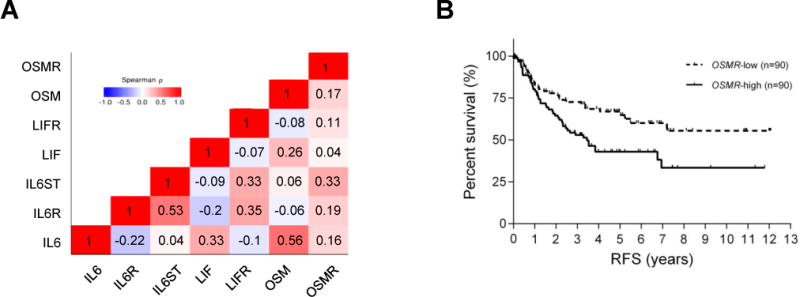
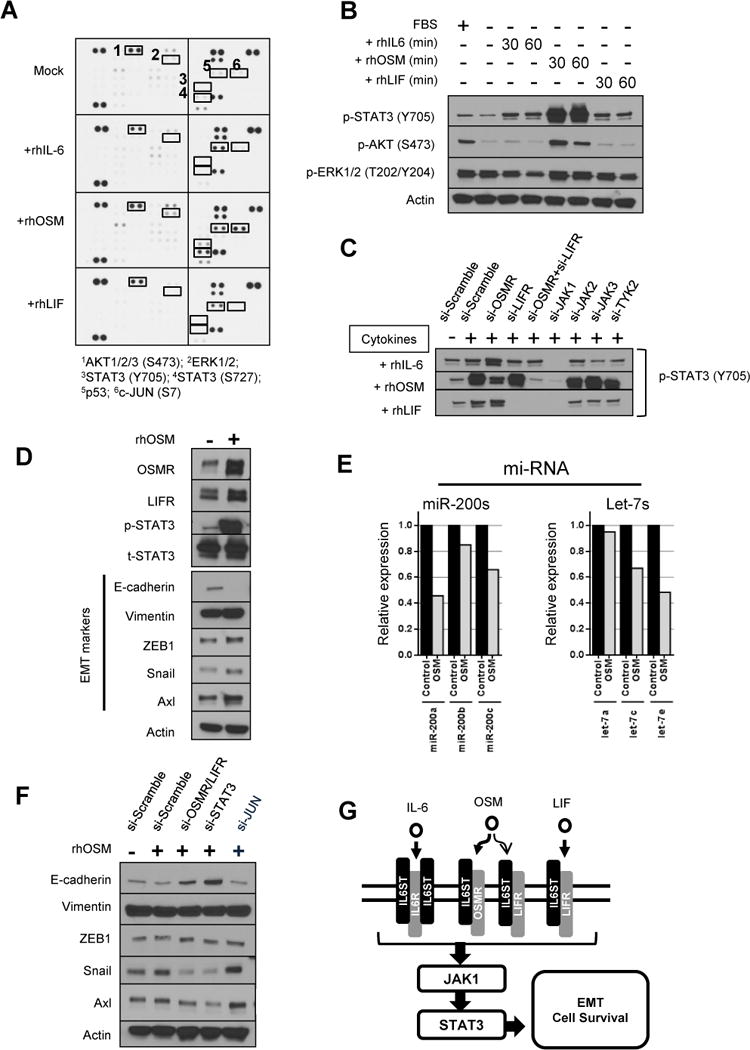
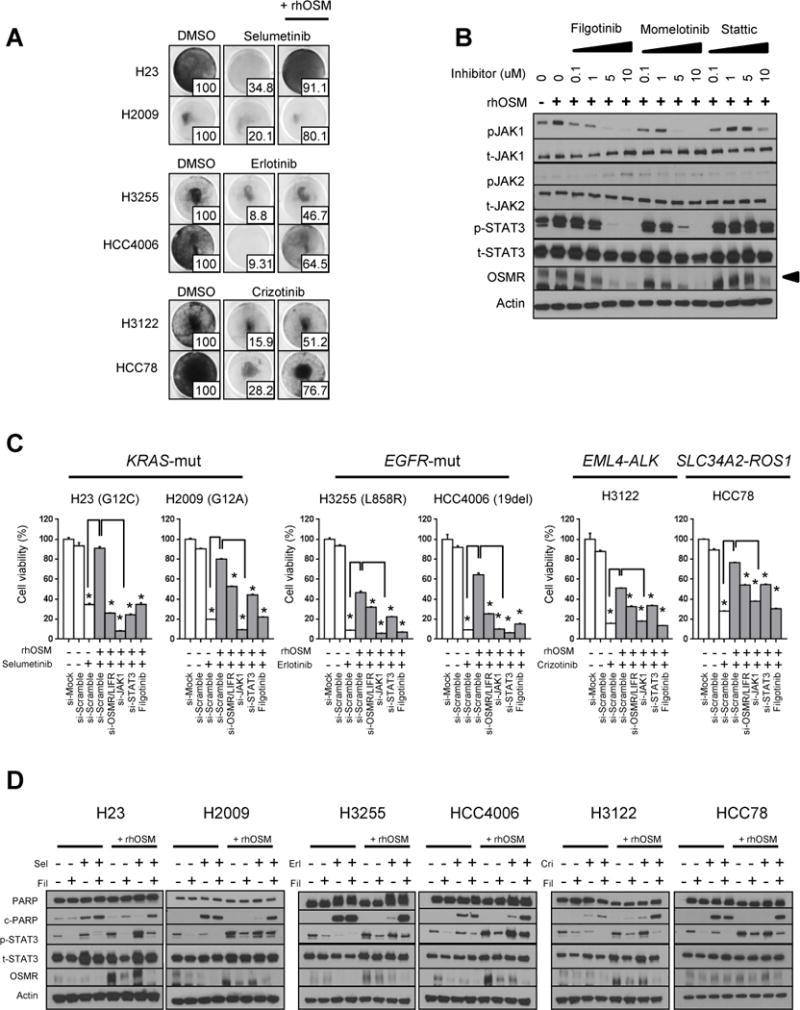
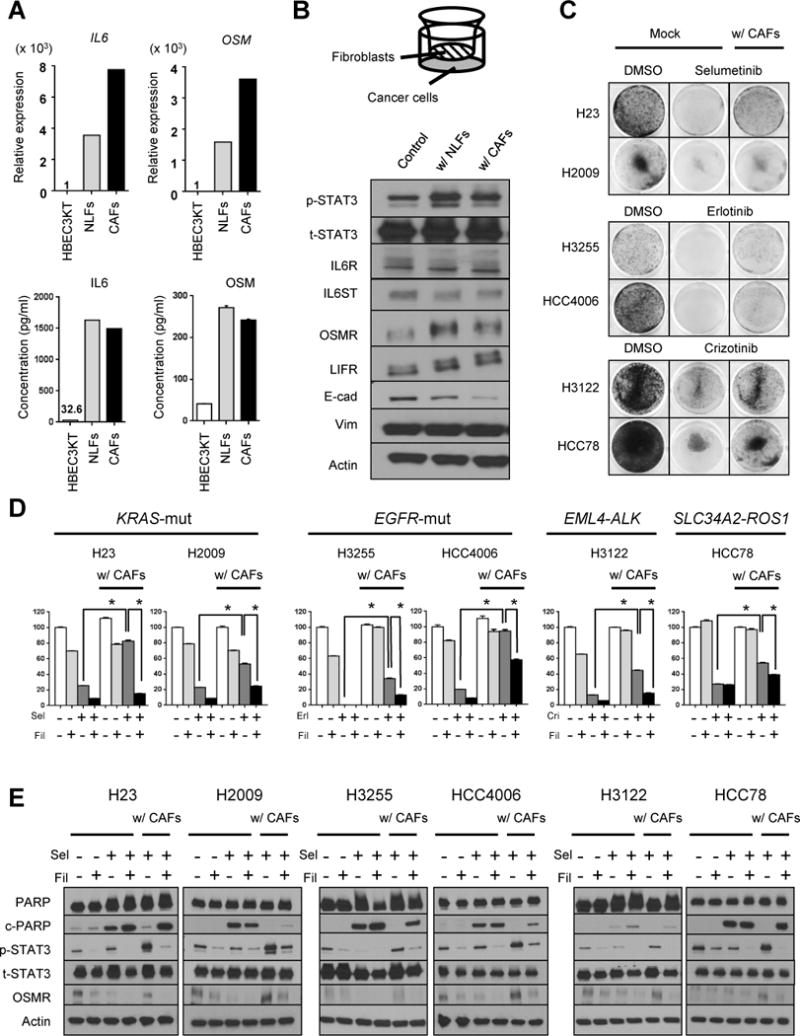
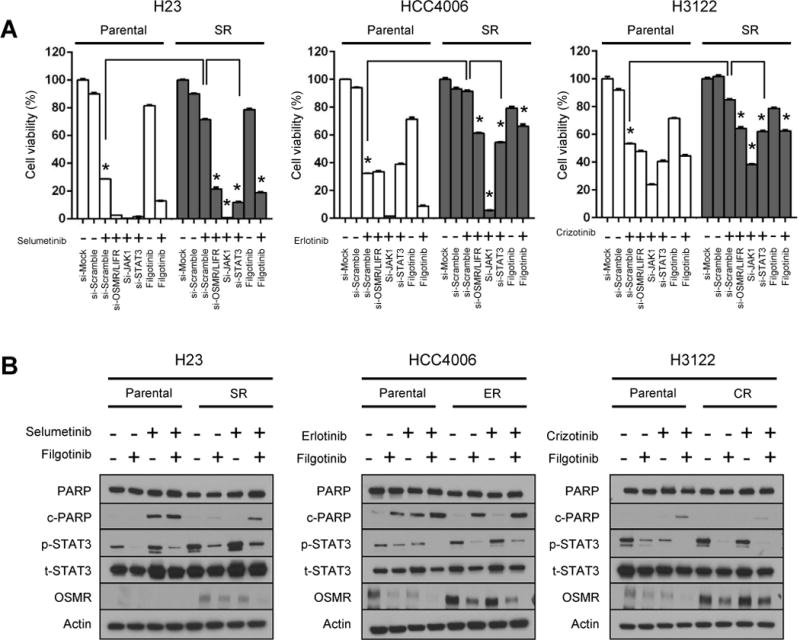
Molecularly targeted drugs have yielded significant therapeutic advances in oncogene-driven non-small cell lung cancer (NSCLC), but a majority of patients eventually develop acquired resistance. Recently, the relation between proinflammatory cytokine IL6 and resistance to targeted drugs has been reported. We investigated the functional contribution of IL6 and the other members of IL6 family proinflammatory cytokine pathway to resistance to targeted drugs in NSCLC cells. In addition, we examined the production of these cytokines by cancer cells and cancer-associated fibroblasts (CAF). We also analyzed the prognostic significance of these molecule expressions in clinical NSCLC samples. In NSCLC cells with acquired resistance to targeted drugs, we observed activation of the IL6-cytokine pathway and STAT3 along with epithelial-to-mesenchymal transition (EMT) features. In particular, IL6 family cytokine oncostatin-M (OSM) induced a switch to the EMT phenotype and protected cells from targeted drug-induced apoptosis in OSM receptors (OSMRs)/JAK1/STAT3-dependent manner. The cross-talk between NSCLC cells and CAFs also preferentially activated the OSM/STAT3 pathway via a paracrine mechanism and decreased sensitivity to targeted drugs. The selective JAK1 inhibitor filgotinib effectively suppressed STAT3 activation and OSMR expression, and cotargeting inhibition of the oncogenic pathway and JAK1 reversed resistance to targeted drugs. In the analysis of clinical samples, gene expression appeared to be associated with worse prognosis in patients with surgically resected lung adenocarcinoma. Our data suggest that the OSMRs/JAK1/STAT3 axis contributes to resistance to targeted drugs in oncogene-driven NSCLC cells, implying that this pathway could be a therapeutic target. .
分子靶向药物在驱动非小细胞肺癌(NSCLC)的致癌基因方面取得了显著的治疗进展,但大多数患者最终会产生获得性耐药。最近,有报道称促炎细胞因子 IL6 与对靶向药物的耐药性有关。我们研究了 IL6 及其它 IL6 家族促炎细胞因子途径成员对 NSCLC 细胞对靶向药物耐药性的功能贡献。此外,我们还检查了这些细胞因子在癌细胞和癌症相关成纤维细胞(CAF)中的产生情况。我们还分析了这些分子在临床 NSCLC 样本中的表达与预后的关系。在对靶向药物产生获得性耐药的 NSCLC 细胞中,我们观察到 IL6 细胞因子途径和 STAT3 的激活,以及上皮间质转化(EMT)特征。特别是,IL6 家族细胞因子成纤维细胞生长因子 23(OSM)诱导 EMT 表型的转变,并以 OSM 受体(OSMRs)/JAK1/STAT3 依赖性方式保护细胞免受靶向药物诱导的凋亡。NSCLC 细胞与 CAF 之间的串扰也通过旁分泌机制优先激活 OSM/STAT3 途径,并降低对靶向药物的敏感性。选择性 JAK1 抑制剂 filgotinib 可有效抑制 STAT3 激活和 OSMR 表达,靶向抑制致癌通路和 JAK1 可逆转对靶向药物的耐药性。在对临床样本的分析中,基因表达似乎与手术切除的肺腺癌患者的预后较差相关。我们的数据表明,OSMRs/JAK1/STAT3 轴有助于驱动致癌基因的 NSCLC 细胞对靶向药物的耐药性,这表明该途径可能是一个治疗靶点。