
癌症中的非经典WNT/PCP信号传导:Fzd6成为焦点。
Non-canonical WNT/PCP signalling in cancer: Fzd6 takes centre stage.
作者信息
Corda G, Sala A
机构信息
College of Health and Life Sciences, Brunel University London, Uxbridge, UK.
Institute of Environment, Health and Societies, Brunel University London, Uxbridge, UK.
出版信息
Oncogenesis. 2017 Jul 24;6(7):e364. doi: 10.1038/oncsis.2017.69.
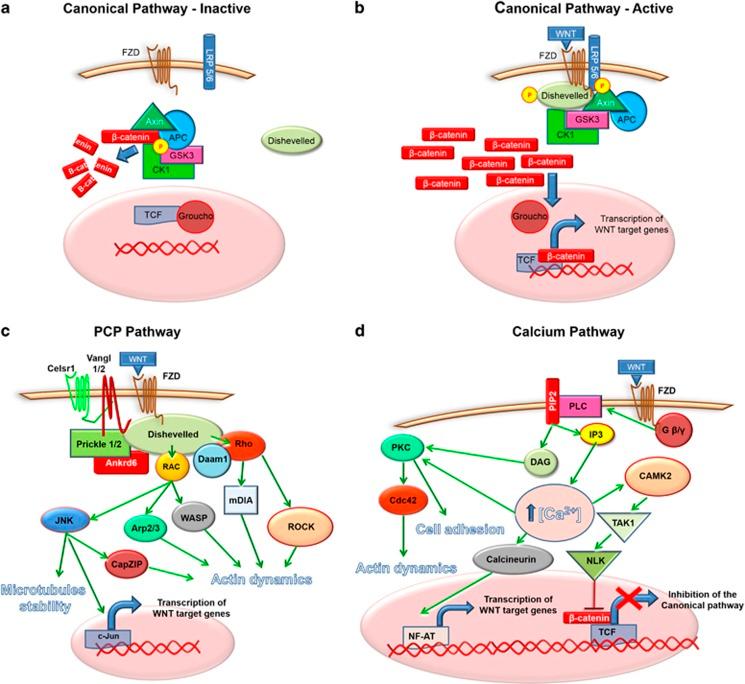
Frizzled receptors are the mediators of the wnt canonical and non-canonical pathways, which play fundamental roles in cell differentiation and organism development. A large body of work indicates that dysregulation of wnt signalling is a feature of oncogenic transformation, but most of the studies published so far focus on the assessment of the consequences of aberrations of the canonical pathway in human cancer. In this review, we discuss the emerging role of the wnt non-canonical pathway regulated by frizzled receptor 6 (Fzd6) in the pathogenesis of different types of human malignancies. The function played by Fzd6 in the physiology of normal and cancer cells has been highlighted in the view that an increased knowledge of the signalling pathways upstream and downstream of this receptor could ultimately result in the identification of new targets for cancer therapy.
卷曲受体是Wnt经典和非经典信号通路的介质,在细胞分化和生物体发育中发挥着重要作用。大量研究表明,Wnt信号失调是致癌转化的一个特征,但迄今为止发表的大多数研究都集中在评估经典信号通路异常在人类癌症中的后果。在这篇综述中,我们讨论了由卷曲受体6(Fzd6)调节的Wnt非经典信号通路在不同类型人类恶性肿瘤发病机制中的新作用。鉴于对该受体上下游信号通路的深入了解最终可能会促成癌症治疗新靶点的发现,Fzd6在正常细胞和癌细胞生理学中所起的作用已得到强调。


 Zotero 插件