Carmon Kendra S, Gong Xing, Yi Jing, Wu Ling, Thomas Anthony, Moore Catherine M, Masuho Ikuo, Timson David J, Martemyanov Kirill A, Liu Qingyun J
From the Brown Foundation Institute of Molecular Medicine and Texas Therapeutics Institute, University of Texas Health Science Center, Houston, Texas 77030.
Department of Cancer Biology, University of Texas M. D. Anderson Cancer Center, Houston, Texas 77030.
J Biol Chem. 2017 Sep 8;292(36):14989-15001. doi: 10.1074/jbc.M117.786798. Epub 2017 Jul 24.
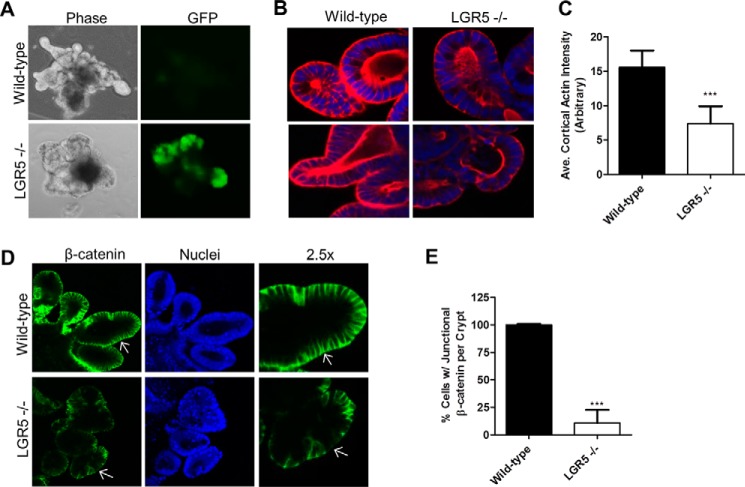
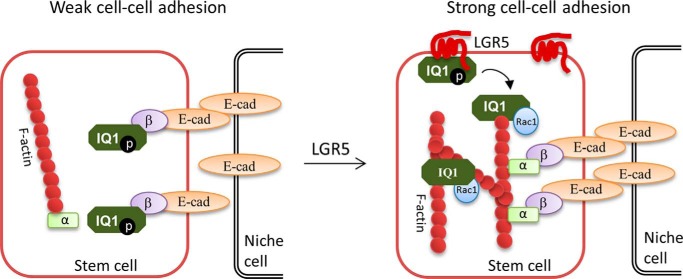
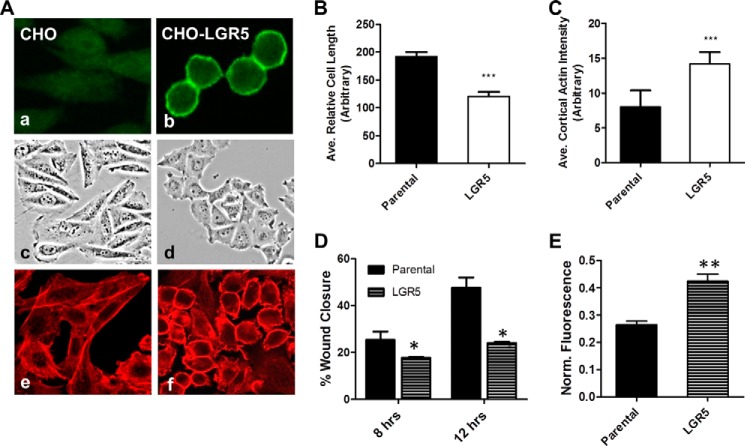
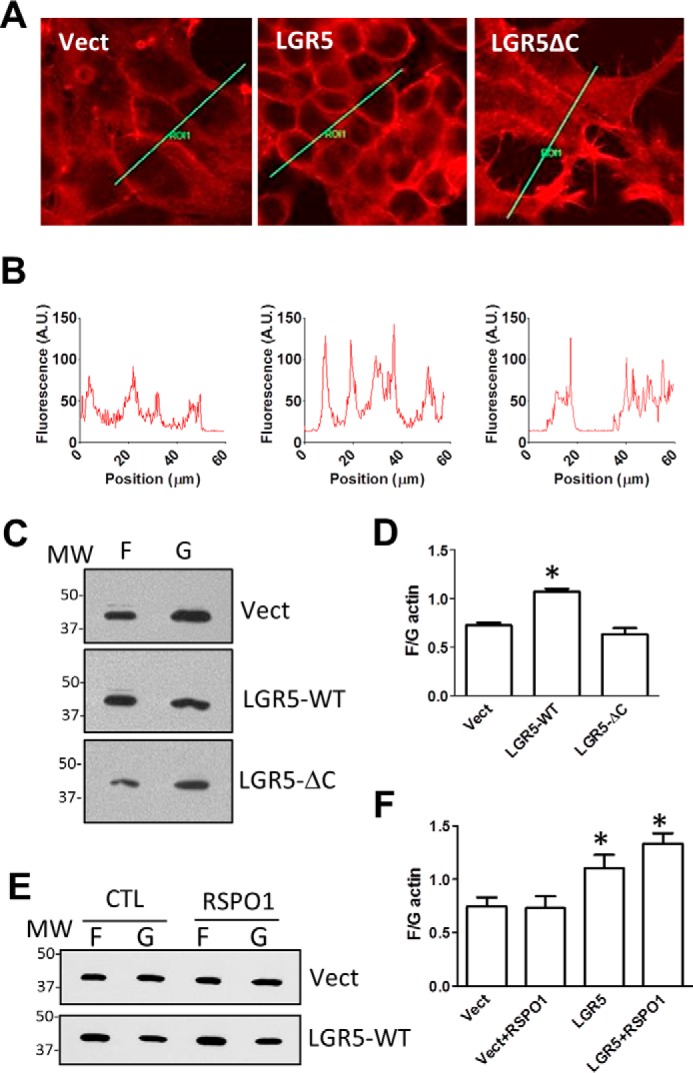
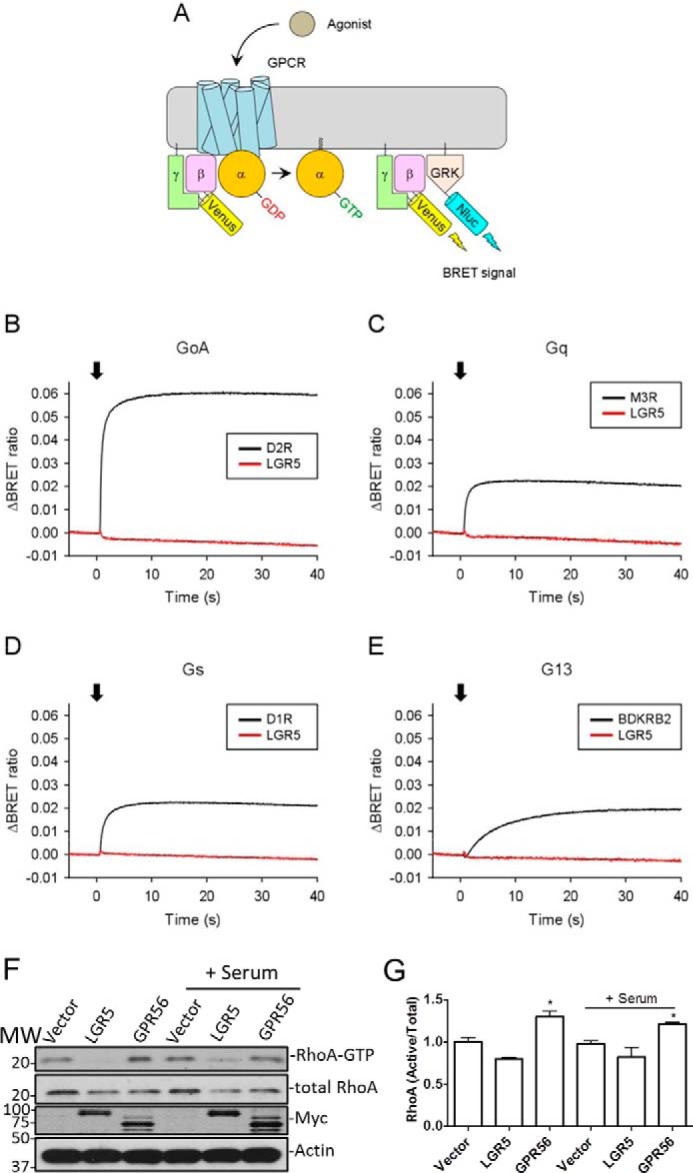
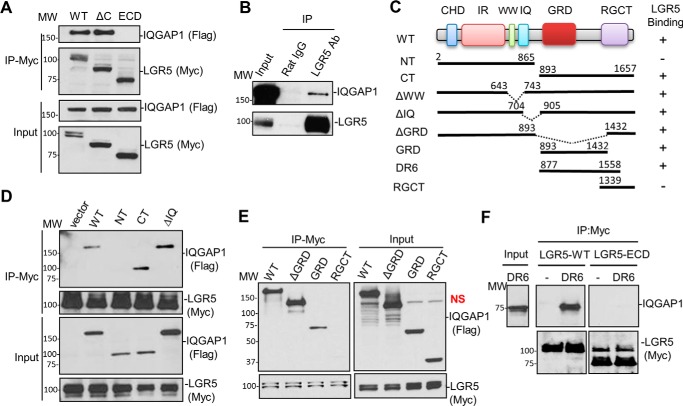
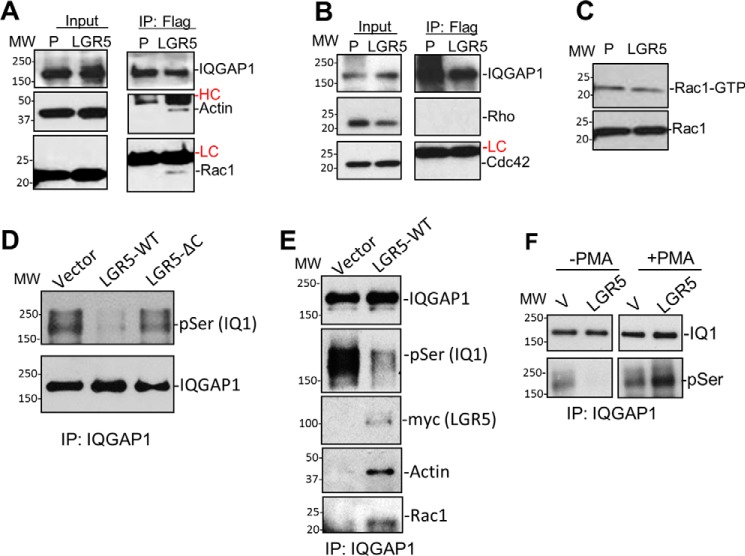
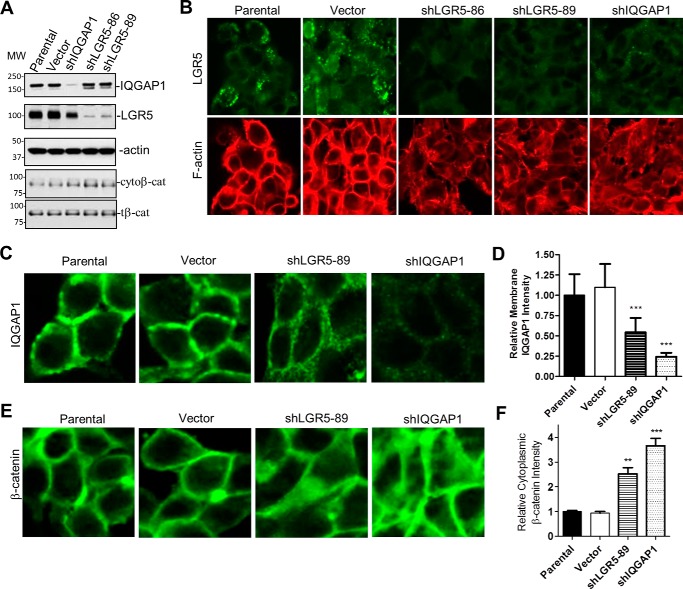
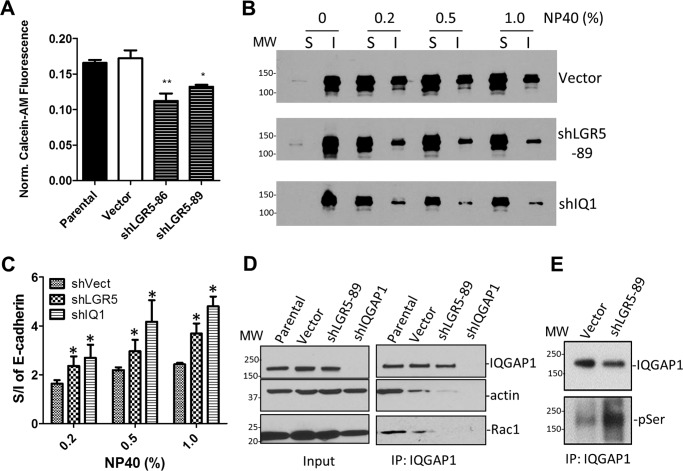
Leucine-rich repeat-containing G protein-coupled receptor 5 (LGR5) is a marker of adult stem cells in several epithelial tissues, most notably in the intestinal crypts, and is highly up-regulated in many colorectal, hepatocellular, and ovarian cancers. LGR5 activation by R-spondin (RSPO) ligands potentiates Wnt/β-catenin signaling ; however, deletion of LGR5 in stem cells has little or no effect on Wnt/β-catenin signaling or cell proliferation Remarkably, modulation of LGR5 expression has a major impact on the actin cytoskeletal structure and cell adhesion in the absence of RSPO stimulation, but the molecular mechanism is unclear. Here, we show that LGR5 interacts with IQ motif-containing GTPase-activating protein 1 (IQGAP1), an effector of Rac1/CDC42 GTPases, in the regulation of actin cytoskeleton dynamics and cell-cell adhesion. Specifically, LGR5 decreased levels of IQGAP1 phosphorylation at Ser-1441/1443, leading to increased binding of Rac1 to IQGAP1 and thus higher levels of cortical F-actin and enhanced cell-cell adhesion. LGR5 ablation in colon cancer cells and crypt stem cells resulted in loss of cortical F-actin, reduced cell-cell adhesion, and disrupted localization of adhesion-associated proteins. No evidence of LGR5 coupling to any of the four major subtypes of heterotrimeric G proteins was found. These findings suggest that LGR5 primarily functions via the IQGAP1-Rac1 pathway to strengthen cell-cell adhesion in normal adult crypt stem cells and colon cancer cells.
富含亮氨酸重复序列的G蛋白偶联受体5(LGR5)是多种上皮组织中成年干细胞的标志物,在肠道隐窝中最为显著,并且在许多结直肠癌、肝细胞癌和卵巢癌中高度上调。R-spondin(RSPO)配体激活LGR5可增强Wnt/β-连环蛋白信号传导;然而,干细胞中LGR5的缺失对Wnt/β-连环蛋白信号传导或细胞增殖几乎没有影响。值得注意的是,在没有RSPO刺激的情况下,LGR5表达的调节对肌动蛋白细胞骨架结构和细胞粘附具有重大影响,但其分子机制尚不清楚。在这里,我们表明LGR5在调节肌动蛋白细胞骨架动力学和细胞间粘附中与含IQ基序的GTP酶激活蛋白1(IQGAP1)相互作用,IQGAP1是Rac1/CDC42 GTP酶的效应器。具体而言,LGR5降低了IQGAP1在Ser-1441/1443处的磷酸化水平,导致Rac1与IQGAP1的结合增加,从而使皮质F-肌动蛋白水平升高并增强细胞间粘附。结肠癌细胞和隐窝干细胞中LGR5的缺失导致皮质F-肌动蛋白丧失、细胞间粘附减少以及粘附相关蛋白的定位紊乱。未发现LGR5与异源三聚体G蛋白的四种主要亚型中的任何一种偶联的证据。这些发现表明,LGR5主要通过IQGAP1-Rac1途径发挥作用,以加强正常成年隐窝干细胞和结肠癌细胞中的细胞间粘附。