Fina Julieta P, Masotti Fiorella, Rius Sebastián P, Crevacuore Franco, Casati Paula
Centro de Estudios Fotosintéticos y Bioquímicos, Universidad Nacional de RosarioRosario, Argentina.
Front Plant Sci. 2017 Jul 10;8:1179. doi: 10.3389/fpls.2017.01179. eCollection 2017.
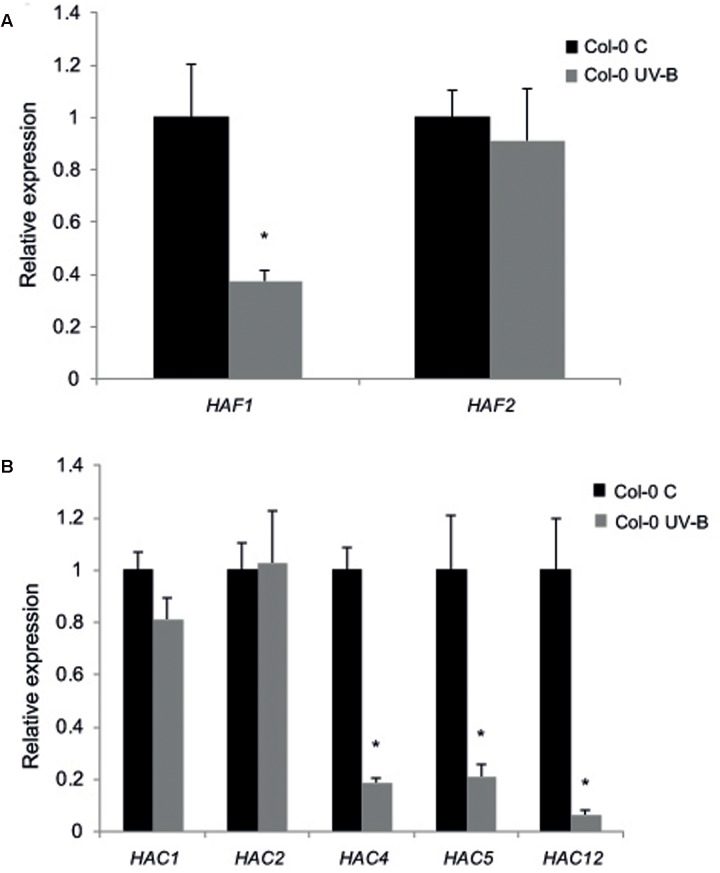
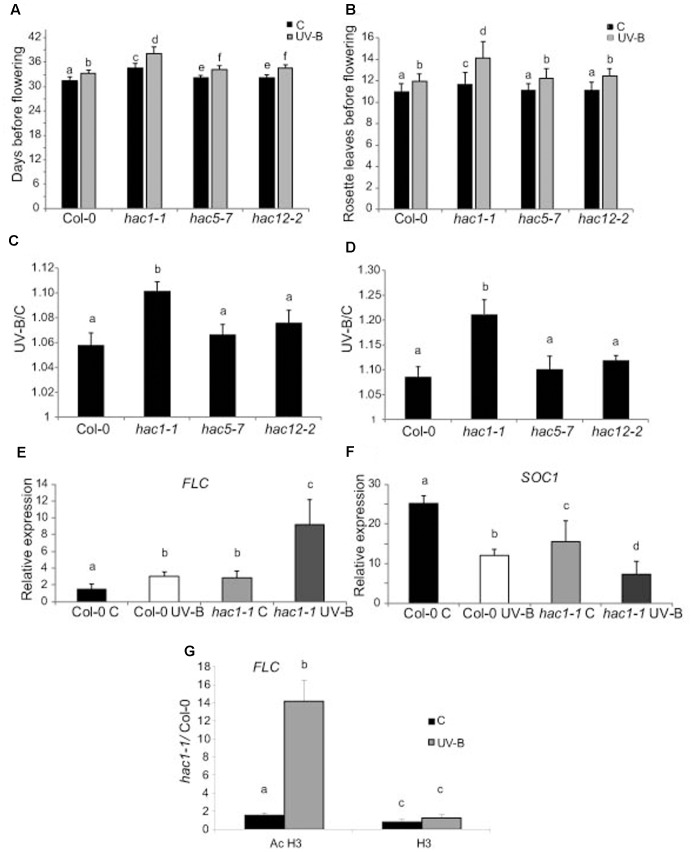
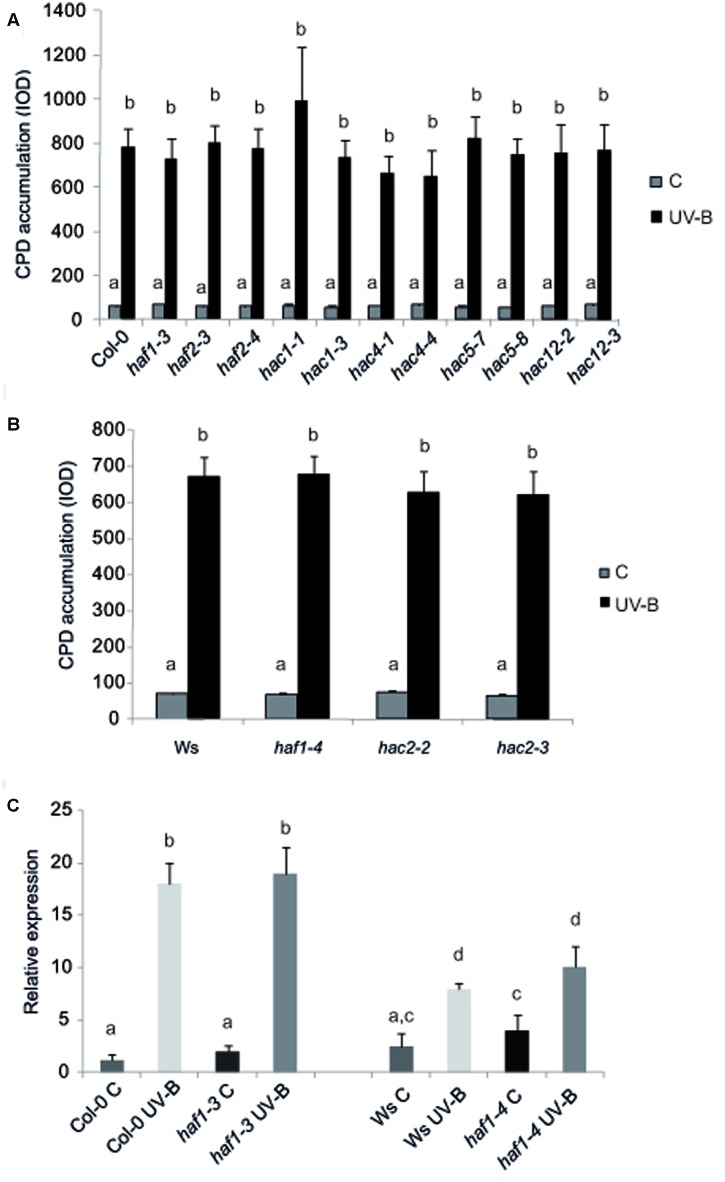
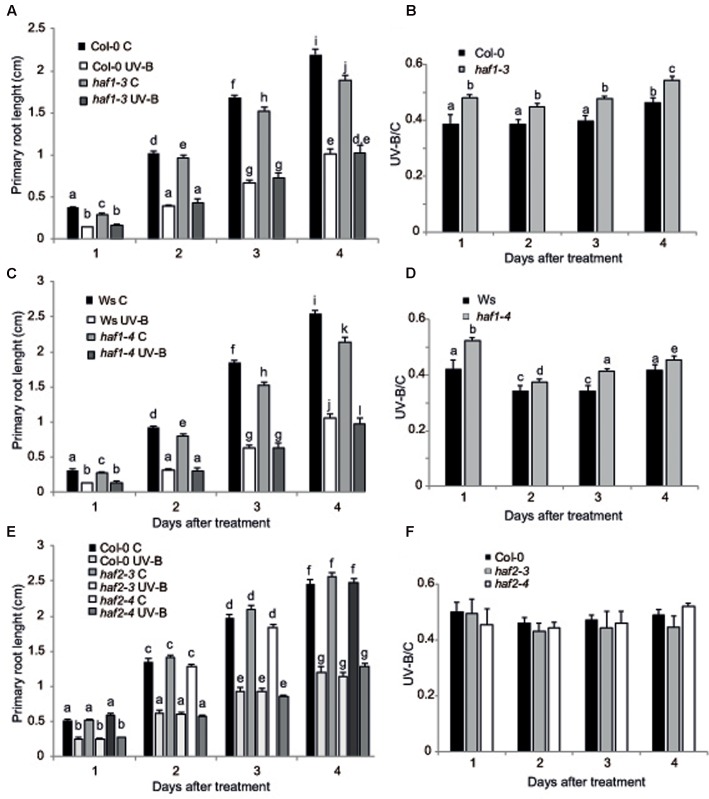
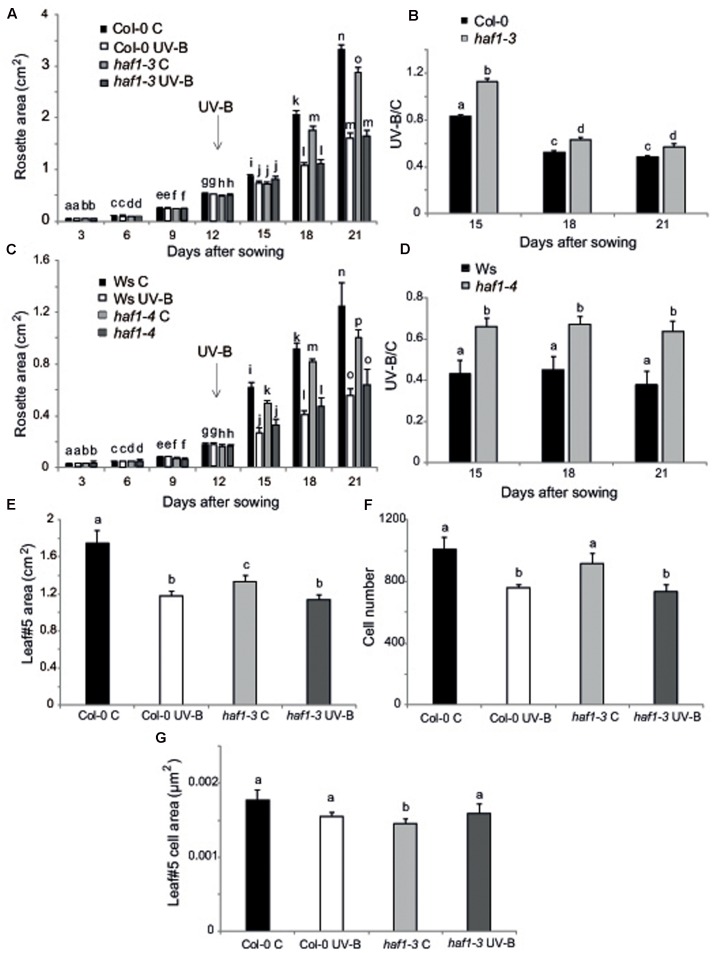
Arabidopsis has 12 histone acetyltransferases grouped in four families: the GNAT/HAG, the MYST/HAM, the p300/CBP/HAC and the TAFII250/HAF families. We previously showed that and mutants accumulated higher damaged DNA after UV-B exposure than WT plants. In contrast, RNA interference transgenic plants showed less DNA damage and lower inhibition of plant growth by UV-B, and increased levels of UV-B-absorbing compounds. These results demonstrated that HAM1, HAM2, and HAG3 participate in UV-B-induced DNA damage repair and signaling. In this work, to further explore the role of histone acetylation in UV-B responses, a putative function of other acetyltransferases of the HAC and the HAF families was analyzed. Neither HAC nor HAF acetyltrasferases participate in DNA damage and repair after UV-B radiation in Arabidopsis. Despite this, mutants presented lower inhibition of leaf and root growth by UV-B, with altered expression of transcription factors. On the other hand, plants showed a delay in flowering time after UV-B exposure and changes in and expression patterns. Our data indicate that HAC1 and HAF1 have crucial roles for in UV-B signaling, confirming that, directly or indirectly, both enzymes also have a role in UV-B responses.
拟南芥有12种组蛋白乙酰转移酶,分为四个家族:GNAT/HAG家族、MYST/HAM家族、p300/CBP/HAC家族和TAFII250/HAF家族。我们之前表明,[具体基因名称1]和[具体基因名称2]突变体在紫外线B照射后积累的受损DNA比野生型植物更多。相比之下,[具体基因名称3]RNA干扰转基因植物表现出较少的DNA损伤以及紫外线B对植物生长的较低抑制作用,并且紫外线吸收化合物水平增加。这些结果表明,HAM1、HAM2和HAG3参与紫外线B诱导的DNA损伤修复和信号传导。在这项工作中,为了进一步探索组蛋白乙酰化在紫外线B反应中的作用,我们分析了HAC家族和HAF家族其他乙酰转移酶的假定功能。在拟南芥中,HAC和HAF乙酰转移酶均不参与紫外线B辐射后的DNA损伤和修复。尽管如此,[具体基因名称4]突变体对紫外线B对叶片和根系生长的抑制作用较低,且转录因子的表达发生了改变。另一方面,[具体基因名称5]植物在紫外线B照射后开花时间延迟,并且[具体基因名称6]和[具体基因名称7]的表达模式发生了变化。我们的数据表明,HAC1和HAF1在紫外线B信号传导中具有关键作用,证实这两种酶直接或间接地在紫外线B反应中也发挥作用。