Zago Michela, Sheridan Jared A, Traboulsi Hussein, Hecht Emelia, Zhang Yelu, Guerrina Necola, Matthews Jason, Nair Parameswaran, Eidelman David H, Hamid Qutayba, Baglole Carolyn J
Department of Medicine, McGill University, Montreal, Quebec, Canada.
Department of Pharmacology & Therapeutics, McGill University, Montreal, Quebec, Canada.
PLoS One. 2017 Jul 27;12(7):e0180881. doi: 10.1371/journal.pone.0180881. eCollection 2017.
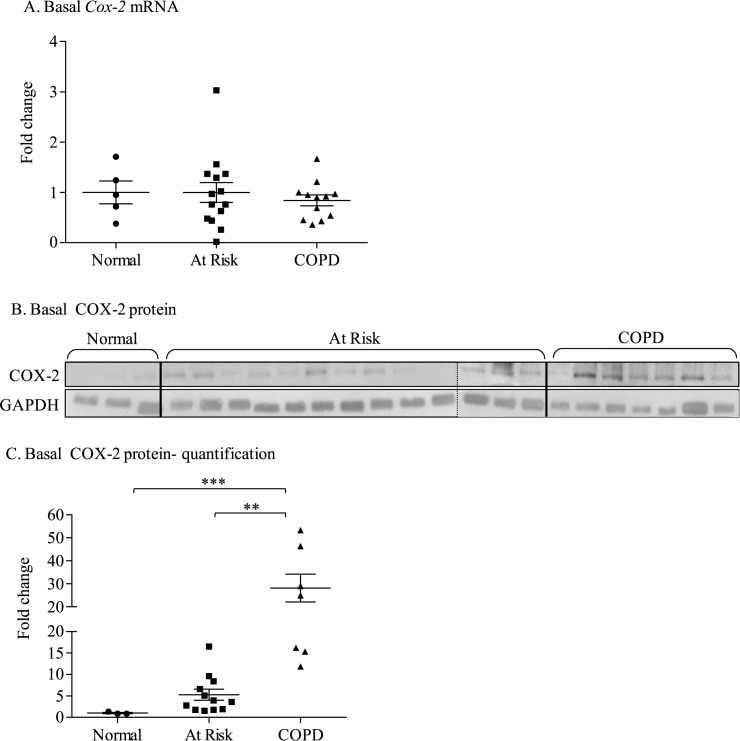
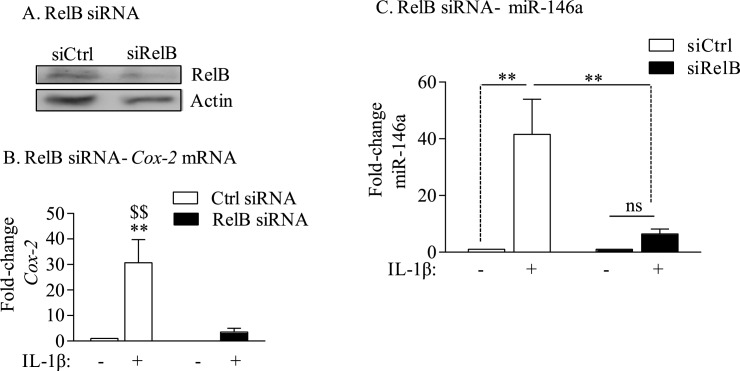
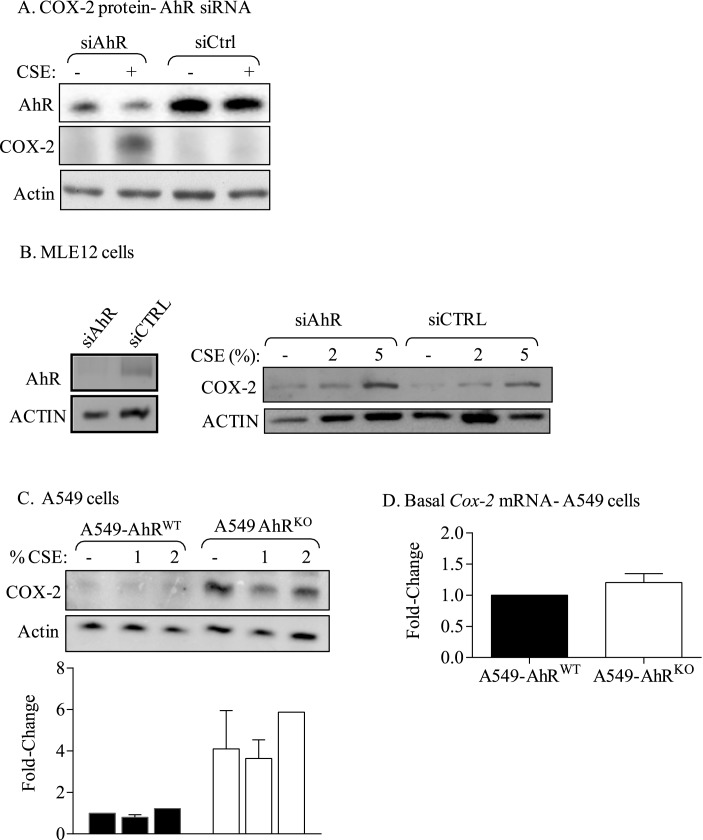
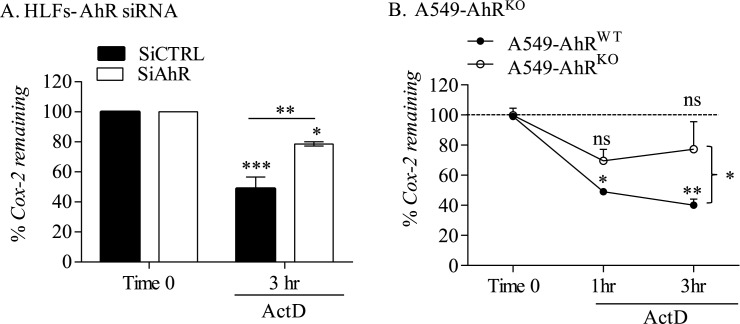
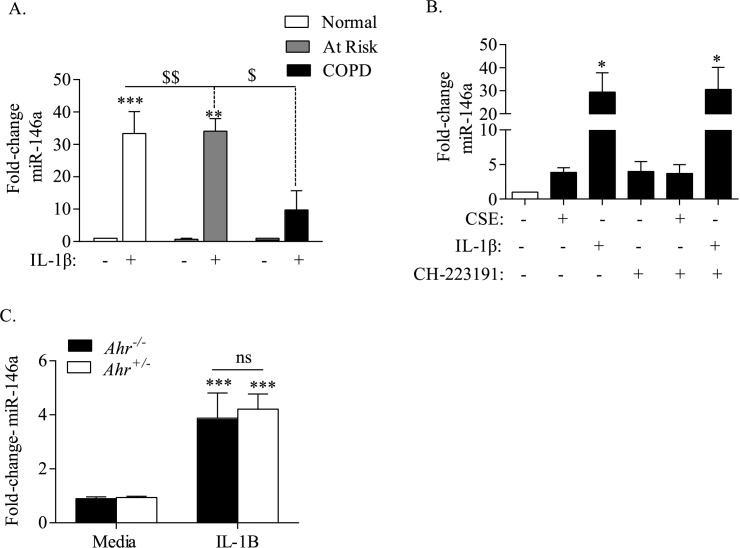
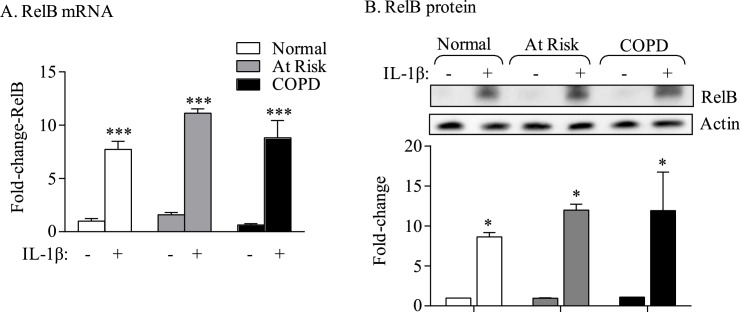
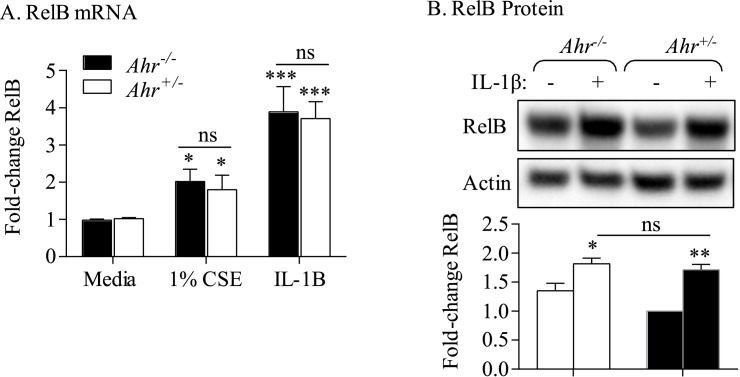
Heightened inflammation, including expression of COX-2, is associated with chronic obstructive pulmonary disease (COPD) pathogenesis. The aryl hydrocarbon receptor (AhR) is a ligand-activated transcription factor that is reduced in COPD-derived lung fibroblasts. The AhR also suppresses COX-2 in response to cigarette smoke, the main risk factor for COPD, by destabilizing the Cox-2 transcript by mechanisms that may involve the regulation of microRNA (miRNA). Whether reduced AhR expression is responsible for heightened COX-2 in COPD is not known. Here, we investigated the expression of COX-2 as well as the expression of miR-146a, a miRNA known to regulate COX-2 levels, in primary lung fibroblasts derived from non-smokers (Normal) and smokers (At Risk) with and without COPD. To confirm the involvement of the AhR, AhR knock-down via siRNA in Normal lung fibroblasts and MLE-12 cells was employed as were A549-AhRko cells. Basal expression of COX-2 protein was higher in COPD lung fibroblasts compared to Normal or Smoker fibroblasts but there was no difference in Cox-2 mRNA. Knockdown of AhR in lung structural cells increased COX-2 protein by stabilizing the Cox-2 transcript. There was less induction of miR-146a in COPD-derived lung fibroblasts but this was not due to the AhR. Instead, we found that RelB, an NF-κB protein, was required for transcriptional induction of both Cox-2 and miR-146a. Therefore, we conclude that the AhR controls COX-2 protein via mRNA stability by a mechanism independent of miR-146a. Low levels of the AhR may therefore contribute to the heightened inflammation common in COPD patients.
包括环氧化酶-2(COX-2)表达在内的炎症加剧与慢性阻塞性肺疾病(COPD)的发病机制相关。芳烃受体(AhR)是一种配体激活的转录因子,在COPD来源的肺成纤维细胞中表达降低。AhR还可通过可能涉及微小RNA(miRNA)调控的机制使Cox-2转录本不稳定,从而对COPD的主要危险因素香烟烟雾作出反应,抑制COX-2。尚不清楚AhR表达降低是否是COPD中COX-2升高的原因。在此,我们研究了COX-2的表达以及miR-146a(一种已知可调节COX-2水平的miRNA)在有和没有COPD的非吸烟者(正常)和吸烟者(有风险)来源的原代肺成纤维细胞中的表达。为了证实AhR的参与,在正常肺成纤维细胞和MLE-12细胞中通过小干扰RNA(siRNA)敲低AhR,A549-AhRko细胞也被用于实验。与正常或吸烟者的成纤维细胞相比,COPD肺成纤维细胞中COX-2蛋白的基础表达更高,但Cox-2 mRNA没有差异。通过稳定Cox-2转录本,敲低肺结构细胞中的AhR可增加COX-2蛋白。COPD来源的肺成纤维细胞中miR-146a的诱导较少,但这并非由AhR所致。相反,我们发现一种核因子κB(NF-κB)蛋白RelB是Cox-2和miR-146a转录诱导所必需的。因此,我们得出结论,AhR通过独立于miR-146a的机制,通过mRNA稳定性来控制COX-2蛋白。因此,AhR水平较低可能导致COPD患者常见的炎症加剧。