Lee Hae-Miru, Kim Soo-Min, Choi Kyung-Chul
Laboratory of Biochemistry and Immunology, College of Veterinary Medicine, Chungbuk National University, Cheongju, Chungbuk 28644, Korea.
Int J Environ Res Public Health. 2017 Jul 29;14(8):854. doi: 10.3390/ijerph14080854.
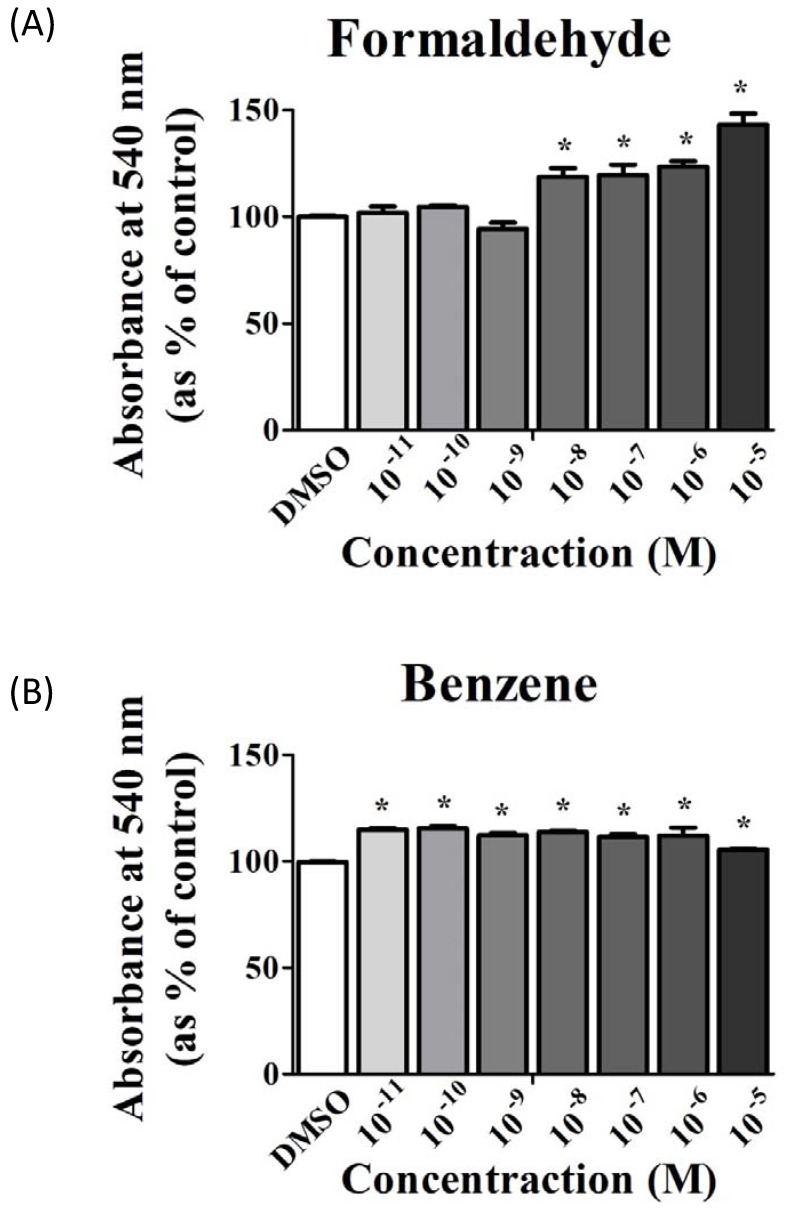
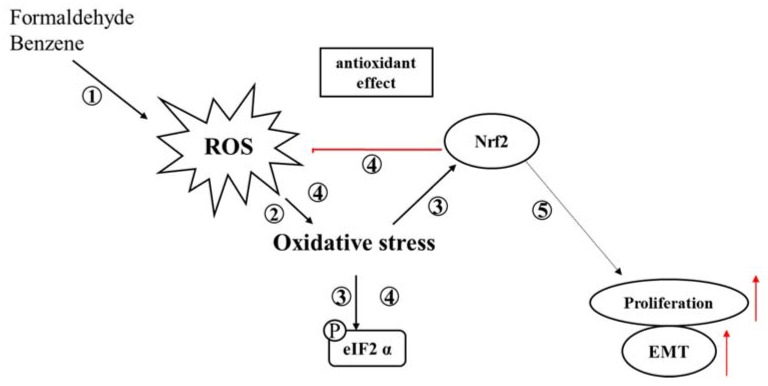
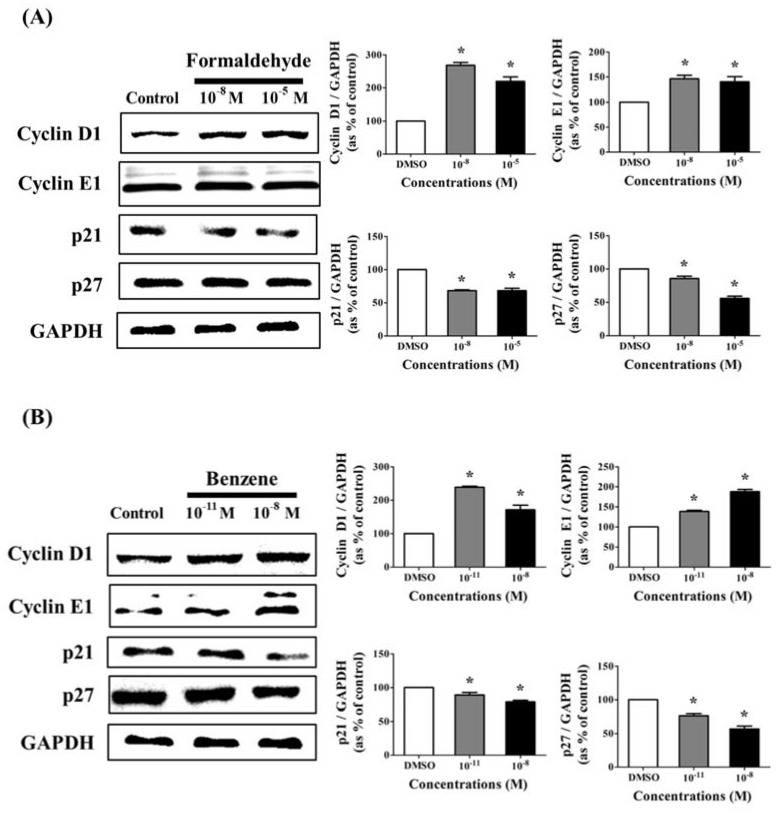
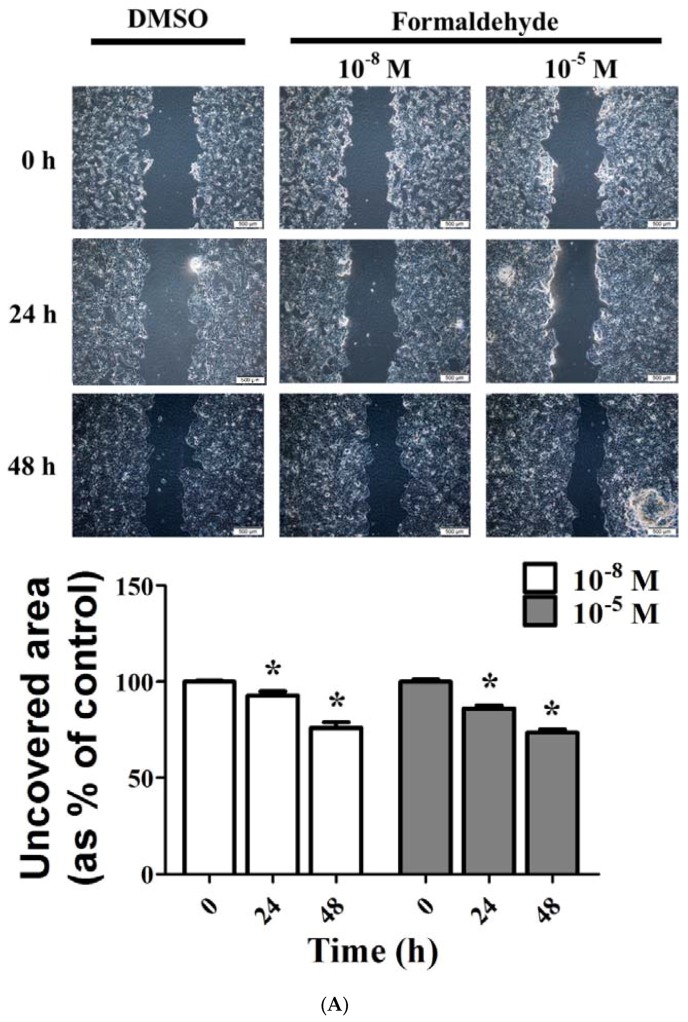
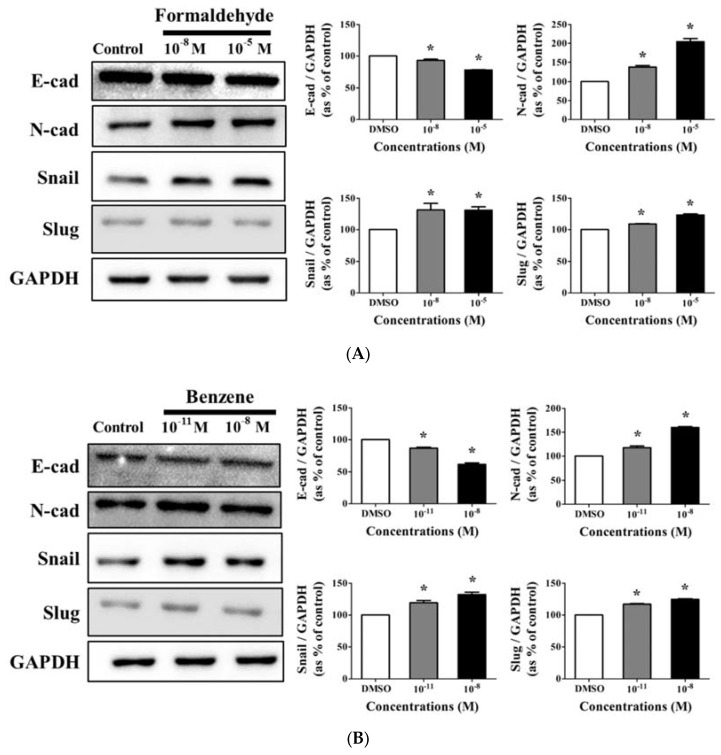
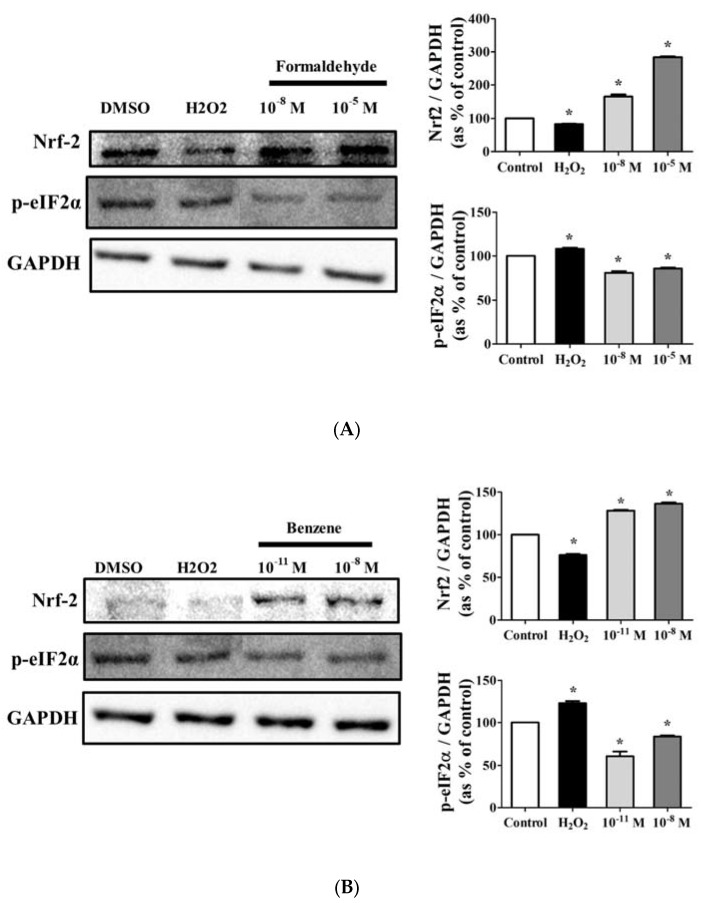
Cigarette smoke (CS) causes about 480,000 deaths each year worldwide, and it is well-known to have harmful effects on the human body, leading to heart disease, stroke, lung cancer, and cardiovascular problems. In this study, the effects of formaldehyde (FA) and benzene (Bz), the main components of CS, on cell proliferation and epithelial mesenchymal transition (EMT) of JEG-3 human choriocarcinoma cells were examined to confirm the relationship between CS components and placenta carcinoma. Upon MTT assay, FA (10 M to 10 M) and Bz (10 M to 10 M) increased JEG-3 cell proliferation. Western blot assay revealed that the protein expression of cyclin D1 and E1 increased, while the levels of p21 and p27 were reduced following treatment. In Scratch assay, FA (10 M and 10 M) and Bz (10 M and 10 M) increased migration of JEG-3 cells at 24 h and 48 h compared with that at 0 h. In addition, the expression of the epithelial marker, E-cadherin, was significantly decreased, while the expression of the mesenchymal marker, N-cadherin, was significantly increased by FA (10 M and 10 M) and Bz (10 M and 10 M). snail and slug transcriptional factors were associated with EMT, which were also up-regulated by FA and Bz, indicating that FA and Bz lead to an increase in the EMT process in JEG-3 choriocarcinoma cells. We further evaluated reactive oxygen species (ROS) and activation of antioxidant effect using dichlorofluorescin diacetate (DCFH-DA) and Western blot assay. FA and Bz increased the ROS production and an antioxidant related marker, Nrf2, in JEG-3 cells. However, eIF2α levels were reduced by FA and Bz via activation of the antioxidant reaction. Taken together, these results indicated that FA and Bz induce the growth and migration of human choriocarcinoma cells via regulation of the cell cycle and EMT and activation of ROS and antioxidant related markers.
全球范围内,香烟烟雾(CS)每年导致约48万人死亡,众所周知,它对人体有有害影响,会引发心脏病、中风、肺癌和心血管问题。在本研究中,检测了CS的主要成分甲醛(FA)和苯(Bz)对JEG-3人绒毛膜癌细胞增殖和上皮-间质转化(EMT)的影响,以确认CS成分与胎盘癌之间的关系。经MTT检测,FA(10 μM至100 μM)和Bz(10 μM至100 μM)可增加JEG-3细胞增殖。蛋白质印迹分析显示,处理后细胞周期蛋白D1和E1的蛋白表达增加,而p21和p27的水平降低。划痕试验中,与0小时相比,FA(10 μM和100 μM)和Bz(10 μM和100 μM)在24小时和48小时时增加了JEG-3细胞的迁移。此外,FA(10 μM和100 μM)和Bz(10 μM和100 μM)显著降低了上皮标志物E-钙黏蛋白的表达,同时显著增加了间质标志物N-钙黏蛋白的表达。蜗牛和蛞蝓转录因子与EMT相关,它们也被FA和Bz上调,表明FA和Bz导致JEG-3绒毛膜癌细胞的EMT过程增加。我们进一步使用二氯荧光素二乙酸酯(DCFH-DA)和蛋白质印迹分析评估了活性氧(ROS)和抗氧化作用的激活情况。FA和Bz增加了JEG-3细胞中的ROS产生以及一种抗氧化相关标志物Nrf2。然而,FA和Bz通过激活抗氧化反应降低了eIF2α水平。综上所述,这些结果表明,FA和Bz通过调节细胞周期和EMT以及激活ROS和抗氧化相关标志物来诱导人绒毛膜癌细胞的生长和迁移。