Ay Cihan, Kamphuisen Pieter Willem, Agnelli Giancarlo
Department of Medicine, Clinical Division of Haematology and Haemostaseology, Comprehensive Cancer Center Vienna, Medical University of Vienna, Vienna, Austria.
Department of Internal Medicine, Tergooi Hospital, Hilversum, The Netherlands.
ESMO Open. 2017 Jun 8;2(2):e000188. doi: 10.1136/esmoopen-2017-000188. eCollection 2017.
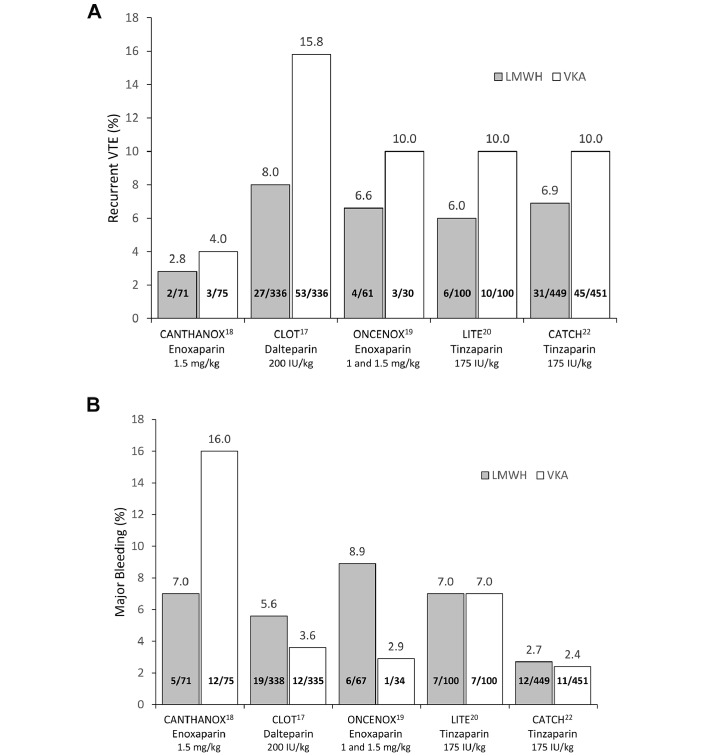
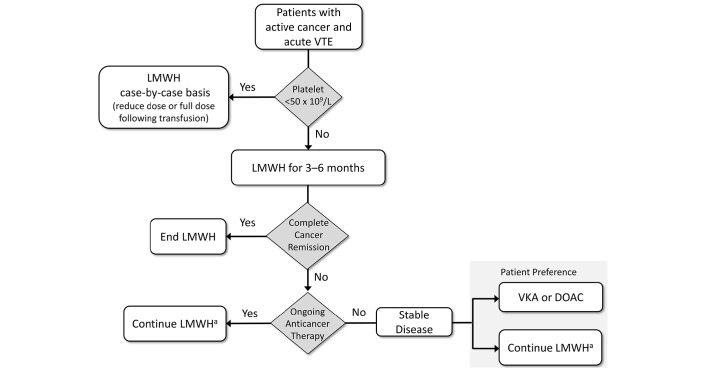
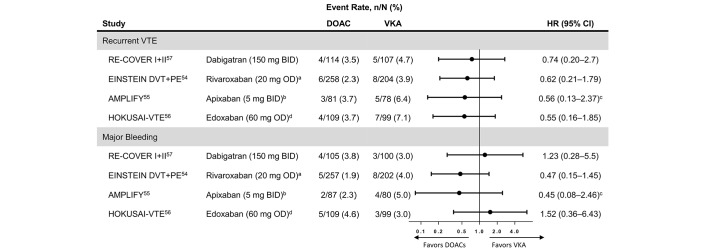
The treatment of cancer-associated venous thromboembolism (VTE) is difficult because cancer patients with VTE on anticoagulation are at an increased risk of bleeding compared with patients without VTE. This review summarises the evidence supporting the current standard of care and emerging treatment options. In difficult-to-treat subpopulations, where clinical data are often lacking, this review also provides the best clinical practice strategies based on the available data. The use of therapeutic doses of parenteral anticoagulants in patients with cancer-associated VTE for at least 3 to 6 months is supported by the current clinical data. After major cancer surgery, extended thromboprophylaxis for approximately 1 month following hospital discharge is also supported. In select populations of ambulatory cancer patients with solid tumours, or in patients with myeloma receiving immunomodulatory agents in combination with chemotherapy and/or corticosteroids, pharmacological prophylaxis could be considered. Although parenteral anticoagulants may not be tolerated by some patients, the data pertaining to the use of direct oral anticoagulants (DOACs) in cancer patients with VTE at this point can only be considered hypothesis generating. Clarity of the use of DOACs is awaiting the results of head-to-head trials between DOACs and parenteral anticoagulants. In addition, because of the lack of clinical trials, there are still unanswered questions on the optimal treatment regimens in subpopulations at increased risk of bleeding, including cancer patients with thrombocytopenia and those with brain metastases. For clinicians to balance the risk of recurrent thrombosis with the chance of bleeding, they need to assess the relevant clinical data. Current data support the use of parenteral anticoagulants in cancer patients with VTE, but many unanswered questions pertaining to the optimal regimens in special subpopulations and regarding the efficacy and safety of DOACs remain. To address this need, there are currently several clinical trials under way.
癌症相关静脉血栓栓塞(VTE)的治疗颇具难度,因为与未发生VTE的患者相比,接受抗凝治疗的VTE癌症患者出血风险更高。本综述总结了支持当前治疗标准及新出现的治疗选择的证据。在往往缺乏临床数据的难治性亚组人群中,本综述还根据现有数据提供了最佳临床实践策略。目前的临床数据支持在癌症相关VTE患者中使用治疗剂量的肠外抗凝剂至少3至6个月。在大型癌症手术后,出院后延长约1个月的血栓预防也得到支持。在部分实体瘤门诊癌症患者或接受免疫调节药物联合化疗和/或皮质类固醇治疗的骨髓瘤患者中,可考虑进行药物预防。尽管有些患者可能无法耐受肠外抗凝剂,但目前关于VTE癌症患者使用直接口服抗凝剂(DOACs)的数据只能作为假设性参考。DOACs使用的明确结论有待DOACs与肠外抗凝剂的头对头试验结果。此外,由于缺乏临床试验,对于出血风险增加的亚组人群,包括血小板减少的癌症患者和脑转移患者,最佳治疗方案仍有未解决的问题。临床医生若要平衡血栓复发风险与出血几率,就需要评估相关临床数据。目前的数据支持在VTE癌症患者中使用肠外抗凝剂,但在特殊亚组人群的最佳治疗方案以及DOACs的疗效和安全性方面仍有许多未解决的问题。为满足这一需求,目前正在进行多项临床试验。