Ricci Davide, Nava Michele M, Zandrini Tommaso, Cerullo Giulio, Raimondi Manuela T, Osellame Roberto
Department of Chemistry, Materials and Chemical Engineering "Giulio Natta", Politecnico di Milano, 20133 Milano, Italy.
Istituto di Fotonica e Nanotecnologie (IFN)-CNR and Department of Physics, Politecnico di Milano, 20133 Milano, Italy.
Materials (Basel). 2017 Jan 13;10(1):66. doi: 10.3390/ma10010066.
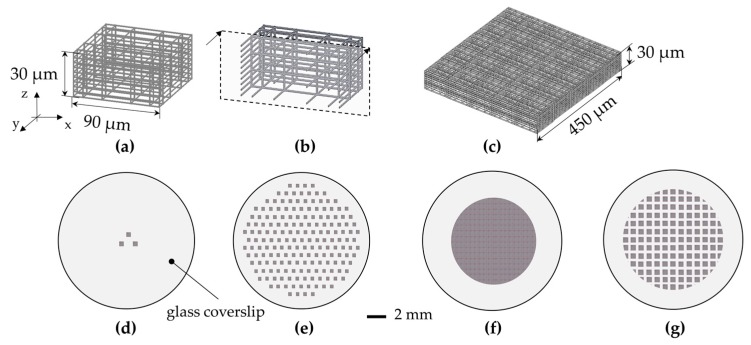
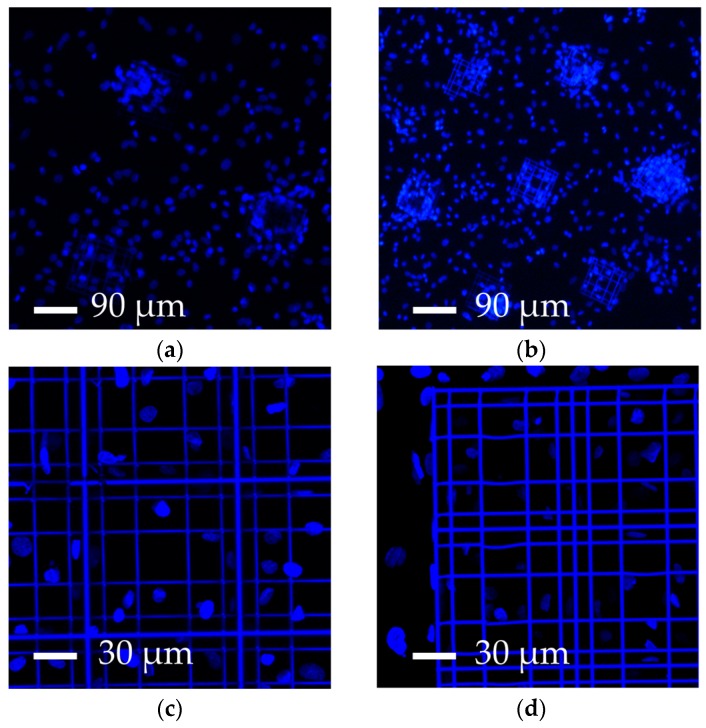
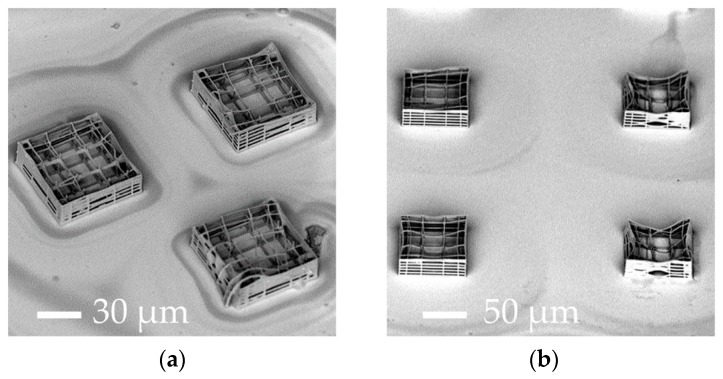
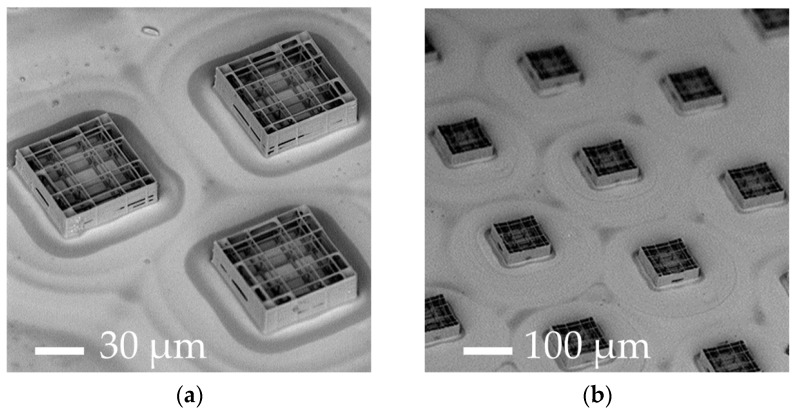
Stem-cell-based therapies require a high number (10⁶-10⁸) of cells, therefore in vitro expansion is needed because of the initially low amount of stem cells obtainable from human tissues. Standard protocols for stem cell expansion are currently based on chemically-defined culture media and animal-derived feeder-cell layers, which expose cells to additives and to xenogeneic compounds, resulting in potential issues when used in clinics. The two-photon laser polymerization technique enables three-dimensional micro-structures to be fabricated, which we named synthetic nichoids. Here we review our activity on the technological improvements in manufacturing biomimetic synthetic nichoids and, in particular on the optimization of the laser-material interaction to increase the patterned area and the percentage of cell culture surface covered by such synthetic nichoids, from a low initial value of 10% up to 88% with an optimized micromachining time. These results establish two-photon laser polymerization as a promising tool to fabricate substrates for stem cell expansion, without any chemical supplement and in feeder-free conditions for potential therapeutic uses.
基于干细胞的疗法需要大量(10⁶ - 10⁸)的细胞,因此由于最初从人体组织中可获得的干细胞数量较少,需要进行体外扩增。目前,干细胞扩增的标准方案基于化学成分明确的培养基和动物来源的饲养细胞层,这会使细胞接触添加剂和异种化合物,在临床应用时会产生潜在问题。双光子激光聚合技术能够制造三维微结构,我们将其命名为合成类龛。在此,我们回顾了我们在制造仿生合成类龛的技术改进方面所做的工作,特别是在优化激光与材料的相互作用以增加图案化区域以及此类合成类龛覆盖的细胞培养表面百分比方面所做的工作,从最初较低的10%提高到了在优化微加工时间下的88%。这些结果表明双光子激光聚合是一种很有前景的工具,可用于制造在无任何化学补充物和无饲养细胞条件下用于干细胞扩增的基质,以用于潜在的治疗用途。