
植物提取受镉污染土壤和再生烟草生物量回收镉的潜力。
Phytoextraction of cadmium-contaminated soil and potential of regenerated tobacco biomass for recovery of cadmium.
机构信息
College of Bioscience and Biotechnology, Hunan Agricultural University, Changsha, 410128, China.
College of Resources and Environment, Hunan Agricultural University, Changsha, 410128, China.
出版信息
Sci Rep. 2017 Aug 3;7(1):7210. doi: 10.1038/s41598-017-05834-8.
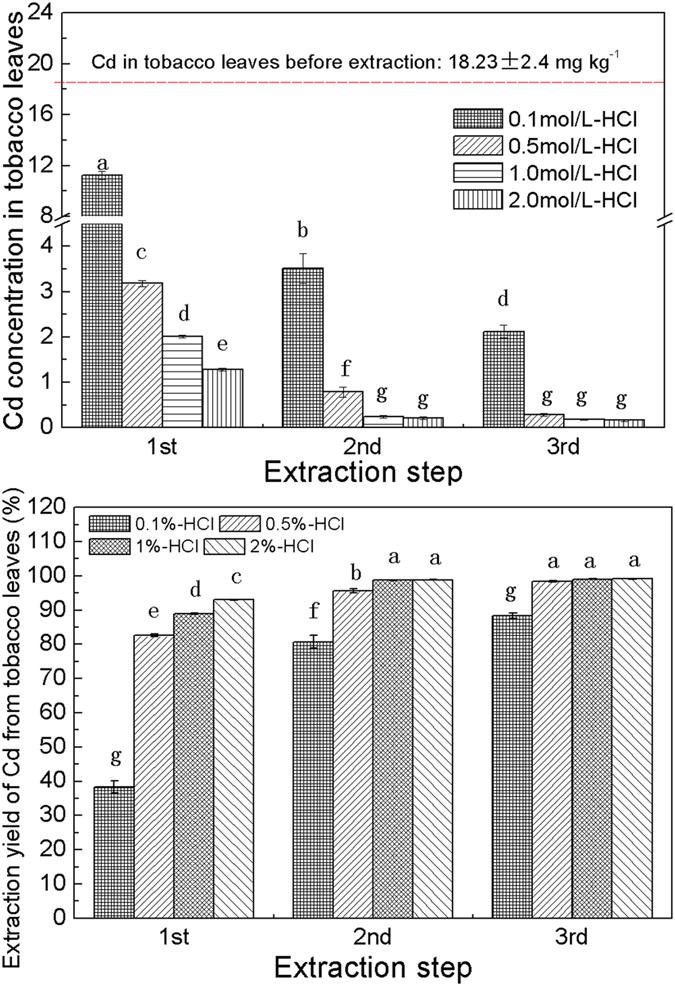
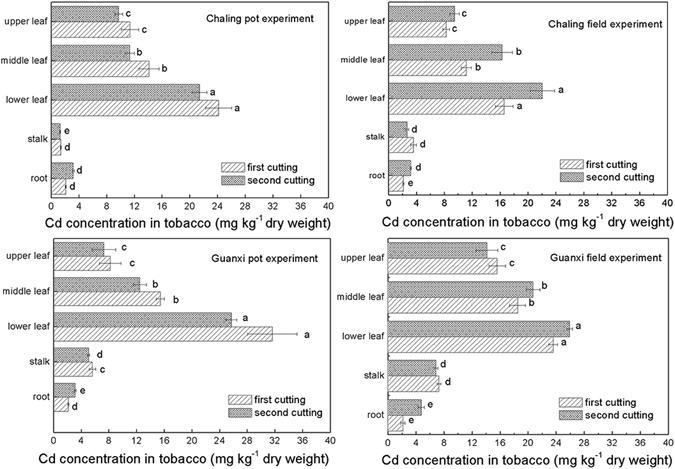
The aim of this study was to estimate the influence of regenerated tobacco on the extraction of Cd from two acidic soils as well as to address the problem of how to deal with contaminated leaves following phytoextraction. Results showed that a coppicing tobacco led to a decline in Cd concentration in regenerated leaves and stalks when plants were grown in pots, but increased concentrations in regenerated lower and middle leaves when plants were grown under field conditions. The highest recorded bioconcentration factors in Chaling and Guanxi soil were 37.53 and 19.21 in lower leaves in the field, respectively. Total Cd extraction efficiency in practice (9.43% for Chaling soil and 6.24% for Guanxi soil) under field conditions confirmed our theoretical calculations (10.0% for Chaling soil and 6.73% for Guanxi soil). Use of a 0.5% hydrochloric acid(HCl) solution was sufficient to reduce Cd (98.4%) in tobacco leaves to permissible levels as required by the Hygienic Standard for Feeds in China (≤0.5 mg kg). Regenerated tobacco has the potential to allow cultivation of Cd contaminated farmland to produce animal feed, assist in lowering total Cd content of soil, and allow income generation for farmers.
本研究旨在评估再生烟草对两种酸性土壤中镉提取的影响,并解决植物进行植物修复后如何处理受污染叶片的问题。结果表明,在盆栽条件下,分株再生烟草会导致再生叶片和茎中的镉浓度降低,但在田间条件下,再生中下叶片的镉浓度会增加。在茶陵和灌溪土壤中,下叶片的生物浓缩因子最高,分别为 37.53 和 19.21。田间条件下,实际的总镉提取效率(茶陵土壤为 9.43%,灌溪土壤为 6.24%)证实了我们的理论计算(茶陵土壤为 10.0%,灌溪土壤为 6.73%)。使用 0.5%盐酸(HCl)溶液足以将烟草叶片中的镉(98.4%)降低到中国饲料卫生标准(≤0.5mg/kg)要求的允许水平。再生烟草有望允许在受镉污染的农田上种植,以生产动物饲料,有助于降低土壤中总镉含量,并为农民创造收入。

 Zotero 插件