Michael and Marian Ilitch Department of Surgery, Wayne State University School of Medicine, 4100 John R St., Mailcode: HW08AO, Detroit, MI, 48201, USA.
Tumor Microenvironment Program, Barbara Ann Karmanos Cancer Institute, 4100 John R, Detroit, MI, 48201, USA.
Breast Cancer Res Treat. 2017 Nov;166(2):407-419. doi: 10.1007/s10549-017-4435-x. Epub 2017 Aug 5.
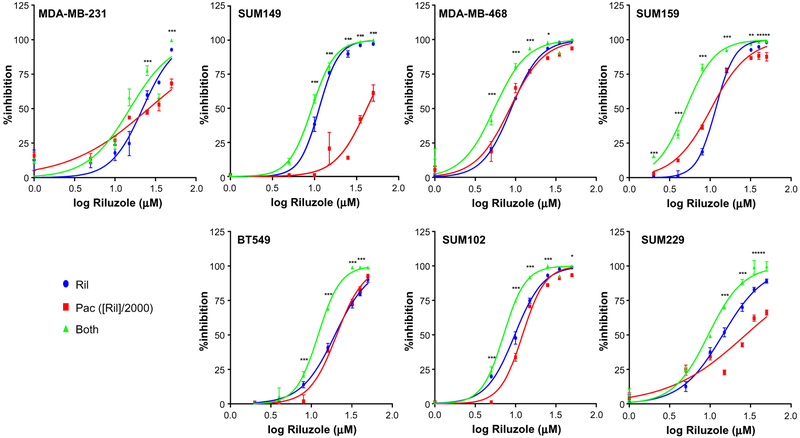
One in eight women will develop breast cancer, 15-20% of whom will have triple-negative breast cancer (TNBC), an aggressive breast cancer with no current targeted therapy. We have demonstrated that riluzole, an FDA-approved drug for treating amyotrophic lateral sclerosis, inhibits growth of TNBC. In this study, we explore potential synergism between riluzole and paclitaxel, a chemotherapeutic agent commonly used to treat TNBC, in regulating TNBC proliferation, cell cycle arrest, and apoptosis.
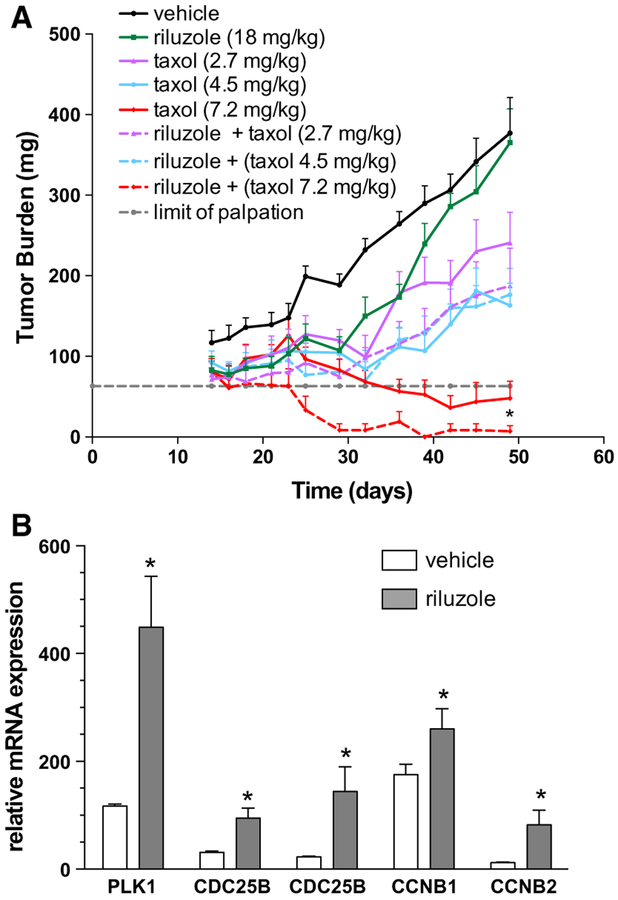
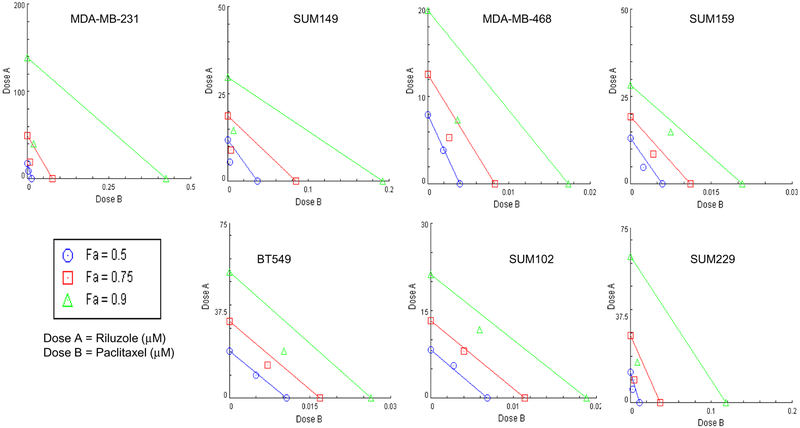
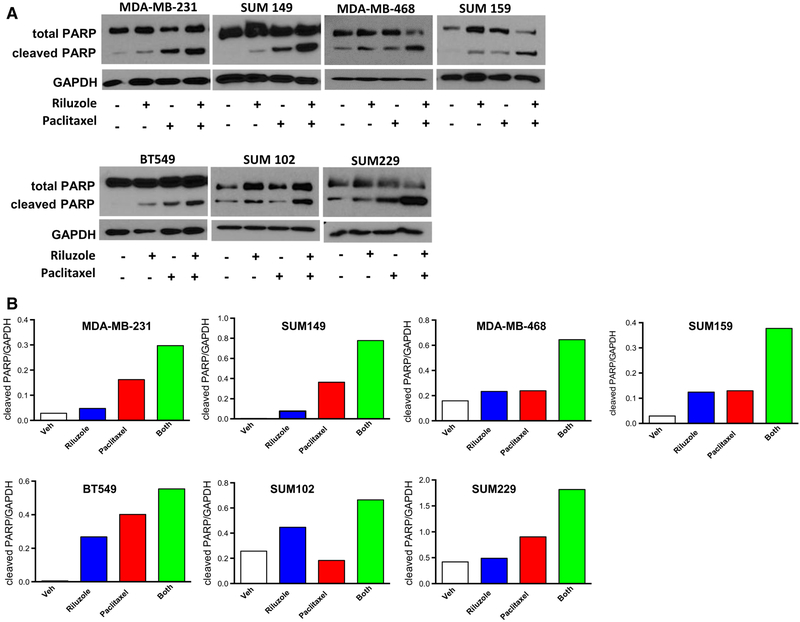
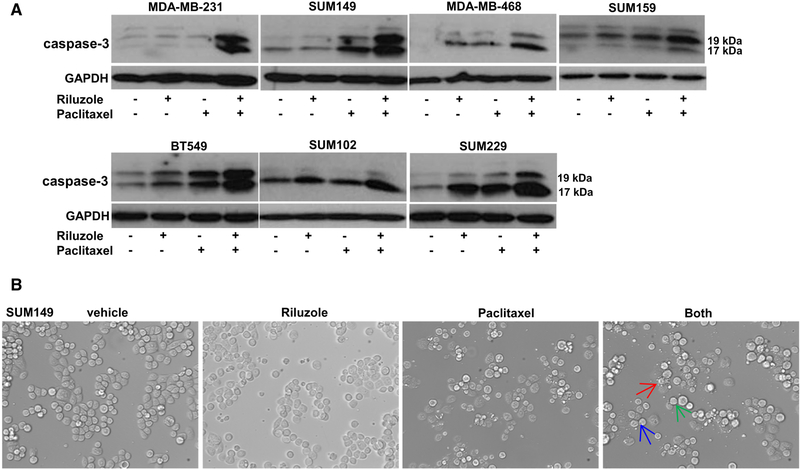
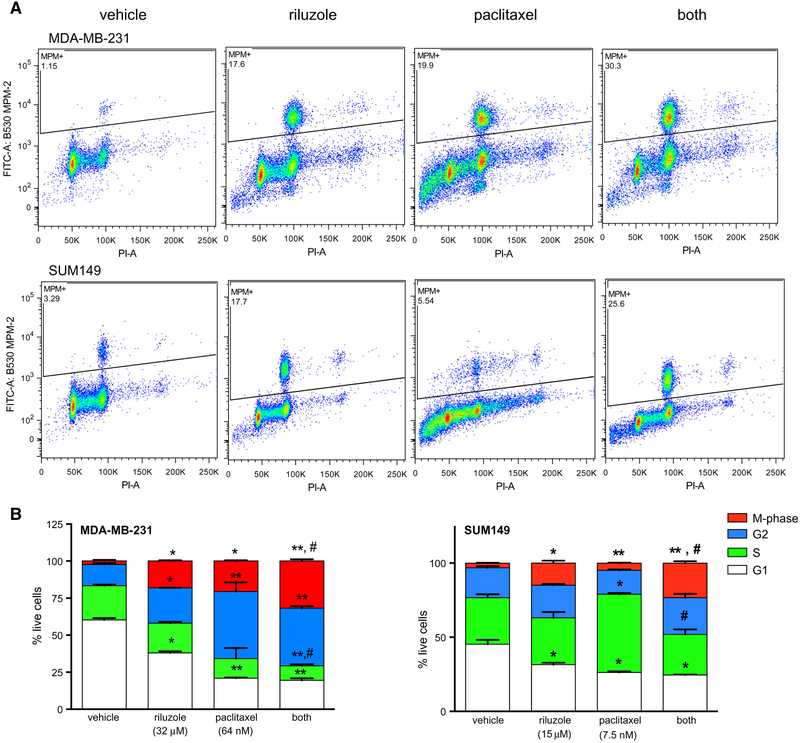
TNBC cells were treated with paclitaxel and/or riluzole and synergistic effects on cell proliferation were quantified via MTT assay and CompuSyn analysis. Apoptosis was observed morphologically and by measuring cleaved PARP/caspase three products. Microarray analysis was performed using MDA-MB-231 cells to examine cell cycle genes regulated by riluzole and any enhanced effects on paclitaxel-mediated cell cycle arrest, determined by FACS analysis. These results were confirmed in vivo using a MDA-MB-231 xenograft model.
Strong enhanced or synergistic effects of riluzole on paclitaxel regulation of cell cycle progression and apoptosis was demonstrated in all TNBC cells tested as well as in the xenograft model. The MDA-MB-231, SUM149, and SUM229 cells, which are resistant to paclitaxel treatment, demonstrated the strongest synergistic or enhanced effect. Key protein kinases were shown to be upregulated in this study by riluzole as well as downstream cell cycle genes regulated by these kinases.
All TNBC cells tested responded synergistically to riluzole and paclitaxel strongly suggesting the usefulness of this combinatorial treatment strategy in TNBC, especially for patients whose tumors are relatively resistant to paclitaxel.
每 8 名女性中就有 1 人会患乳腺癌,其中 15-20%为三阴性乳腺癌(TNBC),这是一种侵袭性乳腺癌,目前尚无靶向治疗方法。我们已经证明,利鲁唑是一种治疗肌萎缩侧索硬化症的 FDA 批准药物,可抑制 TNBC 的生长。在这项研究中,我们探讨了利鲁唑与紫杉醇(一种常用于治疗 TNBC 的化疗药物)之间的潜在协同作用,以调节 TNBC 的增殖、细胞周期停滞和细胞凋亡。
用紫杉醇和/或利鲁唑处理 TNBC 细胞,并通过 MTT 测定和 CompuSyn 分析定量检测细胞增殖的协同作用。通过形态学观察和测量裂解的 PARP/半胱天冬酶 3 产物来观察凋亡。使用 MDA-MB-231 细胞进行微阵列分析,以检查利鲁唑调节的细胞周期基因,以及通过 FACS 分析确定的任何增强的紫杉醇介导的细胞周期停滞作用。这些结果在 MDA-MB-231 异种移植模型中得到了验证。
在所有测试的 TNBC 细胞以及异种移植模型中,均证实了利鲁唑对紫杉醇调节细胞周期进展和凋亡的强烈增强或协同作用。对紫杉醇治疗耐药的 MDA-MB-231、SUM149 和 SUM229 细胞表现出最强的协同或增强作用。该研究表明,利鲁唑上调了关键蛋白激酶,以及这些激酶调节的下游细胞周期基因。
所有测试的 TNBC 细胞对利鲁唑和紫杉醇均表现出协同作用,强烈表明这种联合治疗策略在 TNBC 中的有用性,特别是对于那些肿瘤对紫杉醇相对耐药的患者。