Receptos, a wholly owned subsidiary of Celgene Corporation, San Diego, California, USA.
Bioclinica Inc, London, UK.
Clin Pharmacol Drug Dev. 2018 Mar;7(3):263-276. doi: 10.1002/cpdd.383. Epub 2017 Aug 7.
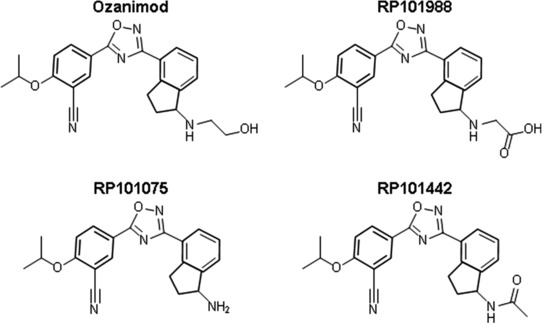
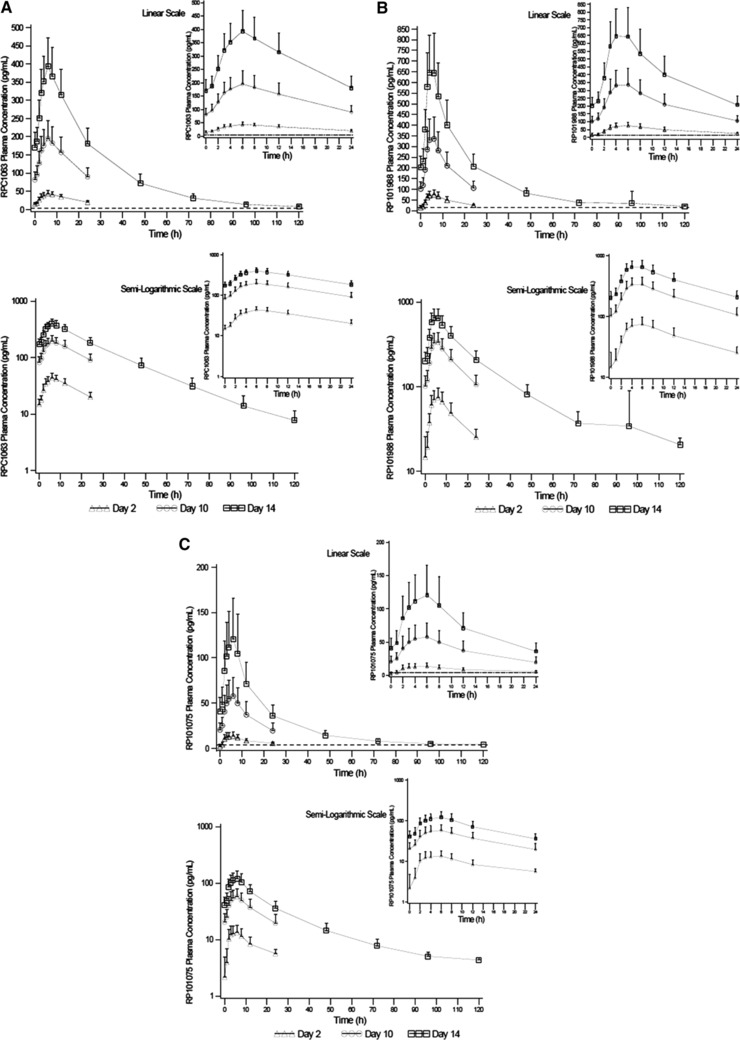
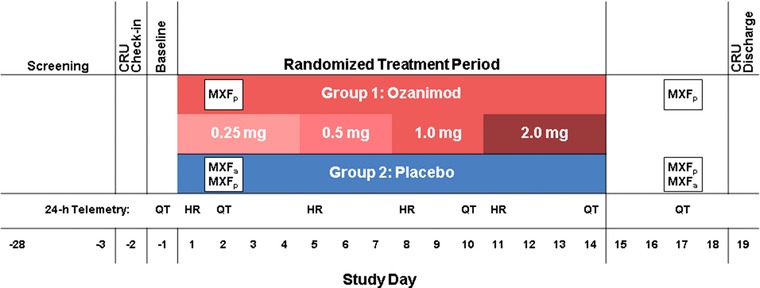
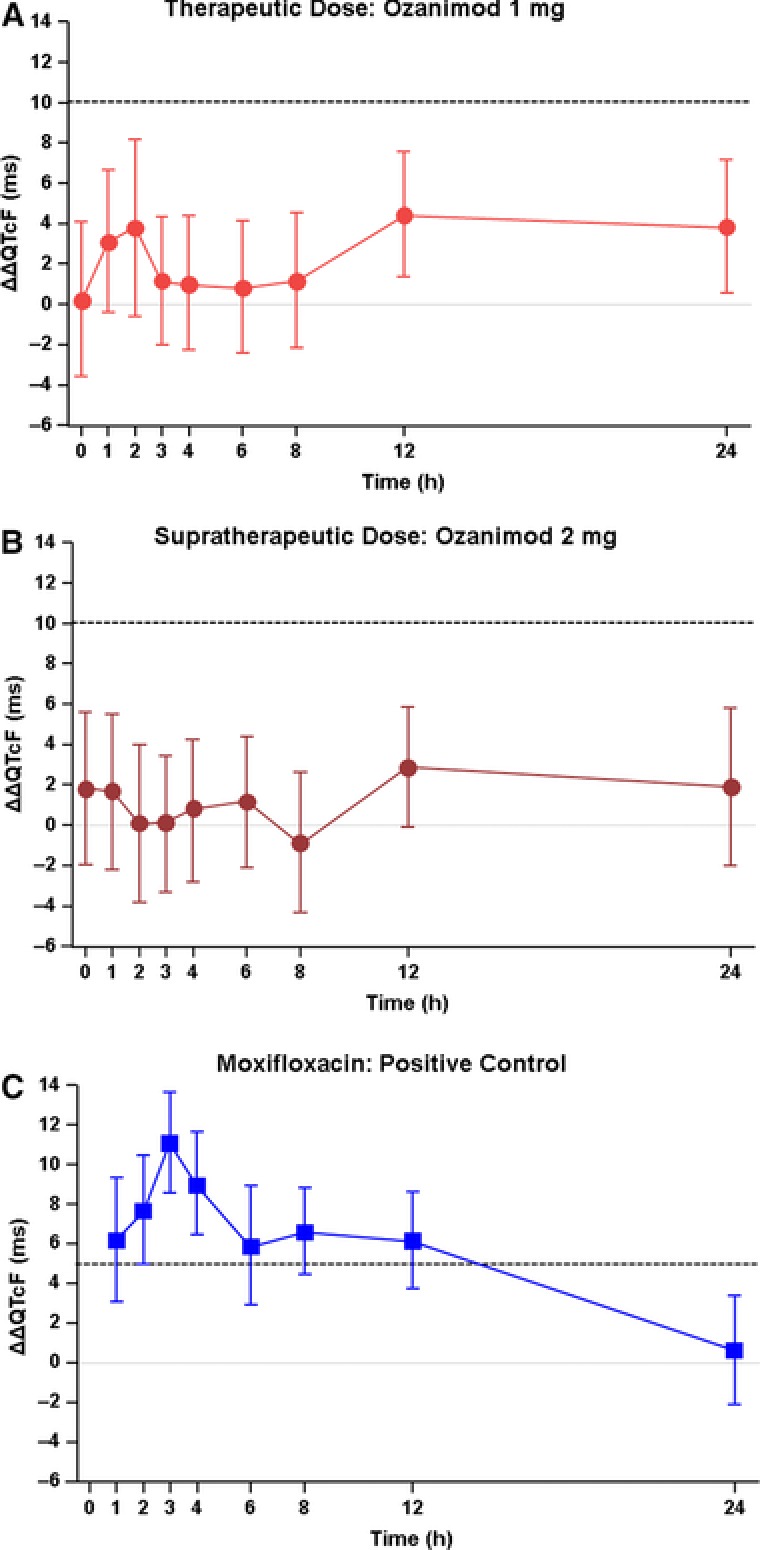
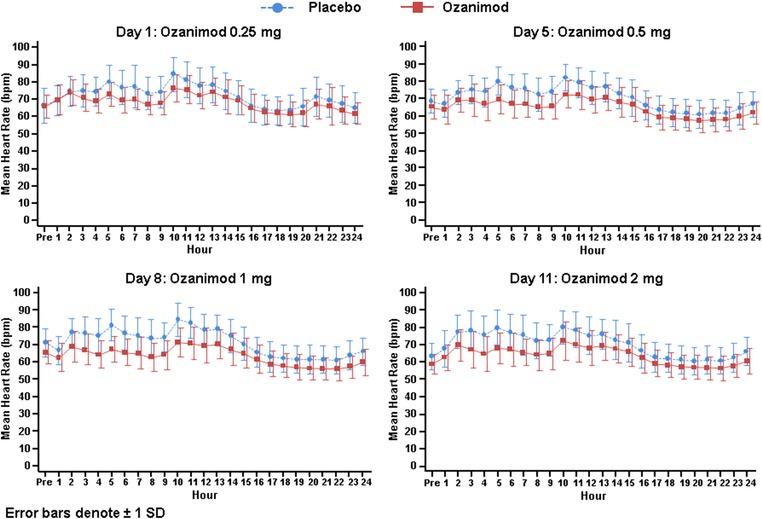
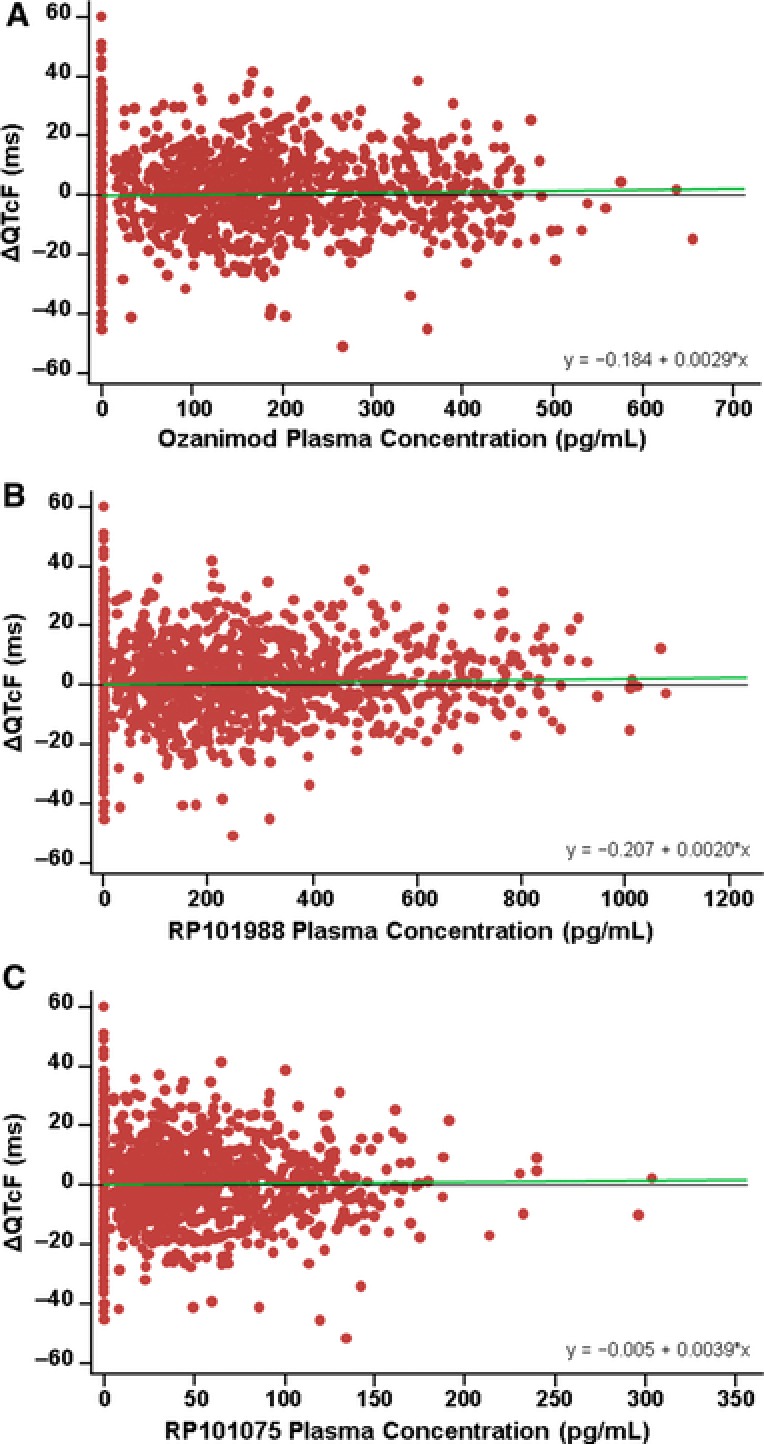
Ozanimod is a novel, selective, oral sphingosine-1-phosphate (1 and 5) receptor modulator in development for multiple sclerosis and inflammatory bowel disease. This randomized, double-blind, placebo-controlled, positive-controlled, parallel-group thorough QT study characterized the effects of ozanimod on cardiac repolarization in healthy subjects. Eligible subjects were randomized to 1 of 2 groups: ozanimod (escalated from 0.25 to 2 mg over 14 days) or placebo (for 14 days). A single dose of moxifloxacin 400 mg or placebo was administered on days 2 and 17. The primary end point was the time-matched, placebo-corrected, baseline-adjusted mean QTcF (ΔΔQTcF). A total of 113/124 (91.1%) subjects completed the study. The upper limits of the 2-sided 90% confidence intervals for ΔΔQTcF for both ozanimod 1 and 2 mg were below the 10-millisecond regulatory threshold. No QTcF >480 milliseconds or postdose change in QTcF of >60 milliseconds was observed. There was no evidence of a positive relationship between concentrations of ozanimod and its active metabolites and ΔΔQTcF. Although ozanimod blunted the observed diurnal increase in heart rate, excursions below predose heart rates were no greater than with placebo. Results demonstrate that ozanimod does not prolong the QTc interval or cause clinically significant bradycardia, supporting ozanimod's evolving favorable cardiac safety profile.
奥扎莫德是一种新型、选择性、口服鞘氨醇-1-磷酸(1 和 5)受体调节剂,目前正在开发用于多发性硬化症和炎症性肠病。这项随机、双盲、安慰剂对照、阳性对照、平行组全面 QT 研究旨在描述奥扎莫德对健康受试者心脏复极的影响。符合条件的受试者被随机分为 2 组之一:奥扎莫德(在 14 天内从 0.25 毫克逐渐增加至 2 毫克)或安慰剂(14 天)。在第 2 天和第 17 天给予单次莫西沙星 400 毫克或安慰剂。主要终点是时间匹配、安慰剂校正、基线调整后的平均 QTcF(ΔΔQTcF)。共有 113/124(91.1%)名受试者完成了研究。奥扎莫德 1 毫克和 2 毫克的双侧 90%置信区间上限均低于 10 毫秒的监管阈值,均低于 10 毫秒的监管阈值。未观察到 QTcF>480 毫秒或 QTcF 后剂量变化>60 毫秒。奥扎莫德及其活性代谢物的浓度与ΔΔQTcF 之间没有证据表明存在正相关关系。虽然奥扎莫德减弱了观察到的心率昼夜变化,但低于预剂量的心率波动并不大于安慰剂。结果表明,奥扎莫德不会延长 QTc 间隔或导致临床显著的心动过缓,支持奥扎莫德不断发展的良好心脏安全性特征。