Rozenblum Ester, Sotelo-Silveira Jose R, Kim Gina Y, Zhu Jack Y, Lau Christopher C, McNeil Nicole, Korolevich Susana, Liao Hongling, Cherry James M, Munroe David J, Ried Thomas, Meltzer Paul S, Kuehl Walter M, Roschke Anna V
Genetics Branch, CCR, NCI, NIH, Bethesda, Maryland, United States of America.
Laboratory of Molecular Technology, Advanced Technology Program, SAIC-Frederick, Inc., NCI-Frederick, Frederick, Maryland, United States of America.
PLoS One. 2017 Aug 7;12(8):e0182610. doi: 10.1371/journal.pone.0182610. eCollection 2017.
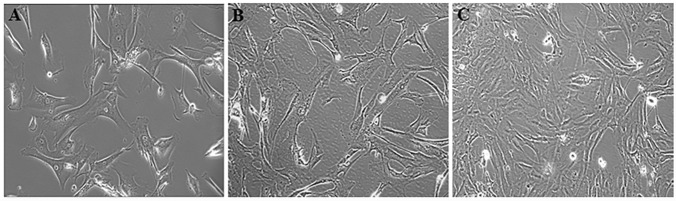
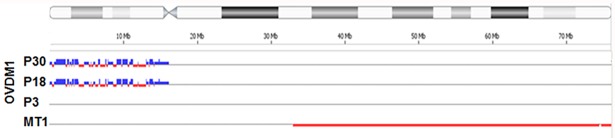
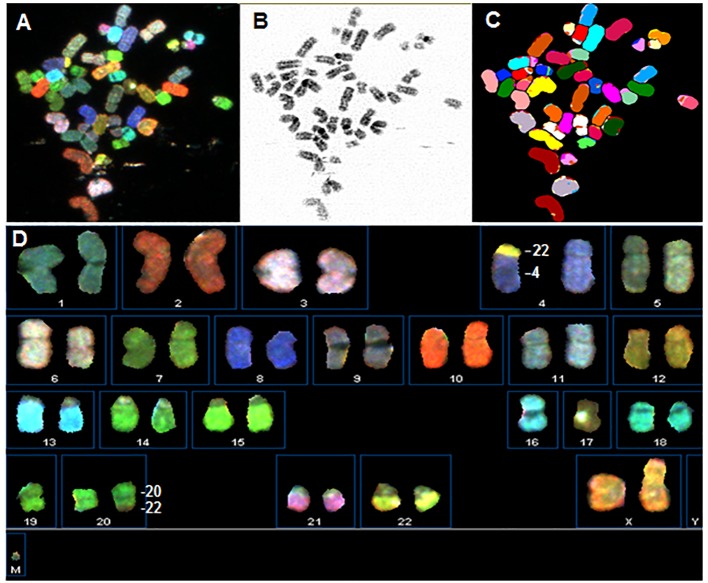
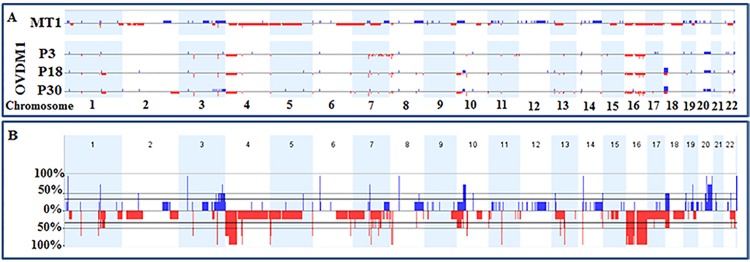
A new ovarian near-diploid cell line, OVDM1, was derived from a highly aneuploid serous ovarian metastatic adenocarcinoma. A metastatic tumor was obtained from a 47-year-old Ashkenazi Jewish patient three years after the first surgery removed the primary tumor, both ovaries, and the remaining reproductive organs. OVDM1 was characterized by cell morphology, genotyping, tumorigenic assay, mycoplasma testing, spectral karyotyping (SKY), and molecular profiling of the whole genome by aCGH and gene expression microarray. Targeted sequencing of a panel of cancer-related genes was also performed. Hierarchical clustering of gene expression data clearly confirmed the ovarian origin of the cell line. OVDM1 has a near-diploid karyotype with a low-level aneuploidy, but samples of the original metastatic tumor were grossly aneuploid. A number of single nucleotide variations (SNVs)/mutations were detected in OVDM1 and the metastatic tumor samples. Some of them were cancer-related according to COSMIC and HGMD databases (no founder mutations in BRCA1 and BRCA2 have been found). A large number of focal copy number alterations (FCNAs) were detected, including homozygous deletions (HDs) targeting WWOX and GATA4. Progression of OVDM1 from early to late passages was accompanied by preservation of the near-diploid status, acquisition of only few additional large chromosomal rearrangements and more than 100 new small FCNAs. Most of newly acquired FCNAs seem to be related to localized but massive DNA fragmentation (chromothripsis-like rearrangements). Newly developed near-diploid OVDM1 cell line offers an opportunity to evaluate tumorigenesis pathways/events in a minor clone of metastatic ovarian adenocarcinoma as well as mechanisms of chromothripsis.
一种新的卵巢近二倍体细胞系OVDM1,源自高度非整倍体的浆液性卵巢转移性腺癌。在首次手术切除原发性肿瘤、双侧卵巢及其余生殖器官三年后,从一名47岁的阿什肯纳兹犹太患者身上获取了转移性肿瘤。通过细胞形态学、基因分型、致瘤性检测、支原体检测、光谱核型分析(SKY)以及采用aCGH和基因表达微阵列对全基因组进行分子谱分析,对OVDM1进行了特征描述。还对一组癌症相关基因进行了靶向测序。基因表达数据的层次聚类明确证实了该细胞系的卵巢起源。OVDM1具有近二倍体核型,非整倍体水平较低,但原始转移性肿瘤样本为严重非整倍体。在OVDM1和转移性肿瘤样本中检测到了一些单核苷酸变异(SNV)/突变。根据COSMIC和HGMD数据库,其中一些与癌症相关(未发现BRCA1和BRCA2中的奠基者突变)。检测到大量局灶性拷贝数改变(FCNA),包括针对WWOX和GATA4的纯合缺失(HD)。OVDM1从早期传代到晚期传代的过程中,近二倍体状态得以保留,仅获得了少数额外的大型染色体重排以及100多个新的小FCNA。大多数新获得的FCNA似乎与局部但大量的DNA片段化(类染色体碎裂重排)有关。新建立的近二倍体OVDM1细胞系为评估转移性卵巢腺癌微小克隆中的肿瘤发生途径/事件以及染色体碎裂机制提供了一个机会。