Department of Pediatric Hematology, Erasmus University Medical Center - Sophia Children's Hospital, Wytemaweg 80, 3015 CN, Rotterdam, The Netherlands.
Department of Hematology, Erasmus University Medical Center, Rotterdam, 's-Gravendijkwal 230, 3015 CE, Rotterdam, The Netherlands.
Drugs. 2017 Sep;77(14):1531-1547. doi: 10.1007/s40265-017-0793-2.
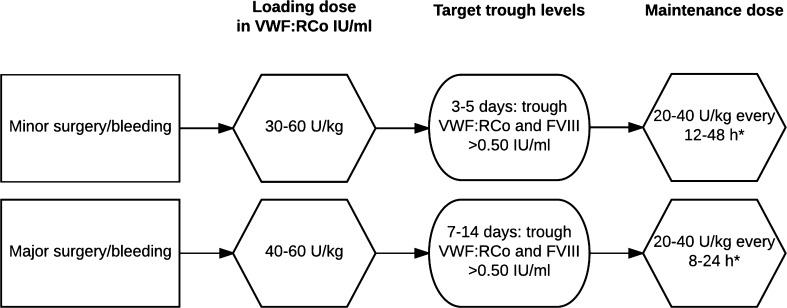
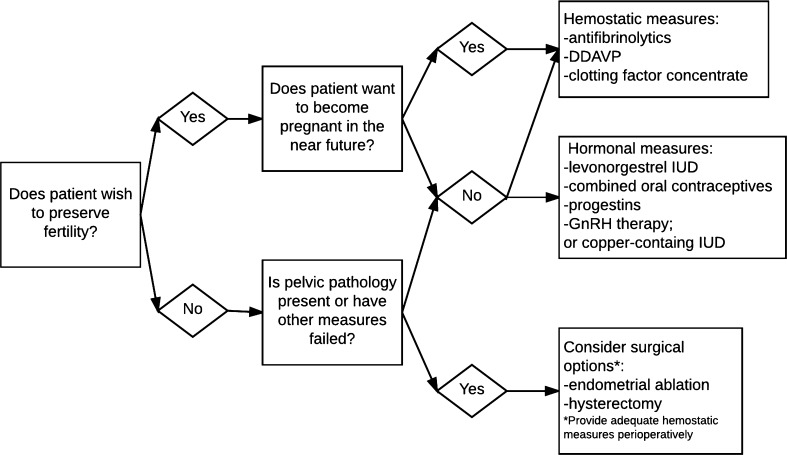
Von Willebrand disease (VWD) is the most common inherited bleeding disorder with an estimated prevalence of ~1% and clinically relevant bleeding symptoms in approximately 1:10,000 individuals. VWD is caused by a deficiency and/or defect of von Willebrand factor (VWF). The most common symptoms are mucocutaneous bleeding, hematomas, and bleeding after trauma or surgery. For decades, treatment to prevent or treat bleeding has consisted of desmopressin in milder cases and of replacement therapy with plasma-derived concentrates containing VWF and Factor VIII (FVIII) in more severe cases. Both are usually combined with supportive therapy, e.g. antifibrinolytic agents, and maximal hemostatic measures. Several developments such as the first recombinant VWF concentrate, which has been recently licensed for VWD, will make a more "personalized" approach to VWD management possible. As research on new treatment strategies for established therapies, such as population pharmacokinetic-guided dosing of clotting factor concentrates, and novel treatment modalities such as aptamers and gene therapy are ongoing, it is likely that the horizon to tailor therapy to the individual patients' needs will be extended, thus, further improving the already high standard of care in VWD in most high-resource countries.
血管性血友病(VWD)是最常见的遗传性出血性疾病,估计患病率约为 1%,约有 1/10000 的个体有临床相关的出血症状。VWD 是由血管性血友病因子(VWF)的缺乏和/或缺陷引起的。最常见的症状是黏膜皮肤出血、血肿和创伤或手术后出血。几十年来,预防或治疗出血的治疗方法一直包括轻度病例的去氨加压素和更严重病例的含有 VWF 和因子 VIII(FVIII)的血浆衍生浓缩物替代治疗。两者通常与支持治疗相结合,例如抗纤维蛋白溶解剂和最大程度的止血措施。一些新的发展,如最近获得 VWD 许可的首个重组 VWF 浓缩物,将使 VWD 的管理更有可能采取“个性化”方法。由于正在对新的治疗策略进行研究,例如基于群体药代动力学的凝血因子浓缩物给药,以及新的治疗方式如适体和基因治疗,因此很可能会扩展到根据个体患者的需求定制治疗的范围,从而进一步提高大多数高资源国家 VWD 的护理标准。