Department of Microbiology and Immunology, Tulane University School of Medicine, New Orleans, Louisiana, USA.
Mucosal Immunol. 2018 Mar;11(2):549-561. doi: 10.1038/mi.2017.70. Epub 2017 Aug 9.
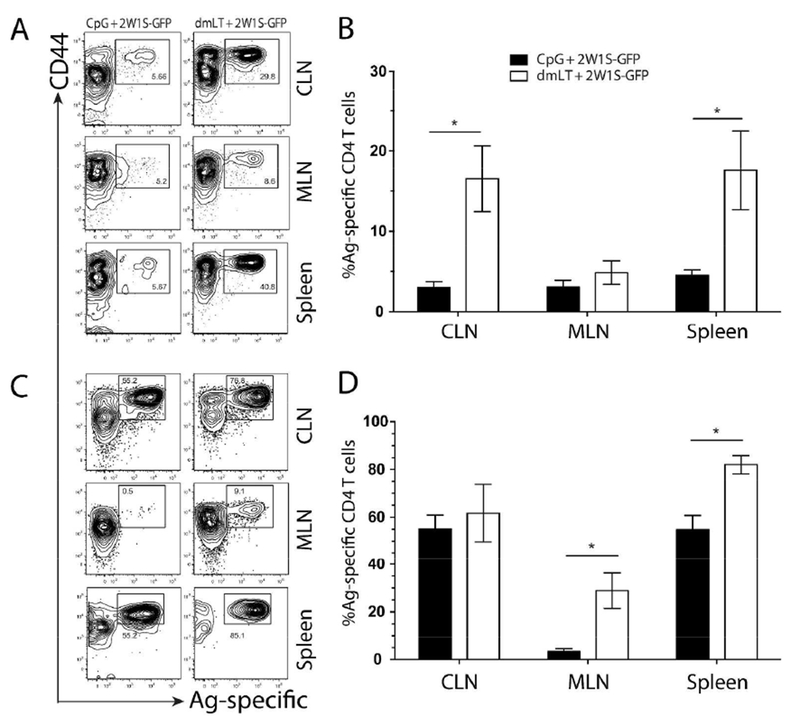
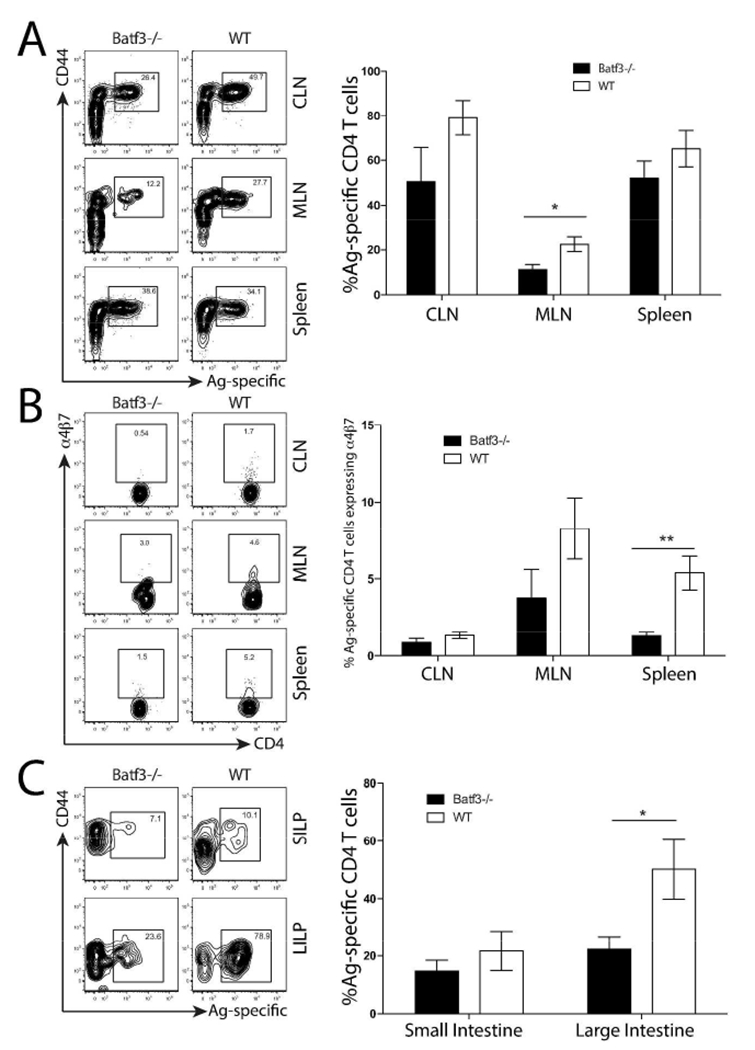
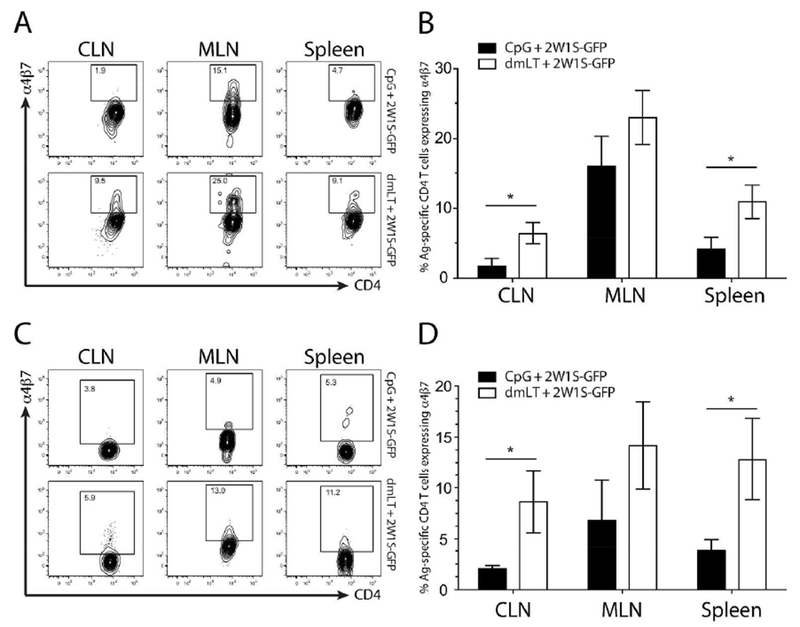
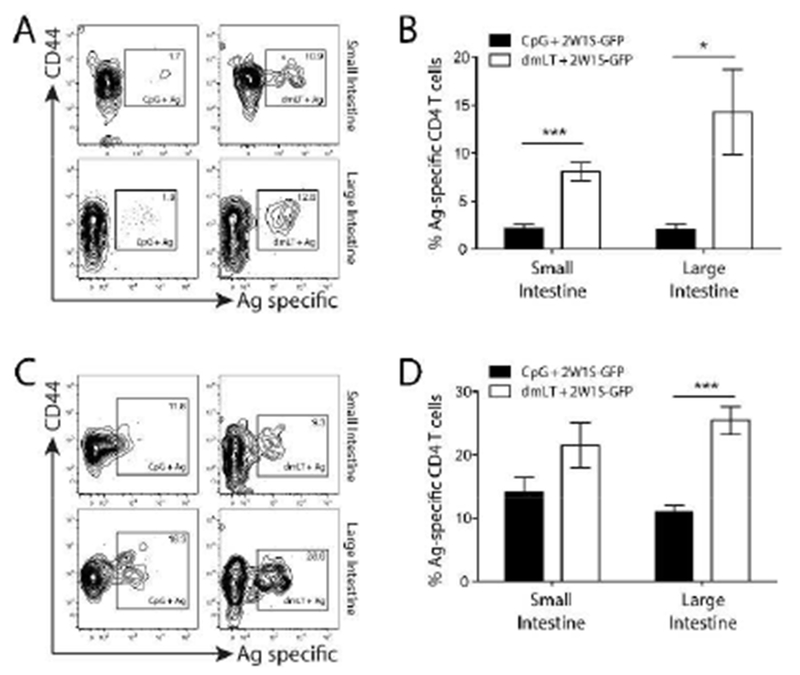
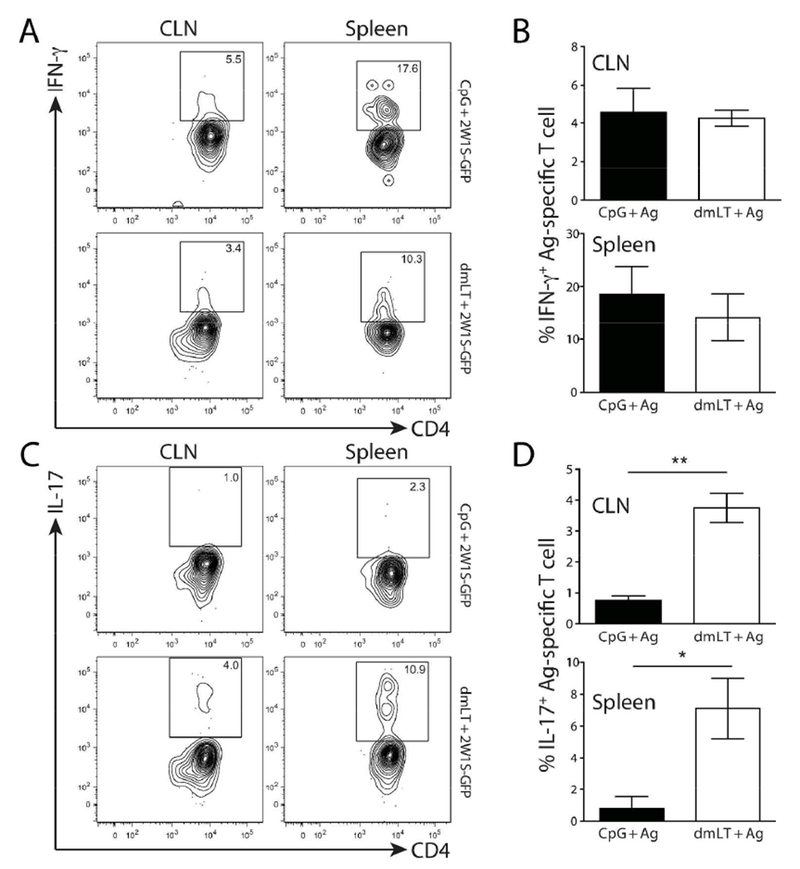
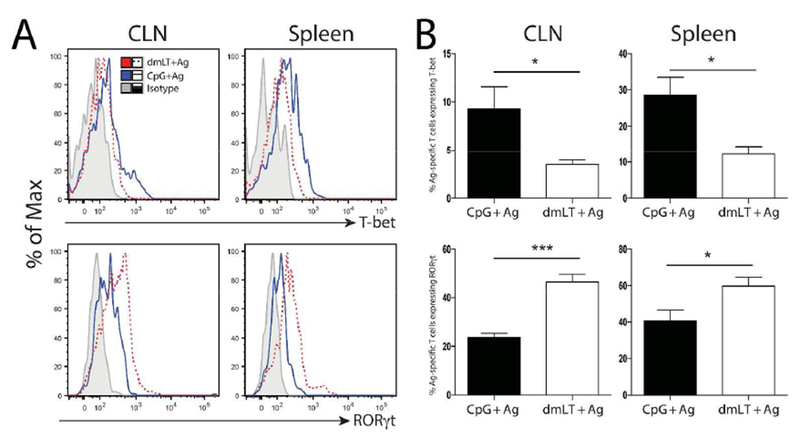
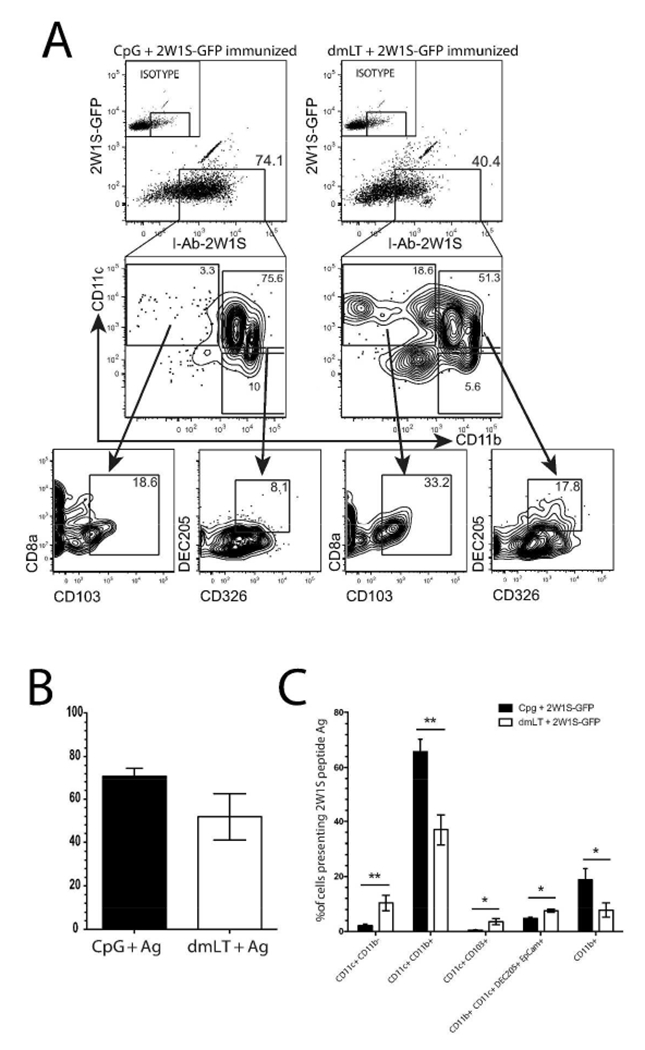
Infectious diarrheal diseases are the second leading cause of death in children under 5 years, making vaccines against these diseases a high priority. It is known that certain vaccine adjuvants, chiefly bacterial ADP-ribosylating enterotoxins, can induce mucosal antibodies when delivered parenterally. Based on this, we reasoned vaccine-specific mucosal cellular immunity could be induced via parenteral immunization with these adjuvants. Here, we show that, in contrast to the Toll-like receptor-9 agonist CpG, intradermal immunization with non-toxic double-mutant heat-labile toxin (dmLT) from enterotoxigenic Escherichia coli drove endogenous, antigen-specific CD4 T cells to expand and upregulate the gut-homing integrin α4β7. This was followed by T-cell migration into gut-draining lymph nodes and both small and large intestines. We also found that dmLT produces a balanced T-helper 1 and 17 (Th1 and Th17) response, whereas T cells from CpG immunized mice were predominantly Th1. Immunization with dmLT preferentially engaged CD103 dendritic cells (DCs) compared with CpG, and mice deficient in CD103 DCs were unable to fully license antigen-specific T-cell migration to the intestinal mucosae following parenteral immunization. This work has the potential to redirect the design of existing and next generation vaccines to elicit pathogen-specific immunity in the intestinal tract with non-mucosal immunization.
感染性腹泻病是 5 岁以下儿童死亡的第二大原因,因此针对这些疾病的疫苗成为当务之急。已知某些疫苗佐剂,主要是细菌 ADP-ribosylating 肠毒素,可以在肠外给药时诱导黏膜抗体。基于此,我们推断可以通过这些佐剂的肠外免疫来诱导疫苗特异性黏膜细胞免疫。在这里,我们表明,与 Toll 样受体 9 激动剂 CpG 相反,来自肠产毒大肠杆菌的无毒双突变不耐热毒素(dmLT)皮内免疫会促使内源性、抗原特异性 CD4 T 细胞扩增并上调肠道归巢整合素α4β7。随后,T 细胞迁移到肠道引流淋巴结和小肠及大肠。我们还发现,dmLT 产生平衡的辅助性 T 细胞 1 和 17(Th1 和 Th17)反应,而 CpG 免疫的小鼠 T 细胞主要是 Th1。与 CpG 相比,dmLT 优先与 CD103 树突状细胞(DC)结合,并且缺乏 CD103 DC 的小鼠无法在肠外免疫后充分许可抗原特异性 T 细胞迁移到肠道黏膜。这项工作有可能重新设计现有的和下一代疫苗,通过非黏膜免疫在肠道中引发针对病原体的特异性免疫。