Lin De-Rong, Hu Li-Jiang, Xing Bao-Shan, You Hong, Loy Douglas A
College of Food Science, Sichuan Agricultural University, Ya'an 625014, China.
State Key Laboratory of Urban Water Resource and Environment, Harbin Institute of Technology, Harbin 150090, China.
Materials (Basel). 2015 Aug 31;8(9):5806-5817. doi: 10.3390/ma8095275.
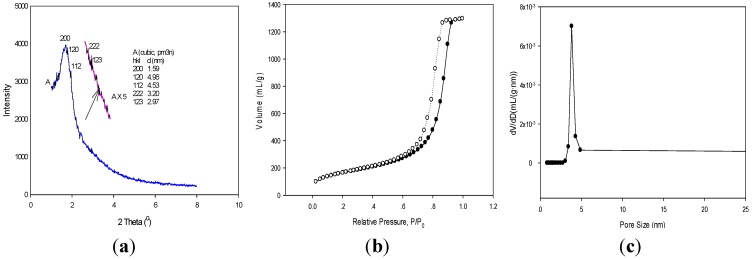
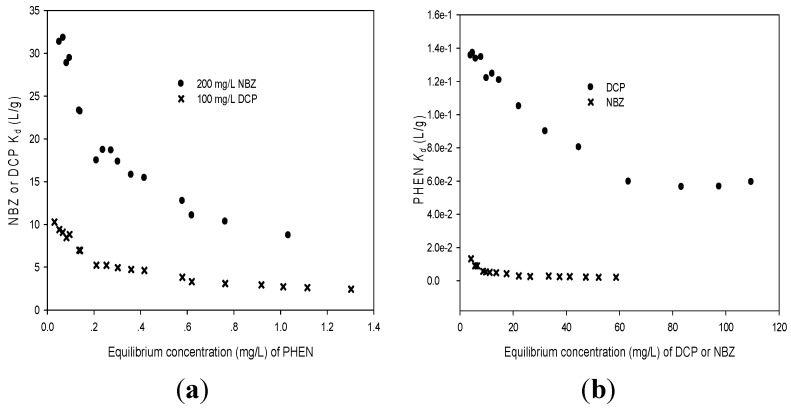
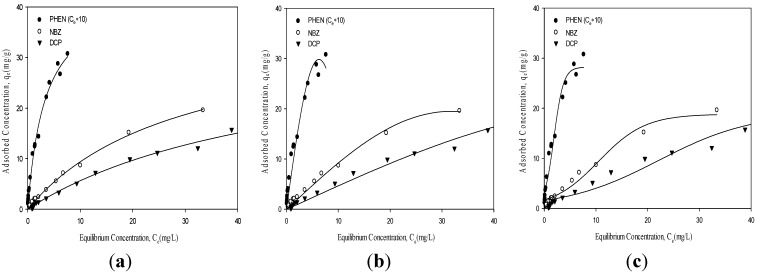
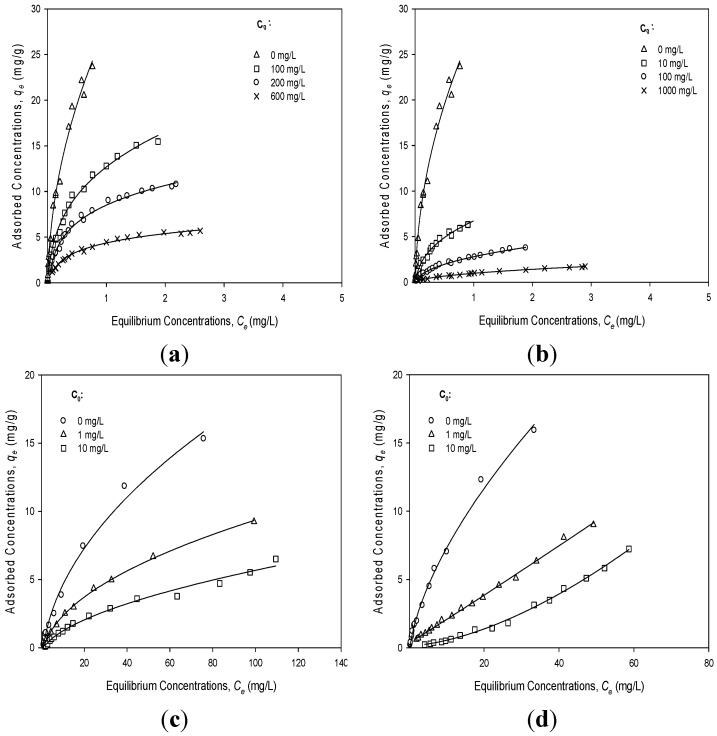
Hexylene-bridged periodic mesoporous polysilsesquioxanes (HBPMS) are a promising new class of adsorbent for the removal of organic contaminants from aqueous solutions. These hybrid organic-inorganic materials have a larger BET surface area of 897 m2·g-1 accessible through a cubic, isotropic network of 3.82-nm diameter pores. The hexylene bridging group provides enhanced adsorption of organic molecules while the bridged polysilsesquioxane structure permits sufficient silanols that are hydrophilic to be retained. In this study, adsorption of phenanthrene (PHEN), 2,4-Dichlorophenol (DCP), and nitrobenzene (NBZ) with HBPMS materials was studied to ascertain the relative contributions to adsorption performance from (1) direct competition for sites and (2) pore blockage. A conceptual model was proposed to further explain the phenomena. This study suggests a promising application of cubic mesoporous BPS in wastewater treatment.
己撑桥连周期性介孔聚倍半硅氧烷(HBPMS)是一类很有前景的新型吸附剂,用于从水溶液中去除有机污染物。这些有机-无机杂化材料具有更大的比表面积,为897 m2·g-1,可通过直径为3.82 nm的立方各向同性孔网络获得。己撑桥连基团增强了有机分子的吸附,而桥连聚倍半硅氧烷结构允许保留足够的具有亲水性的硅醇。在本研究中,研究了HBPMS材料对菲(PHEN)、2,4-二氯苯酚(DCP)和硝基苯(NBZ)的吸附,以确定(1)位点直接竞争和(2)孔堵塞对吸附性能的相对贡献。提出了一个概念模型来进一步解释这些现象。本研究表明立方介孔BPS在废水处理中具有广阔的应用前景。