Malič Barbara, Koruza Jurij, Hreščak Jitka, Bernard Janez, Wang Ke, Fisher John G, Benčan Andreja
Jožef Stefan Institute, Jamova cesta 39, Ljubljana 1000, Slovenia.
Jožef Stefan International Postgraduate School, Jamova cesta 39, Ljubljana 1000, Slovenia.
Materials (Basel). 2015 Dec 1;8(12):8117-8146. doi: 10.3390/ma8125449.
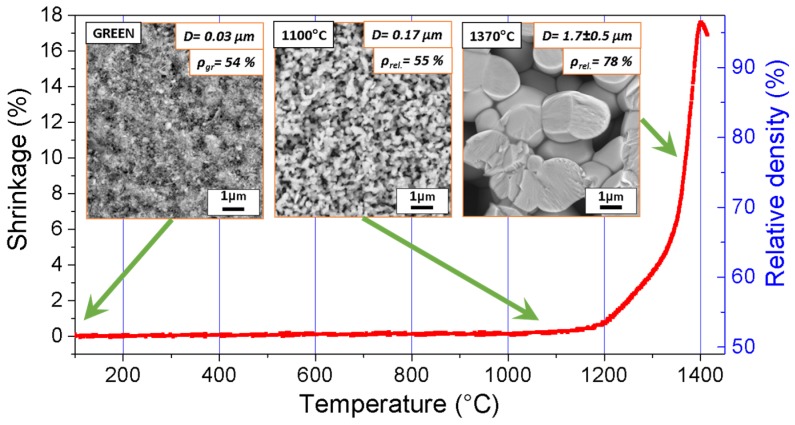
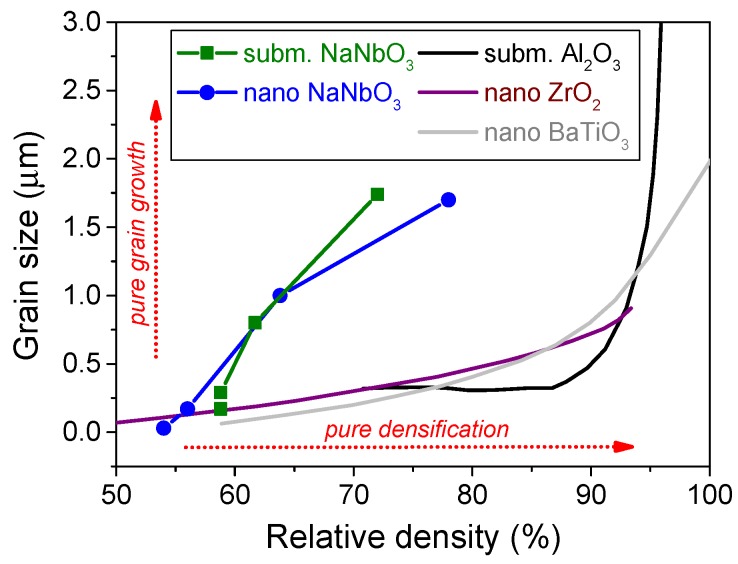
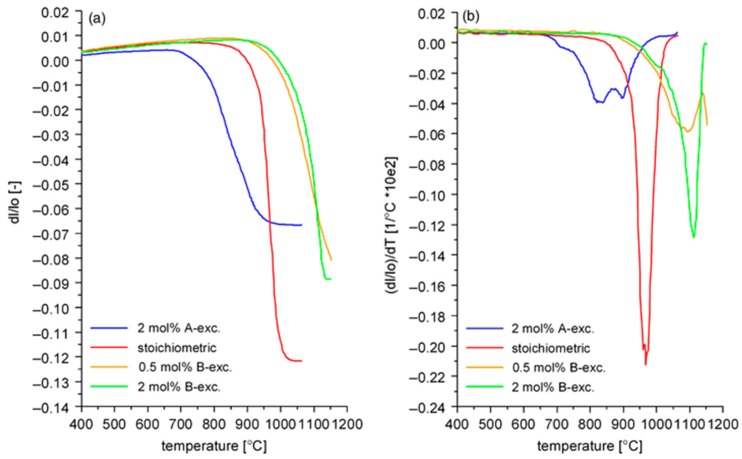
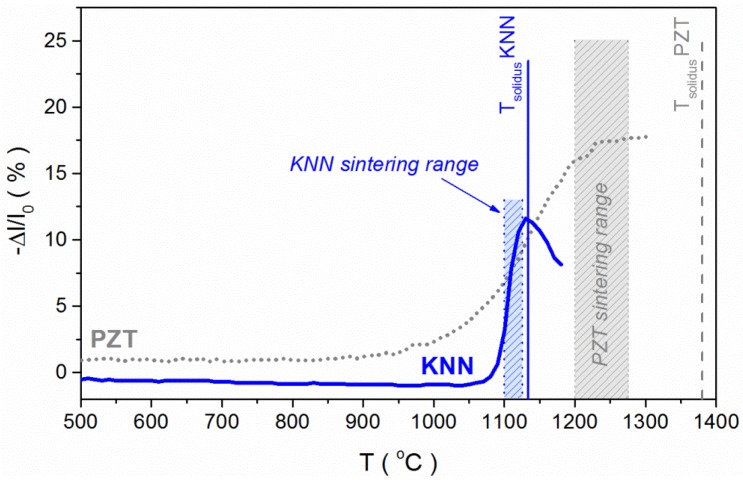
The potassium sodium niobate, KNaNbO₃, solid solution (KNN) is considered as one of the most promising, environment-friendly, lead-free candidates to replace highly efficient, lead-based piezoelectrics. Since the first reports of KNN, it has been recognized that obtaining phase-pure materials with a high density and a uniform, fine-grained microstructure is a major challenge. For this reason the present paper reviews the different methods for consolidating KNN ceramics. The difficulties involved in the solid-state synthesis of KNN powder, , obtaining phase purity, the stoichiometry of the perovskite phase, and the chemical homogeneity, are discussed. The solid-state sintering of stoichiometric KNN is characterized by poor densification and an extremely narrow sintering-temperature range, which is close to the solidus temperature. A study of the initial sintering stage revealed that coarsening of the microstructure without densification contributes to a reduction of the driving force for sintering. The influences of the (K + Na)/Nb molar ratio, the presence of a liquid phase, chemical modifications (doping, complex solid solutions) and different atmospheres (, defect chemistry) on the sintering are discussed. Special sintering techniques, such as pressure-assisted sintering and spark-plasma sintering, can be effective methods for enhancing the density of KNN ceramics. The sintering behavior of KNN is compared to that of a representative piezoelectric lead zirconate titanate (PZT).
铌酸钾钠(KNaNbO₃)固溶体(KNN)被认为是最有前景的、环境友好的无铅材料之一,有望取代高效的铅基压电材料。自首次报道KNN以来,人们已经认识到获得具有高密度和均匀细晶微观结构的纯相材料是一项重大挑战。因此,本文综述了制备KNN陶瓷的不同方法。讨论了KNN粉末固态合成中涉及的困难,即获得相纯度、钙钛矿相的化学计量比以及化学均匀性。化学计量比的KNN的固态烧结表现出致密化不良和烧结温度范围极窄的特点,该范围接近固相线温度。对初始烧结阶段的研究表明,微观结构在未致密化的情况下粗化会导致烧结驱动力降低。讨论了(K + Na)/Nb摩尔比、液相的存在、化学改性(掺杂、复合固溶体)以及不同气氛(缺陷化学)对烧结的影响。特殊烧结技术,如压力辅助烧结和放电等离子烧结,可能是提高KNN陶瓷密度的有效方法。将KNN的烧结行为与代表性压电材料锆钛酸铅(PZT)的烧结行为进行了比较。