Department of Pharmacology and Toxicology, College of Pharmacy, University of Arizona , Tucson, Arizona.
Antioxid Redox Signal. 2018 Dec 10;29(17):1756-1773. doi: 10.1089/ars.2017.7176. Epub 2017 Sep 21.
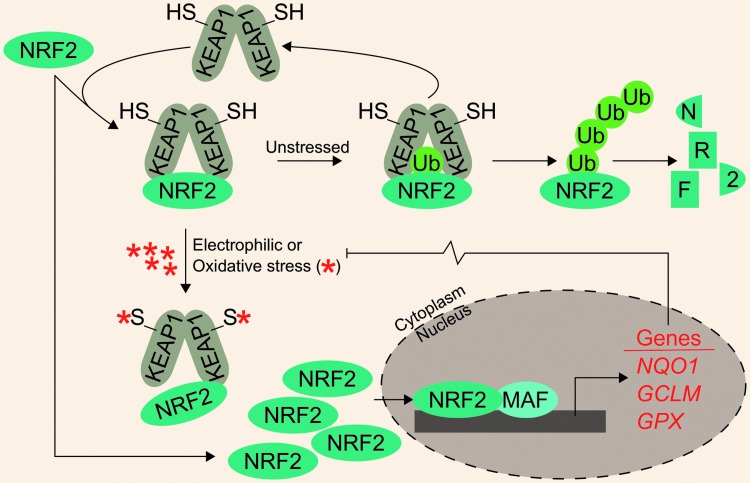
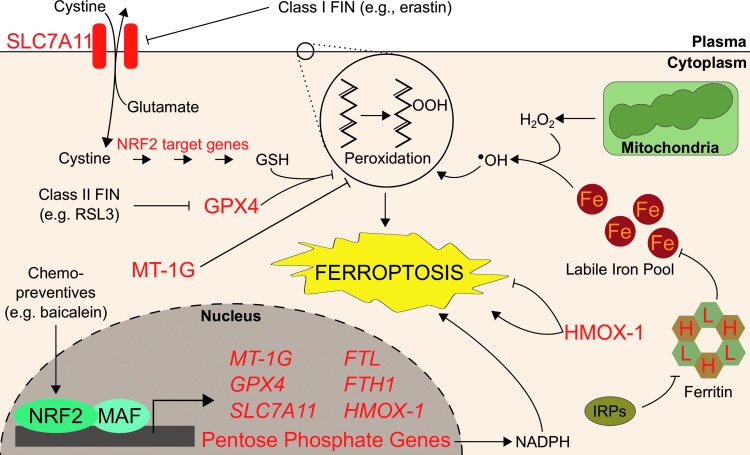
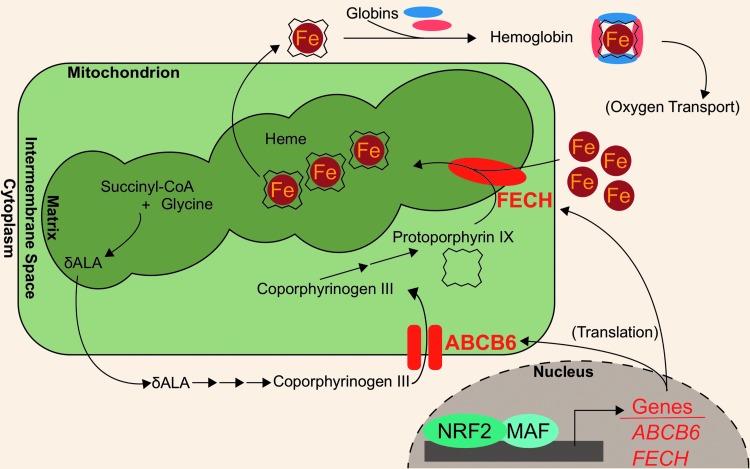
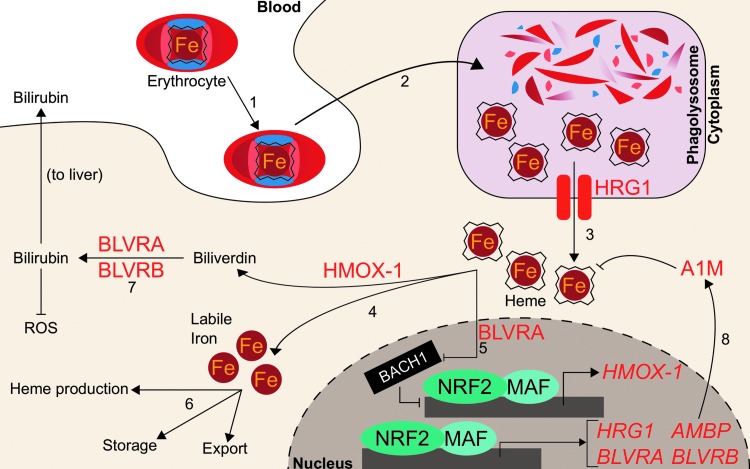
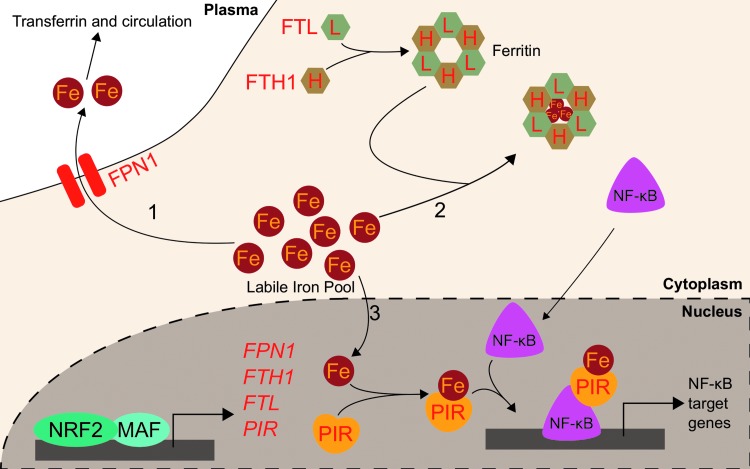
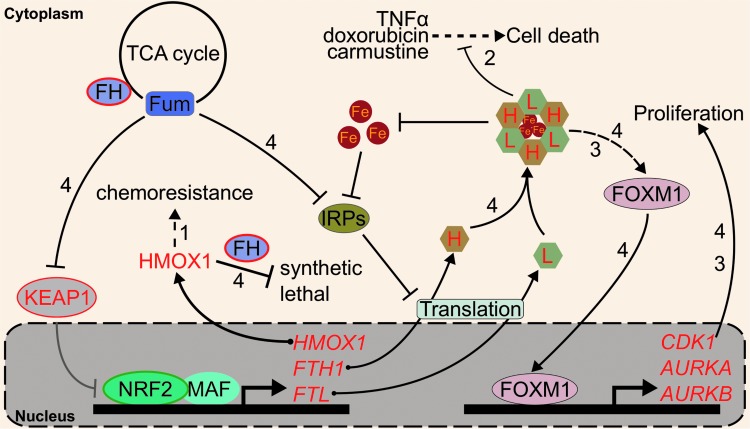
Iron and oxygen are intimately linked: iron is an essential nutrient utilized as a cofactor in enzymes for oxygen transport, oxidative phosphorylation, and metabolite oxidation. However, excess labile iron facilitates the formation of oxygen-derived free radicals capable of damaging biomolecules. Therefore, biological utilization of iron is a tightly regulated process. The nuclear factor (erythroid-derived 2)-like 2 (NRF2) transcription factor, which can respond to oxidative and electrophilic stress, regulates several genes involved in iron metabolism. Recent Advances: The bulk of NRF2 transcription factor research has focused on its roles in detoxification and cancer prevention. Recent works have identified that several genes involved in heme synthesis, hemoglobin catabolism, iron storage, and iron export are under the control of NRF2. Constitutive NRF2 activation and subsequent deregulation of iron metabolism have been implicated in cancer development: NRF2-mediated upregulation of the iron storage protein ferritin or heme oxygenase 1 can lead to enhanced proliferation and therapy resistance. Of note, NRF2 activation and alterations to iron signaling in cancers may hinder efforts to induce the iron-dependent cell death process known as ferroptosis.
Despite growing recognition of NRF2 as a modulator of iron signaling, exactly how iron metabolism is altered due to NRF2 activation in normal physiology and in pathologic conditions remains imprecise; moreover, the roles of NRF2-mediated iron signaling changes in disease progression are only beginning to be uncovered.
Further studies are necessary to connect NRF2 activation with physiological and pathological changes to iron signaling and oxidative stress. Antioxid. Redox Signal. 00, 000-000.
铁和氧密切相关:铁是一种必需的营养物质,作为氧气运输、氧化磷酸化和代谢物氧化的酶的辅助因子。然而,过多的不稳定铁会促进氧自由基的形成,这些自由基能够破坏生物分子。因此,铁的生物利用是一个受严格调控的过程。核因子(红系衍生 2)样 2(NRF2)转录因子可以响应氧化和亲电应激,调节几个与铁代谢有关的基因。最新进展:大量的 NRF2 转录因子研究集中在其在解毒和癌症预防中的作用。最近的研究表明,几个与血红素合成、血红蛋白分解代谢、铁储存和铁输出有关的基因受 NRF2 的控制。NRF2 激活导致铁代谢失调与癌症发展有关:NRF2 介导的铁储存蛋白铁蛋白或血红素加氧酶 1 的上调可导致增强的增殖和治疗耐药性。值得注意的是,NRF2 的激活和癌症中铁信号的改变可能会阻碍诱导铁依赖性细胞死亡过程(称为铁死亡)的努力。
尽管越来越认识到 NRF2 是铁信号的调节剂,但在正常生理和病理条件下,由于 NRF2 激活导致铁代谢发生改变的确切机制仍不明确;此外,NRF2 介导的铁信号变化在疾病进展中的作用才刚刚开始被揭示。
需要进一步的研究来连接 NRF2 的激活与铁信号和氧化应激的生理和病理变化。抗氧化。氧化还原信号。00,000-000。