Chen Rong-Jane, Wu Pei-Hsuan, Ho Chi-Tang, Way Tzong-Der, Pan Min-Hsiung, Chen Hsiu-Min, Ho Yuan-Soon, Wang Ying-Jan
Department of Environmental and Occupational Health, College of Medicine, National Cheng Kung University, Tainan, Taiwan.
Department of Food Safety/Hygiene and Risk Management, College of Medicine, National Cheng Kung University, Tainan, Taiwan.
Cell Death Dis. 2017 Aug 10;8(8):e2985. doi: 10.1038/cddis.2017.333.
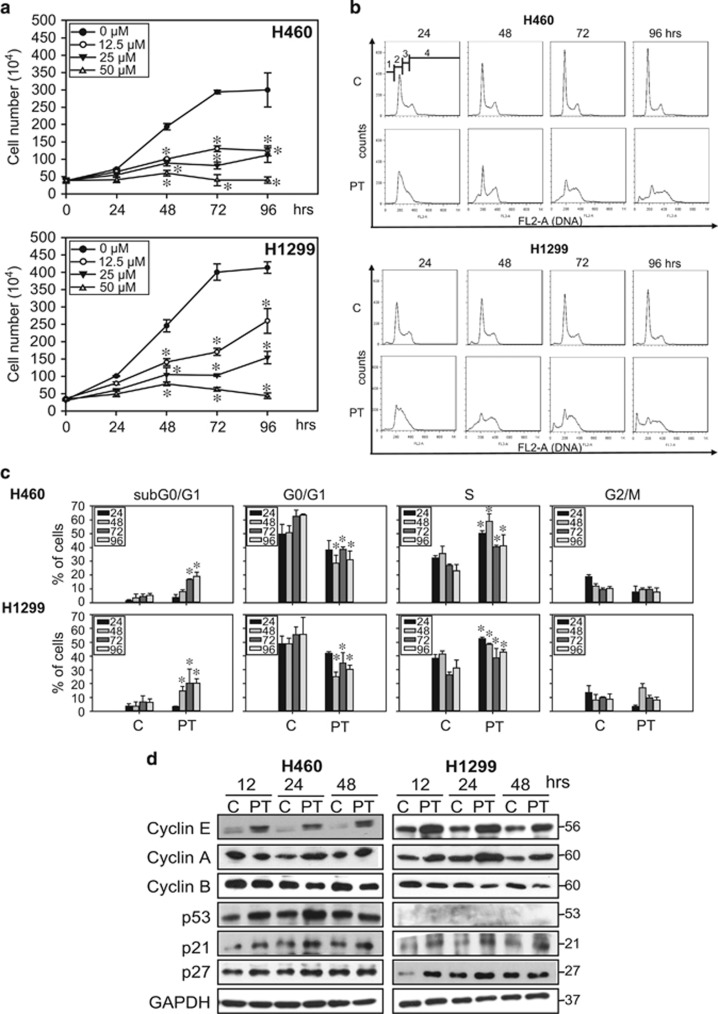
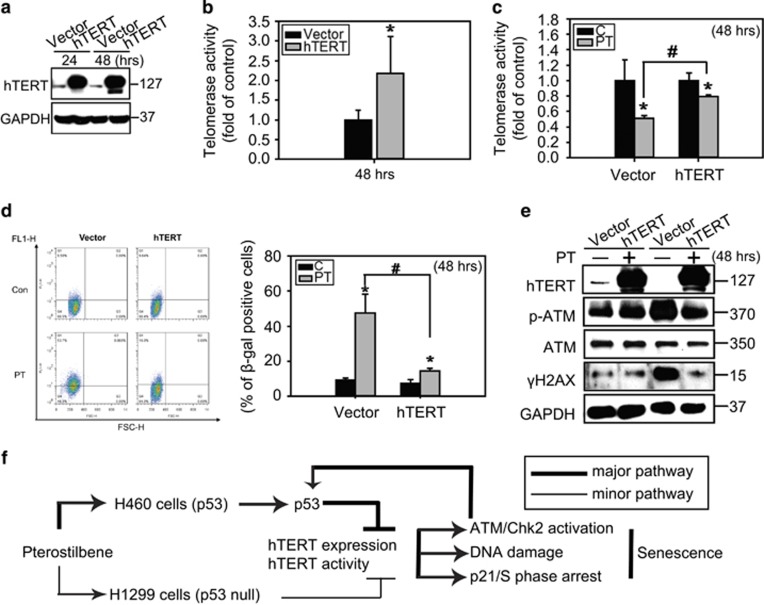
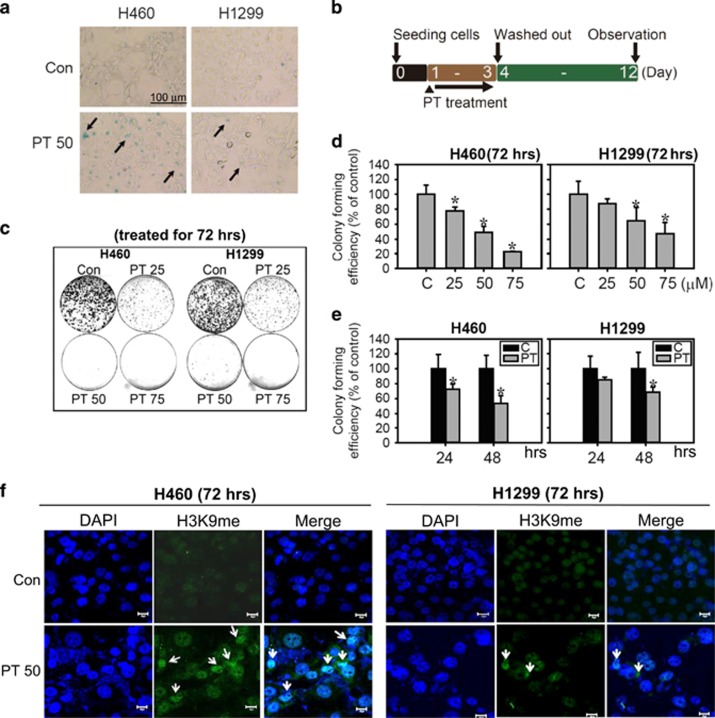
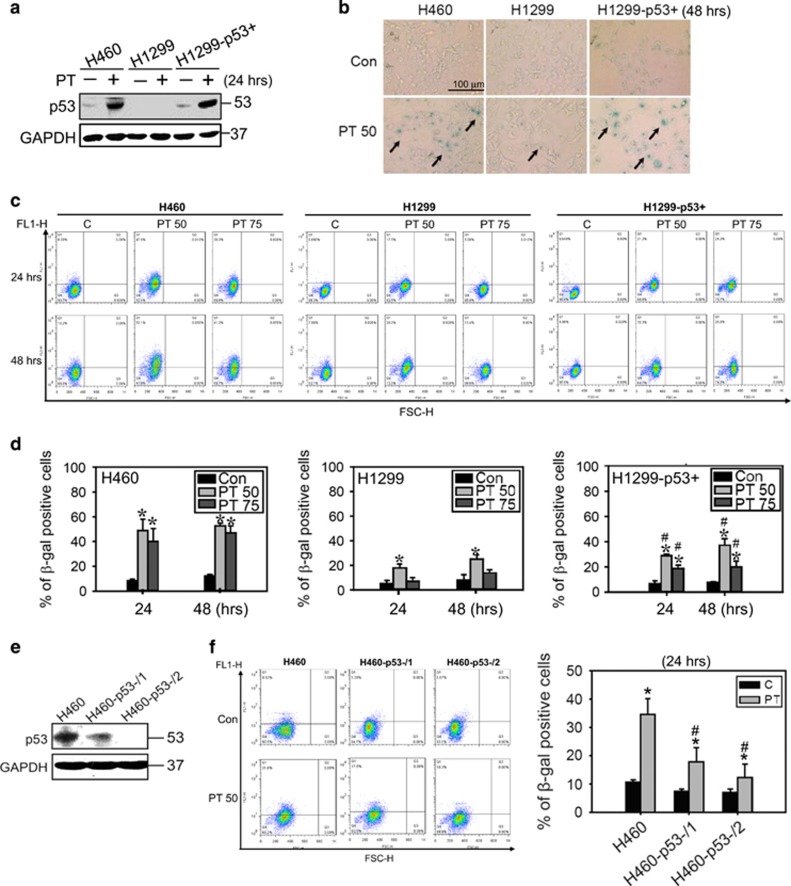
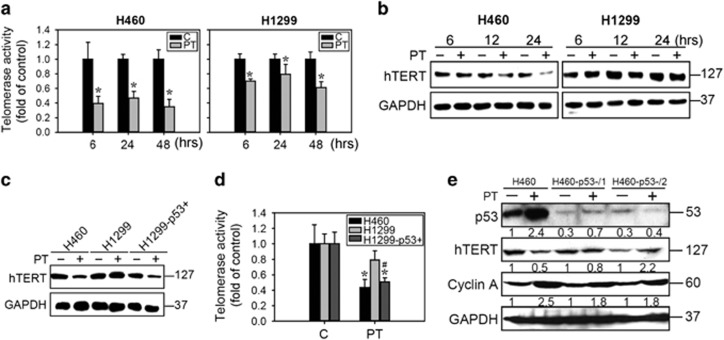
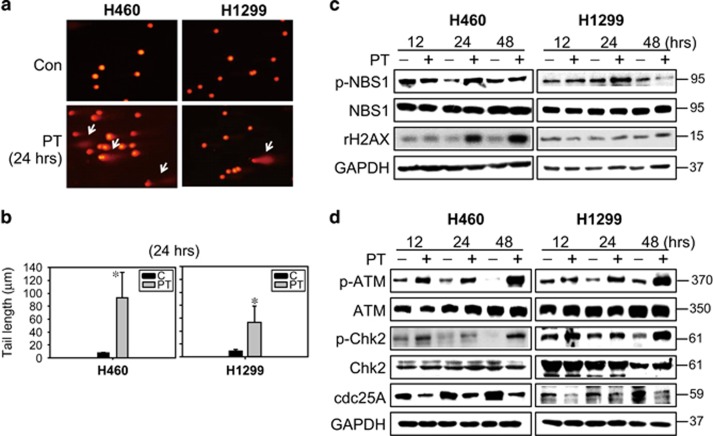
Cellular senescence is characterized by permanent cell cycle arrest, triggered by a variety of stresses, such as telomerase inhibition, and it is recognized as a tumor-suppressor mechanism. In recent years, telomerase has become an important therapeutic target in several cancers; inhibition of telomerase can induce senescence via the DNA damage response (DDR). Pterostilbene (PT), a dimethyl ether analog of resveratrol, possesses a variety of biological functions, including anticancer effects; however, the molecular mechanisms underlying these effects are not fully understood. In this study, we investigated the possible mechanisms of PT-induced senescence through telomerase inhibition in human non-small cell lung cancer cells and delineated the role of p53 in senescence. The results indicated that PT-induced senescence is characterized by a flattened morphology, positive staining for senescence-associated-β galactosidase activity, and the formation of senescence-associated heterochromatic foci. Telomerase activity and protein expression was significantly decreased in H460 (p53 wild type) cells compared with H1299 (p53 null) cells and p53 knockdown H460 cells (H460-p53-). A more detailed mechanistic study revealed that PT-induced senescence partially occurred via a p53-dependent mechanism, triggering inhibition of telomerase activity and protein expression, and leading to the DDR, S phase arrest and, finally, cellular senescence. This study is the first to explore the novel anticancer mechanism of PT senescence induction via the inhibition of telomerase in lung cancer cells.
细胞衰老的特征是由多种应激(如端粒酶抑制)触发的永久性细胞周期停滞,它被认为是一种肿瘤抑制机制。近年来,端粒酶已成为几种癌症的重要治疗靶点;抑制端粒酶可通过DNA损伤反应(DDR)诱导衰老。紫檀芪(PT)是白藜芦醇的二甲醚类似物,具有多种生物学功能,包括抗癌作用;然而,这些作用背后的分子机制尚未完全了解。在本研究中,我们研究了PT通过抑制端粒酶诱导人非小细胞肺癌细胞衰老的可能机制,并阐明了p53在衰老中的作用。结果表明,PT诱导的衰老表现为扁平形态、衰老相关β半乳糖苷酶活性阳性染色以及衰老相关异染色质灶的形成。与H1299(p53缺失)细胞和p53敲低的H460细胞(H460-p53-)相比,H460(p53野生型)细胞中的端粒酶活性和蛋白表达显著降低。更详细的机制研究表明,PT诱导的衰老部分通过p53依赖性机制发生,触发端粒酶活性和蛋白表达的抑制,并导致DDR、S期停滞,最终导致细胞衰老。本研究首次探索了PT通过抑制肺癌细胞端粒酶诱导衰老的新型抗癌机制。