Jin Wei, Liao Xiaodong, Lv Yaping, Pang Zhi, Wang Yuming, Li Quanfu, Liao Yahui, Ye Qing, Chen Guoqiang, Zhao Kewen, Huang Lei
Key Laboratory of Cell Differentiation and Apoptosis of The Chinese Ministry of Education, Department of Pathophysiology, Shanghai Jiao Tong University School of Medicine, Shanghai, China.
Department of Cardiothoracic Surgery, Renji Hospital, Shanghai Jiao Tong University School of Medicine, Shanghai, China.
Cell Death Dis. 2017 Aug 10;8(8):e2980. doi: 10.1038/cddis.2017.378.
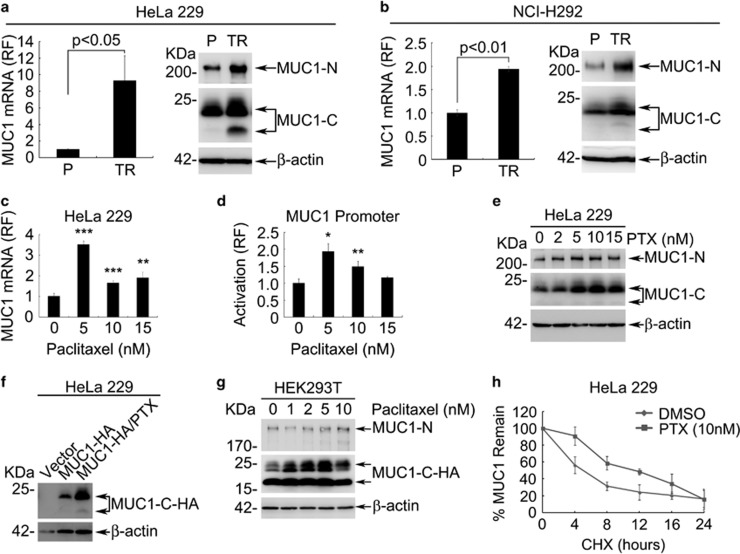
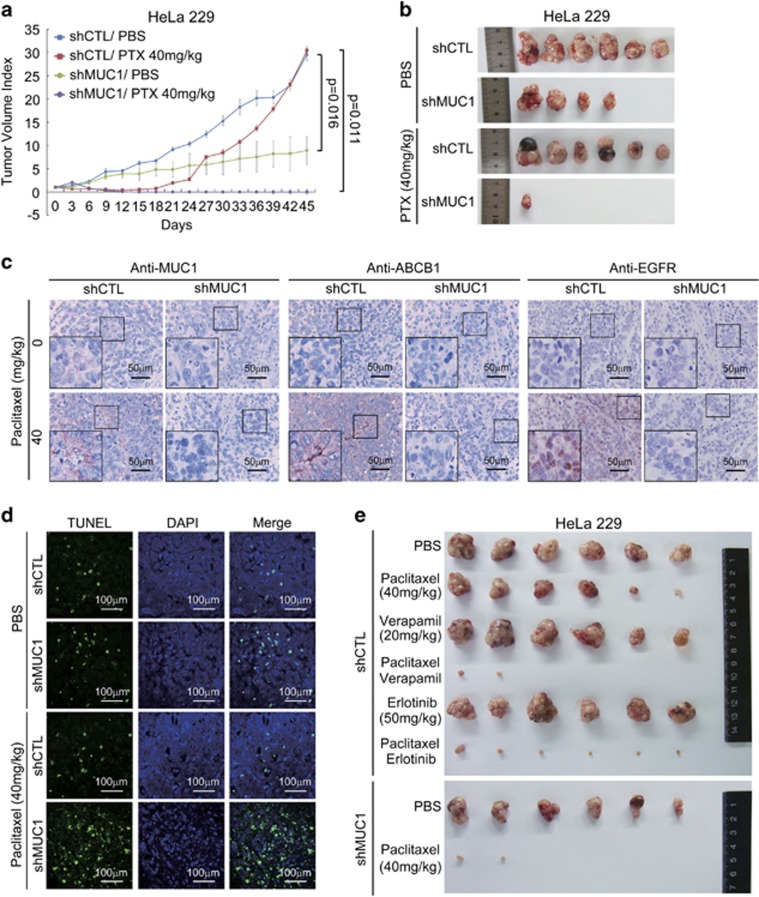
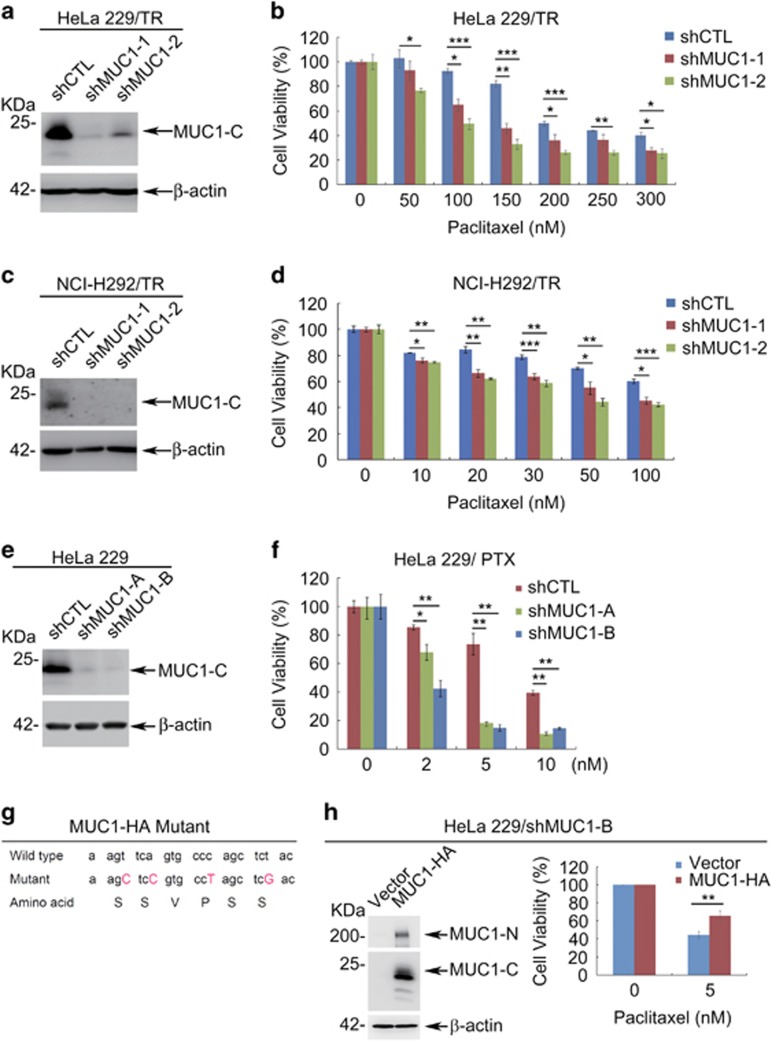
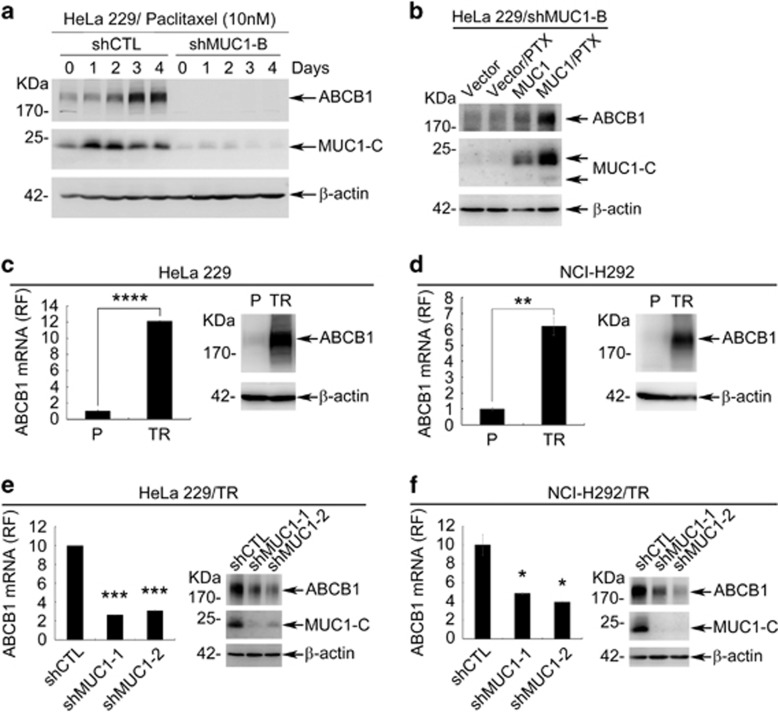
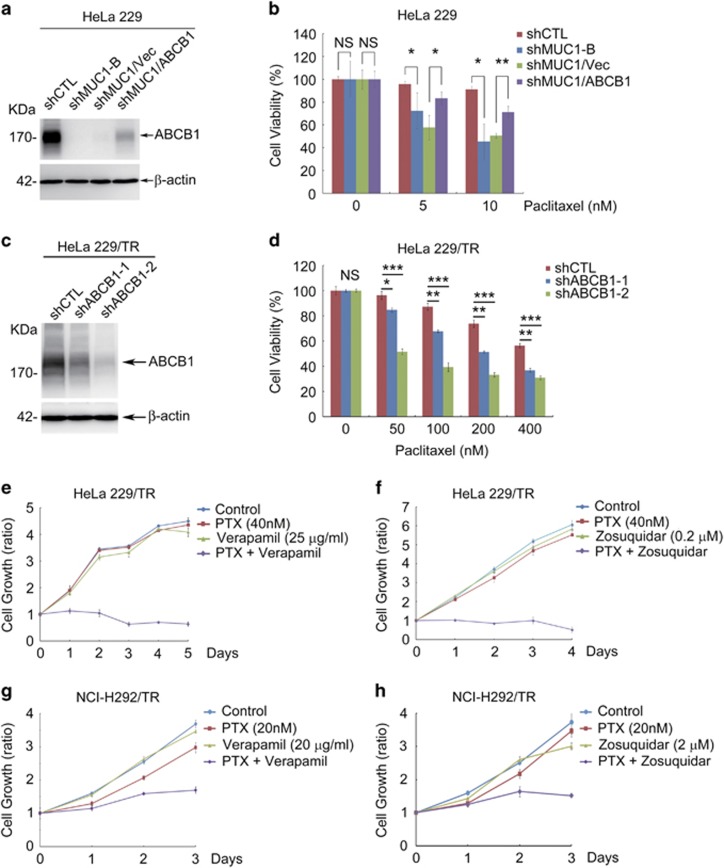
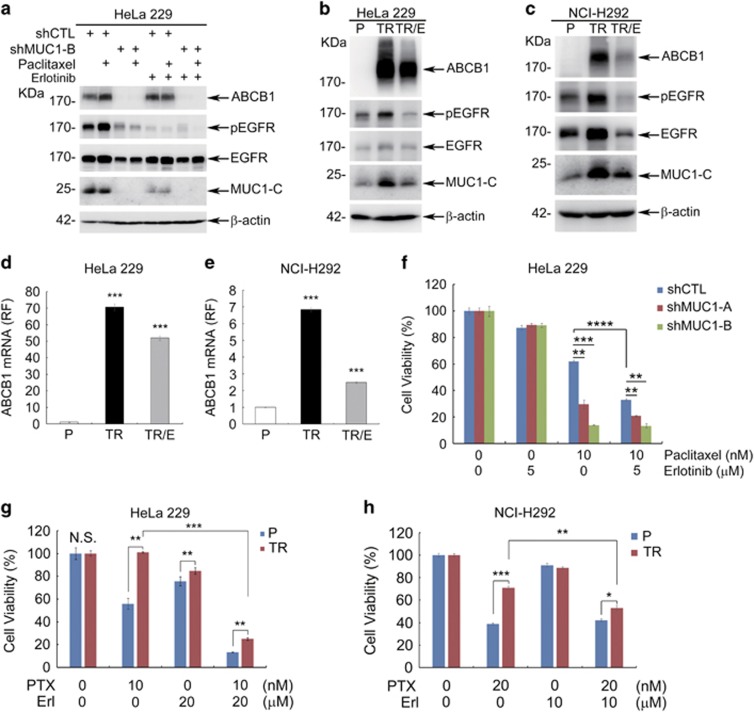
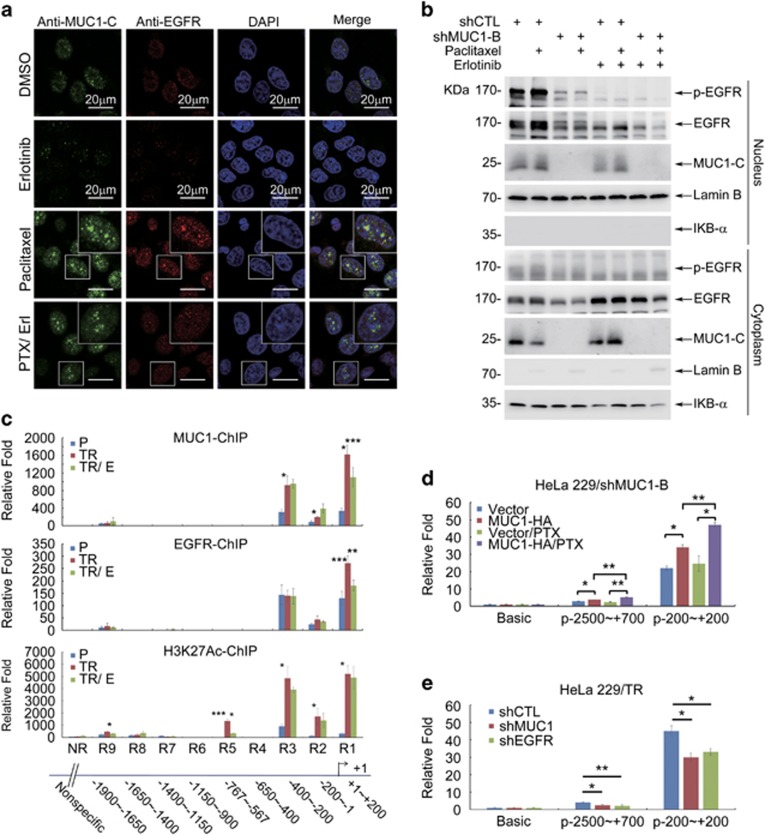
Chemoresistance contributes to cancer relapse and increased mortality in a variety of cancer types, raising a pressing need to better understand the underlying mechanism. MUC1 is abnormally overexpressed in numerous carcinomas and associated with poor prognosis. However, the functional significance of MUC1 in chemoresistance has not been fully elucidated. Here, we showed that MUC1 expression was considerably induced in cells that had acquired chemoresistance at both transcriptional and post-translational levels. Using gain- and loss-of function approaches, we demonstrated a critical role of MUC1 in induction of drug resistance. Through stimulation of EGFR activation and nuclear translocation, MUC1 increased the expression of ATP-binding cassette transporter B1 (ABCB1). Remarkably, targeted suppression of EGFR or ABCB1 by both shRNAs and inhibitors effectively reversed chemoresistance. Moreover, co-administration of the inhibitors of MUC1-EGFR-ABCB1 with paclitaxel significantly blocked not only tumor growth but also relapse in xenograft mouse model. Our data collectively support a model in which MUC1 induces acquired chemotherapy resistance by upregulating ABCB1 in an EGFR-dependent manner, providing a novel molecular basis of using the EGFR inhibitor in MUC1-positive cancers to prevent chemotherapy resistance.
化疗耐药导致多种癌症类型出现癌症复发和死亡率增加,这迫切需要我们更好地理解其潜在机制。MUC1在众多癌症中异常过度表达,并与预后不良相关。然而,MUC1在化疗耐药中的功能意义尚未完全阐明。在此,我们表明在获得化疗耐药性的细胞中,MUC1在转录和翻译后水平均显著上调。通过功能获得和功能缺失方法,我们证明了MUC1在诱导耐药性中起关键作用。通过刺激表皮生长因子受体(EGFR)激活和核转位,MUC1增加了ATP结合盒转运体B1(ABCB1)的表达。值得注意的是,短发夹RNA(shRNAs)和抑制剂对EGFR或ABCB1的靶向抑制有效逆转了化疗耐药性。此外,在异种移植小鼠模型中,MUC1-EGFR-ABCB1抑制剂与紫杉醇联合给药不仅显著抑制肿瘤生长,还能阻止肿瘤复发。我们的数据共同支持了一个模型,即MUC1通过以EGFR依赖的方式上调ABCB1诱导获得性化疗耐药,为在MUC1阳性癌症中使用EGFR抑制剂预防化疗耐药提供了新的分子基础。