Katani Robab, Cote Rebecca, Kudva Indira T, DebRoy Chitrita, Arthur Terrance M, Kapur Vivek
Department of Animal Science, The Pennsylvania State University, University Park, Pennsylvania, United States of America.
The Huck Institutes of the Life Sciences, The Pennsylvania State University, University Park, Pennsylvania, United States of America.
PLoS One. 2017 Aug 10;12(8):e0182940. doi: 10.1371/journal.pone.0182940. eCollection 2017.
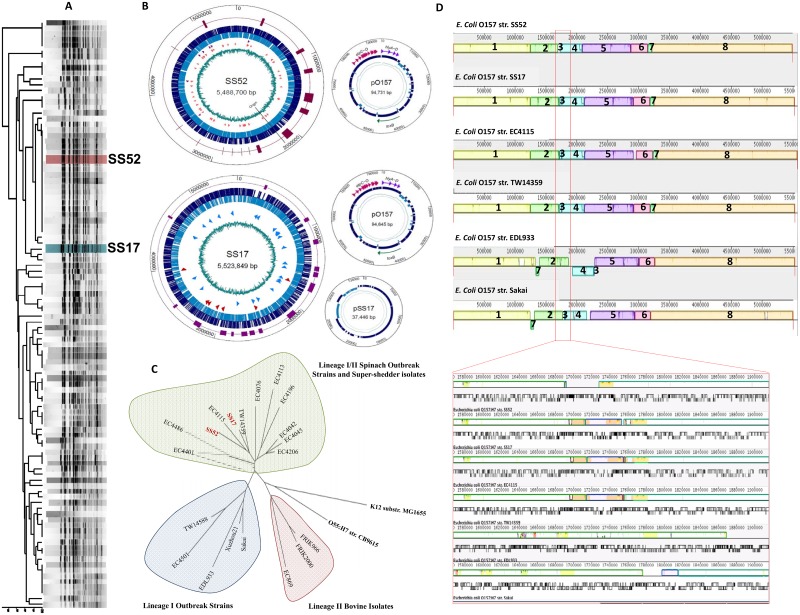
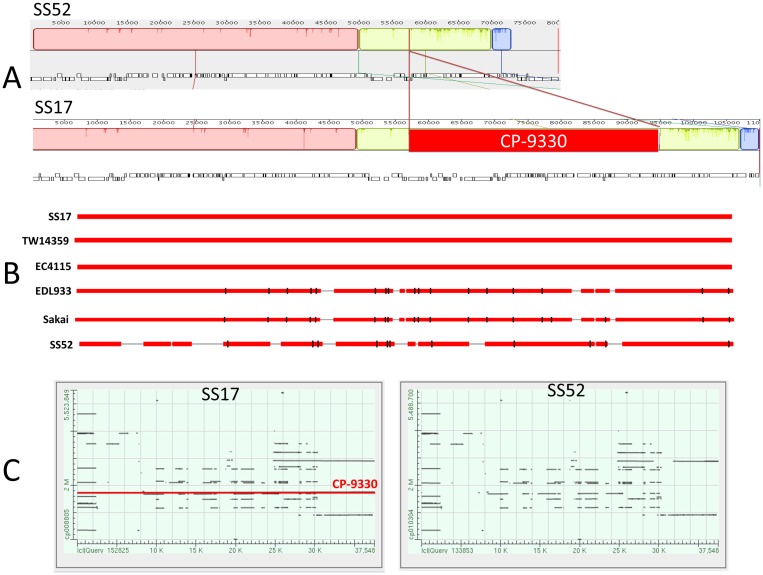
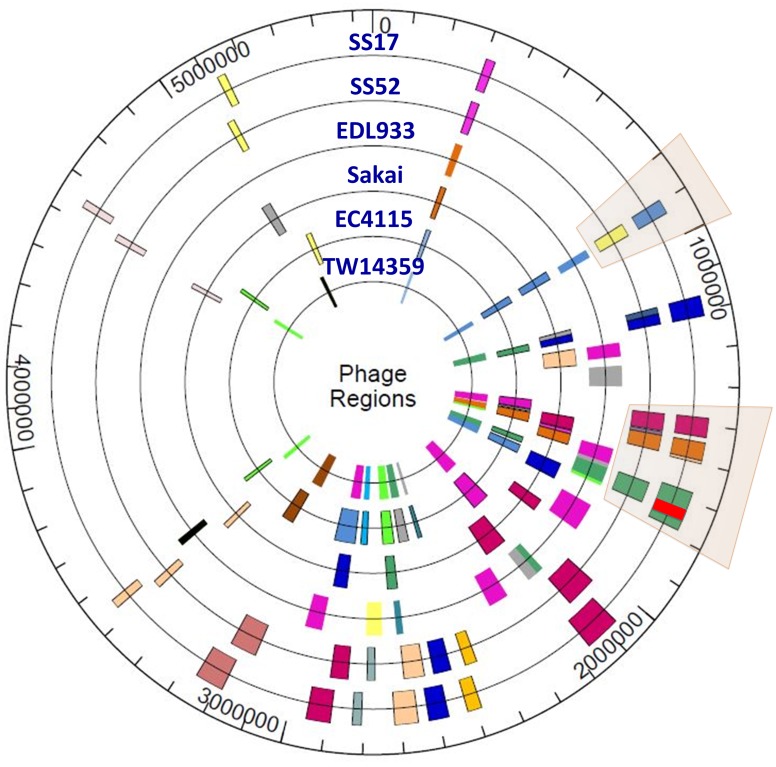
Shiga toxin-producing Escherichia coli O157:H7 (O157) are zoonotic foodborne pathogens and of major public health concern that cause considerable intestinal and extra-intestinal illnesses in humans. O157 colonize the recto-anal junction (RAJ) of asymptomatic cattle who shed the bacterium into the environment through fecal matter. A small subset of cattle, termed super-shedders (SS), excrete O157 at a rate (≥ 104 CFU/g of feces) that is several orders of magnitude greater than other colonized cattle and play a major role in the prevalence and transmission of O157. To better understand microbial factors contributing to super-shedding we have recently sequenced two SS isolates, SS17 (GenBank accession no. CP008805) and SS52 (GenBank accession no. CP010304) and shown that SS isolates display a distinctive strongly adherent phenotype on bovine rectal squamous epithelial cells. Here we present a detailed comparative genomics analysis of SS17 and SS52 with other previously characterized O157 strains (EC4115, EDL933, Sakai, TW14359). The results highlight specific polymorphisms and genomic features shared amongst SS strains, and reveal several SNPs that are shared amongst SS isolates, including in genes involved in motility, adherence, and metabolism. Finally, our analyses reveal distinctive patterns of distribution of phage-associated genes amongst the two SS and other isolates. Together, the results of our comparative genomics studies suggest that while SS17 and SS52 share genomic features with other lineage I/II isolates, they likely have distinct recent evolutionary histories. Future comparative and functional genomic studies are needed to decipher the precise molecular basis for super shedding in O157.
产志贺毒素大肠杆菌O157:H7(O157)是一种人畜共患食源性病原体,是主要的公共卫生问题,可导致人类出现严重的肠道和肠道外疾病。O157定殖于无症状牛的直肠肛门交界处(RAJ),这些牛通过粪便将细菌排放到环境中。一小部分牛,称为超级排菌者(SS),以比其他定殖牛高几个数量级的速率(≥104 CFU/g粪便)排泄O157,在O157的流行和传播中起主要作用。为了更好地了解促成超级排菌的微生物因素,我们最近对两个SS分离株SS17(GenBank登录号CP008805)和SS52(GenBank登录号CP010304)进行了测序,并表明SS分离株在牛直肠鳞状上皮细胞上表现出独特的强粘附表型。在此,我们对SS17和SS52与其他先前已鉴定的O157菌株(EC4115、EDL933、Sakai、TW14359)进行了详细的比较基因组学分析。结果突出了SS菌株之间共有的特定多态性和基因组特征,并揭示了SS分离株之间共有的几个单核苷酸多态性,包括参与运动性、粘附和代谢的基因中的单核苷酸多态性。最后,我们的分析揭示了噬菌体相关基因在两个SS分离株和其他分离株中的独特分布模式。总之,我们的比较基因组学研究结果表明,虽然SS17和SS5与其他I/II谱系分离株具有共同的基因组特征,但它们可能有不同的近期进化历史。未来需要进行比较和功能基因组学研究,以破译O157中超级排菌的确切分子基础。