Shelukhina Irina, Spirova Ekaterina, Kudryavtsev Denis, Ojomoko Lucy, Werner Markus, Methfessel Christoph, Hollmann Michael, Tsetlin Victor
Department of Molecular Basis of Neurosignalling, Shemyakin-Ovchinnikov Institute of Bioorganic Chemistry, Russian Academy of Sciences, Moscow, Russia.
Department of Biochemistry I, Ruhr University Bochum, Bochum, Germany.
PLoS One. 2017 Aug 10;12(8):e0181936. doi: 10.1371/journal.pone.0181936. eCollection 2017.
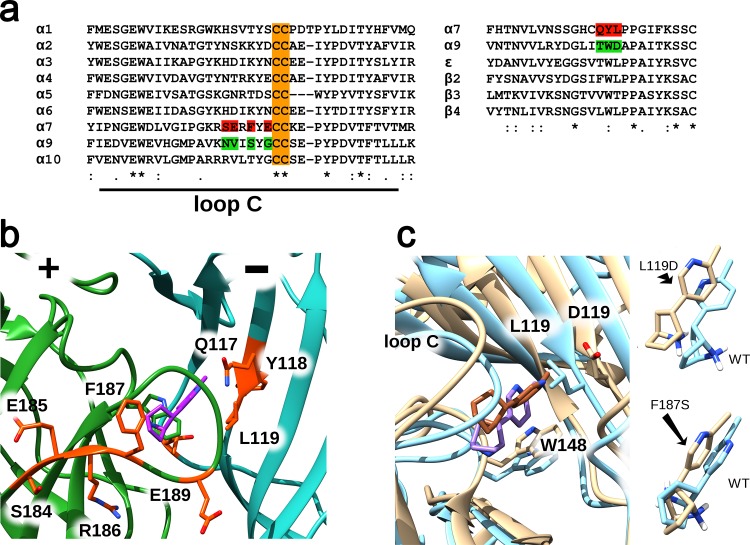
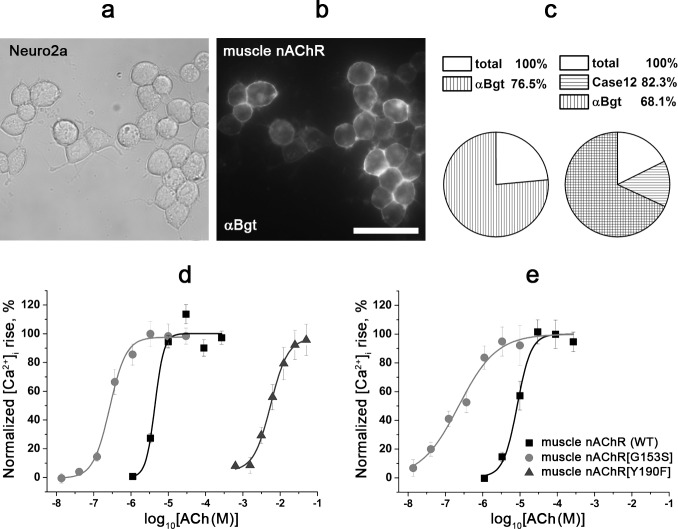
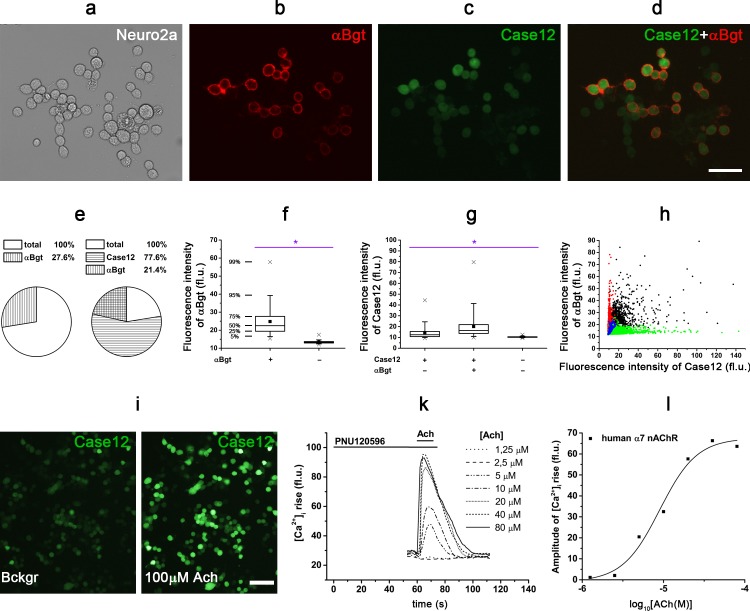
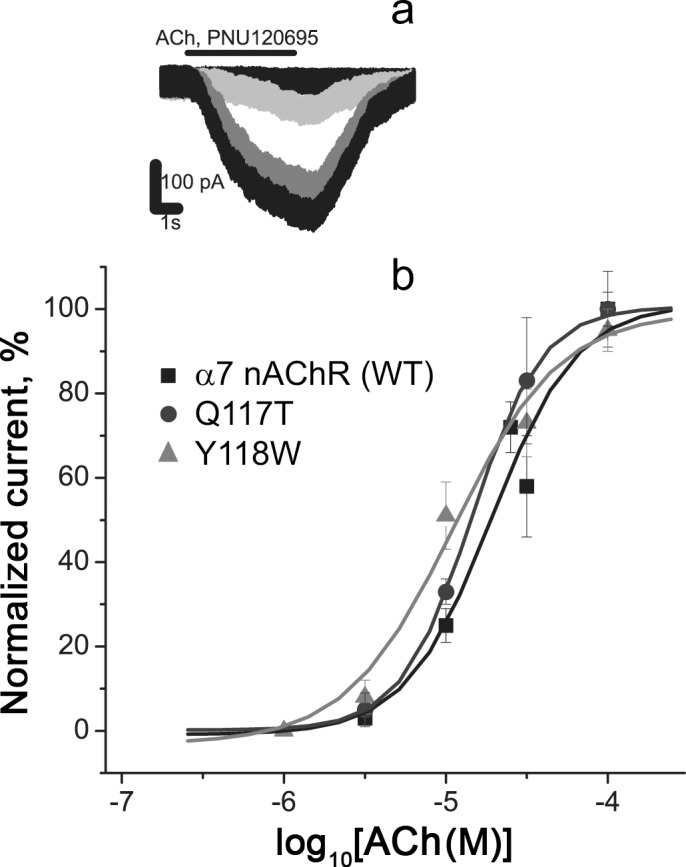
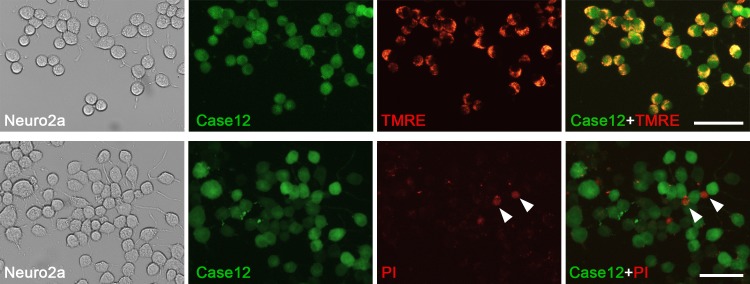
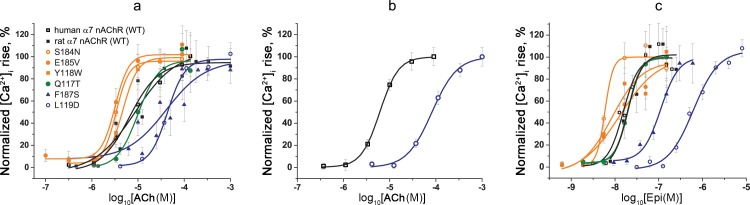
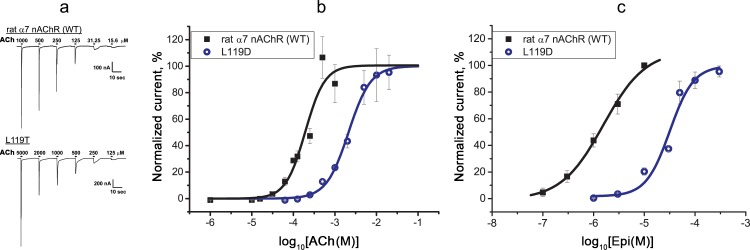
Elucidation of the structural basis of pharmacological differences for highly homologous α7 and α9 nicotinic acetylcholine receptors (nAChRs) may shed light on their involvement in different physiological functions and diseases. Combination of site-directed mutagenesis and electrophysiology is a powerful tool to pinpoint the key amino-acid residues in the receptor ligand-binding site, but for α7 and α9 nAChRs it is complicated by their poor expression and fast desensitization. Here, we probed the ligand-binding properties of α7/α9 nAChR mutants by a proposed simple and fast calcium imaging method. The method is based on transient co-expression of α7/α9 nAChR mutants in neuroblastoma cells together with Ric-3 or NACHO chaperones and Case12 fluorescent calcium ion sensor followed by analysis of their pharmacology using a fluorescence microscope or a fluorometric imaging plate reader (FLIPR) with a GFP filter set. The results obtained were confirmed by electrophysiology and by calcium imaging with the conventional calcium indicator Fluo-4. The affinities for acetylcholine and epibatidine were determined for human and rat α7 nAChRs, and for their mutants with homologous residues of α9 nAChR incorporated at positions 117-119, 184, 185, 187, and 189, which are anticipated to be involved in ligand binding. The strongest decrease in the affinity was observed for mutations at positions 187 and 119. The L119D mutation of α7 nAChR, showing a larger effect for epibatidine than for acetylcholine, may implicate this position in pharmacological differences between α7 and α9 nAChRs.
阐明高度同源的α7和α9烟碱型乙酰胆碱受体(nAChRs)药理差异的结构基础,可能有助于揭示它们在不同生理功能和疾病中的作用。定点诱变和电生理学相结合是确定受体配体结合位点关键氨基酸残基的有力工具,但对于α7和α9 nAChRs来说,由于它们表达不佳和快速脱敏,这一过程变得复杂。在这里,我们通过一种提出的简单快速的钙成像方法,探究了α7/α9 nAChR突变体的配体结合特性。该方法基于在神经母细胞瘤细胞中瞬时共表达α7/α9 nAChR突变体以及Ric-3或NACHO伴侣蛋白和Case12荧光钙离子传感器,随后使用荧光显微镜或配备GFP滤光片组的荧光成像板读数器(FLIPR)分析它们的药理学特性。通过电生理学以及使用传统钙指示剂Fluo-4进行钙成像,证实了所获得的结果。测定了人源和大鼠α7 nAChRs及其在117-119、184、185、187和189位掺入α9 nAChR同源残基的突变体对乙酰胆碱和埃博霉素的亲和力,预计这些位点参与配体结合。在187和119位的突变观察到亲和力下降最为明显。α7 nAChR的L119D突变对埃博霉素的影响比对乙酰胆碱的影响更大,这可能意味着该位点与α7和α9 nAChRs之间的药理学差异有关。