Shibui Yusuke, Sakai Ryosei, Manabe Yasuhiro, Masuyama Takeshi
Safety Evaluation Research Group, Fundamental Technology Labs., Institute for Innovation, Ajinomoto Co., Inc., 1-1 Suzuki-cho, Kawasaki-ku, Kawasaki-shi, Kanagawa 210-8681, Japan.
J Toxicol Pathol. 2017 Jul;30(3):217-229. doi: 10.1293/tox.2017-0002. Epub 2017 Apr 22.
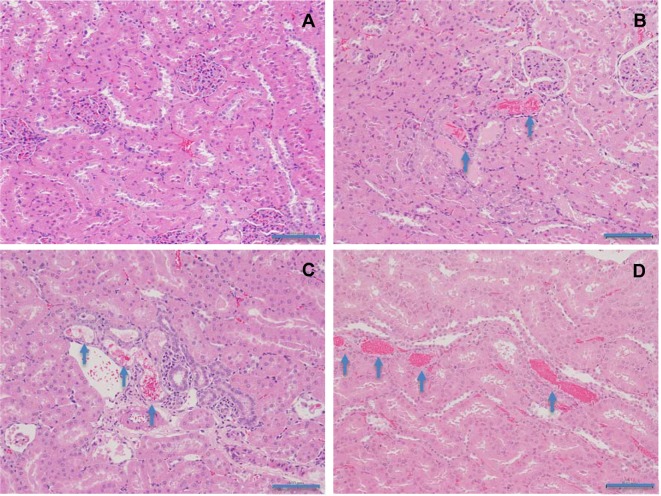
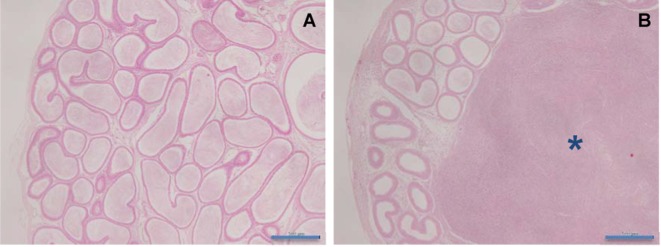
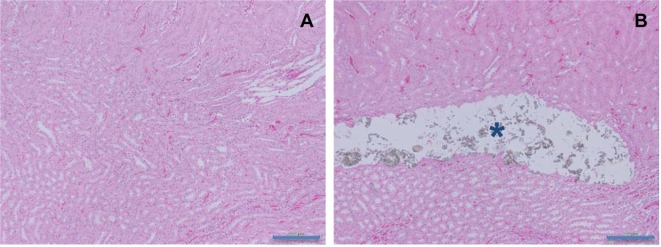
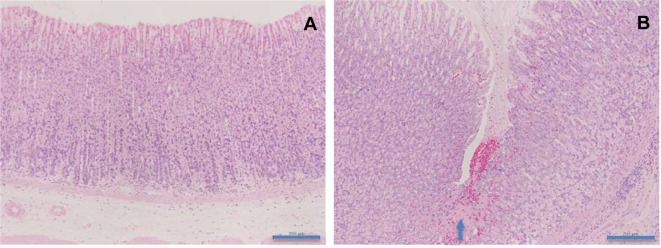
Two 4-week repeated-dose toxicity studies were conducted to evaluate the potential toxicity of l-cysteine and d-cysteine. In one study, three groups of 6 male rats were each administered l-cysteine once daily by gavage at doses of 500, 1,000, or 2,000 mg/kg/day for 28 consecutive days. The control group was administered a 0.5% methylcellulose vehicle solution. The other study followed a similar protocol except that the experimental groups received d-cysteine. Toxicological observations showed that the l-cysteine-treated groups exhibited renal injuries such as basophilic tubules with eosinophilic material in the lumen, and there were increased numbers of basophilic tubules in all treated groups. In 1,000 or 2,000 mg/kg/day-treated groups, salivation and necropsy findings indicative of focal erosion in the stomach mucosa were found. Increases in reticulocyte counts were observed in the 2,000 mg/kg/day-treated group. Toxicological findings obtained for the d-cysteine-treated groups included anemia and renal injuries such as basophilic tubules with eosinophilic material in the lumen, increased numbers of basophilic tubules, and crystal deposition in the medulla in the 2,000 mg/kg/day-treated group. Additional findings included sperm granuloma in the epididymis, necropsy findings suggestive of focal erosion in the stomach mucosa, and salivation in the 1,000 or 2,000 mg/kg/day-treated groups. One rat in the 2,000 mg/kg/day-treated group died due to renal failure. In conclusion, the no-observed-adverse-effect levels (NOAELs) were estimated to be less than 500 mg/kg/day for l-cysteine and 500 mg/kg/day for d-cysteine under our study conditions. The toxicological profiles were similar for l-cysteine and d-cysteine; however, there were slight differences in the dose responses. The mechanisms underlying these differences remain to be determined.
进行了两项为期4周的重复给药毒性研究,以评估L-半胱氨酸和D-半胱氨酸的潜在毒性。在一项研究中,三组6只雄性大鼠连续28天每天经口灌胃给予L-半胱氨酸,剂量分别为500、1000或2000mg/kg/天。对照组给予0.5%甲基纤维素赋形剂溶液。另一项研究采用类似方案,只是实验组给予D-半胱氨酸。毒理学观察表明,L-半胱氨酸处理组出现肾损伤,如嗜碱性小管管腔内有嗜酸性物质,且所有处理组嗜碱性小管数量增加。在1000或2000mg/kg/天处理组中,发现有流涎现象以及尸检结果表明胃黏膜有局灶性糜烂。在2000mg/kg/天处理组中观察到网织红细胞计数增加。D-半胱氨酸处理组的毒理学发现包括贫血和肾损伤,如嗜碱性小管管腔内有嗜酸性物质、嗜碱性小管数量增加,以及在2000mg/kg/天处理组中髓质有晶体沉积。其他发现包括在1000或2000mg/kg/天处理组中附睾有精子肉芽肿、尸检结果提示胃黏膜有局灶性糜烂以及流涎。2000mg/kg/天处理组中有1只大鼠死于肾衰竭。总之,在我们的研究条件下,L-半胱氨酸的未观察到不良反应水平(NOAELs)估计低于500mg/kg/天,D-半胱氨酸为500mg/kg/天。L-半胱氨酸和D-半胱氨酸的毒理学特征相似;然而,剂量反应存在细微差异。这些差异背后的机制仍有待确定。