Hammam Elie, Macefield Vaughan G
School of Medicine, Western Sydney University, Sydney, NSW, Australia.
Neuroscience Research Australia, Sydney, NSW, Australia.
Front Neurol. 2017 Jul 26;8:334. doi: 10.3389/fneur.2017.00334. eCollection 2017.
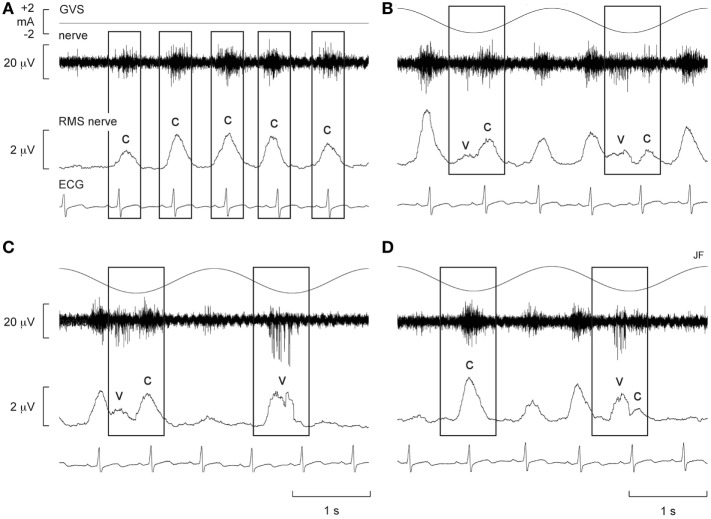
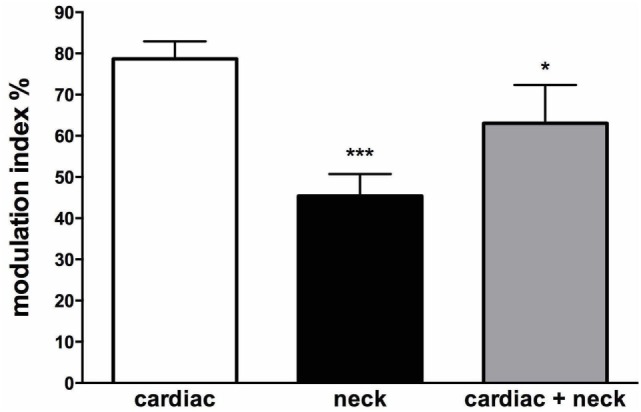
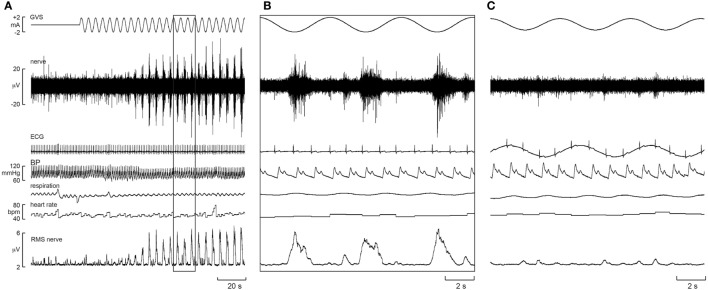
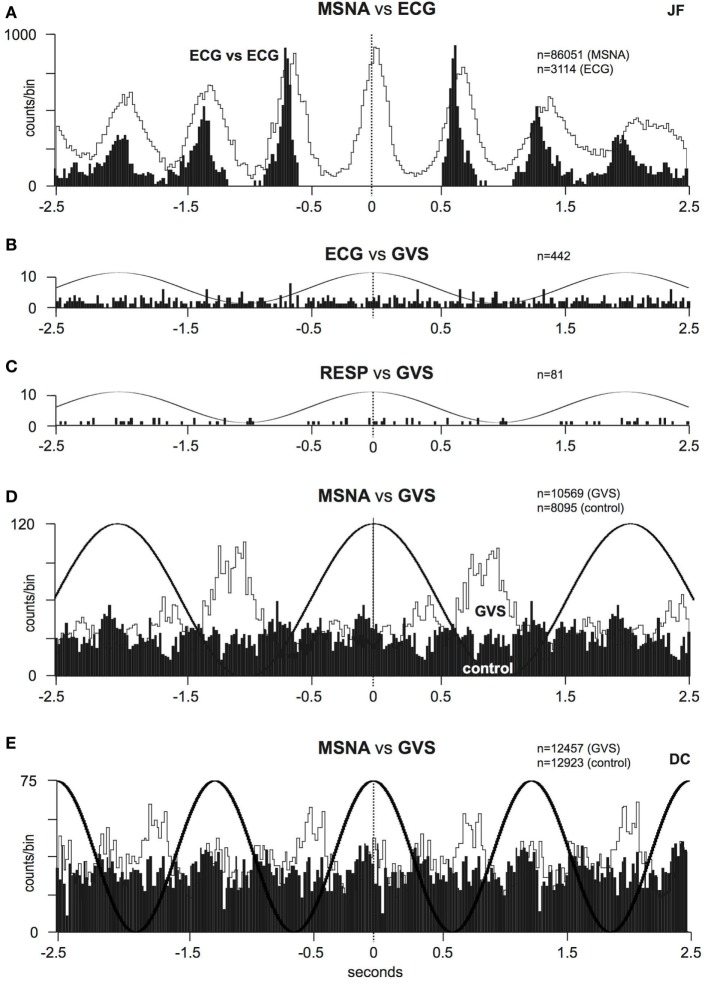
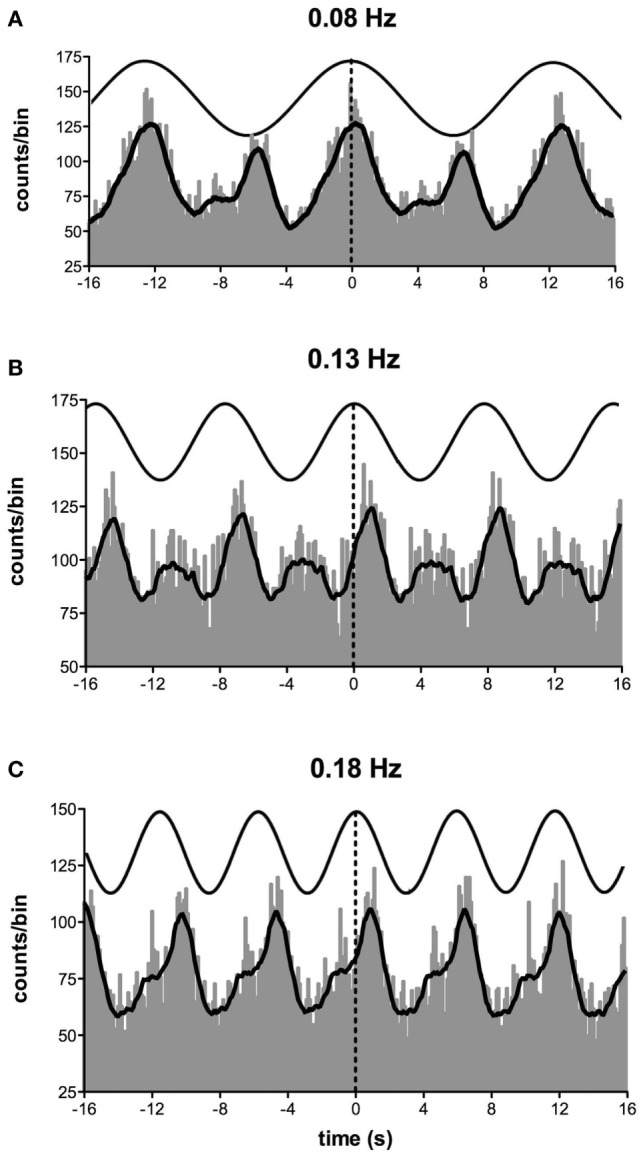
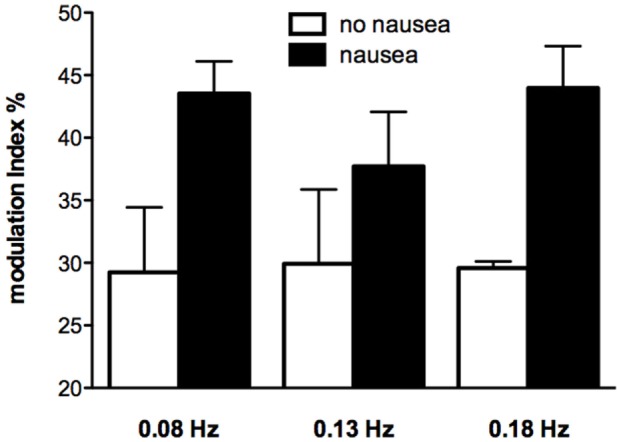
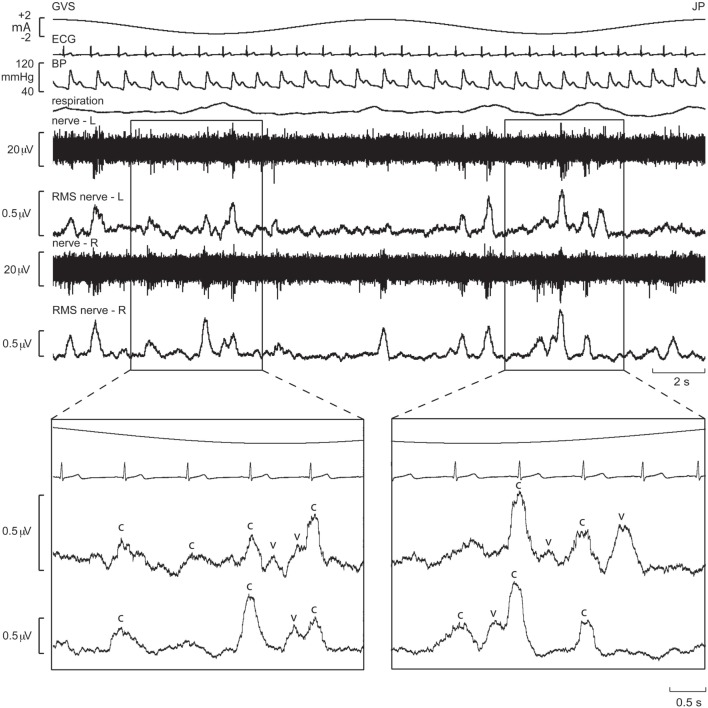
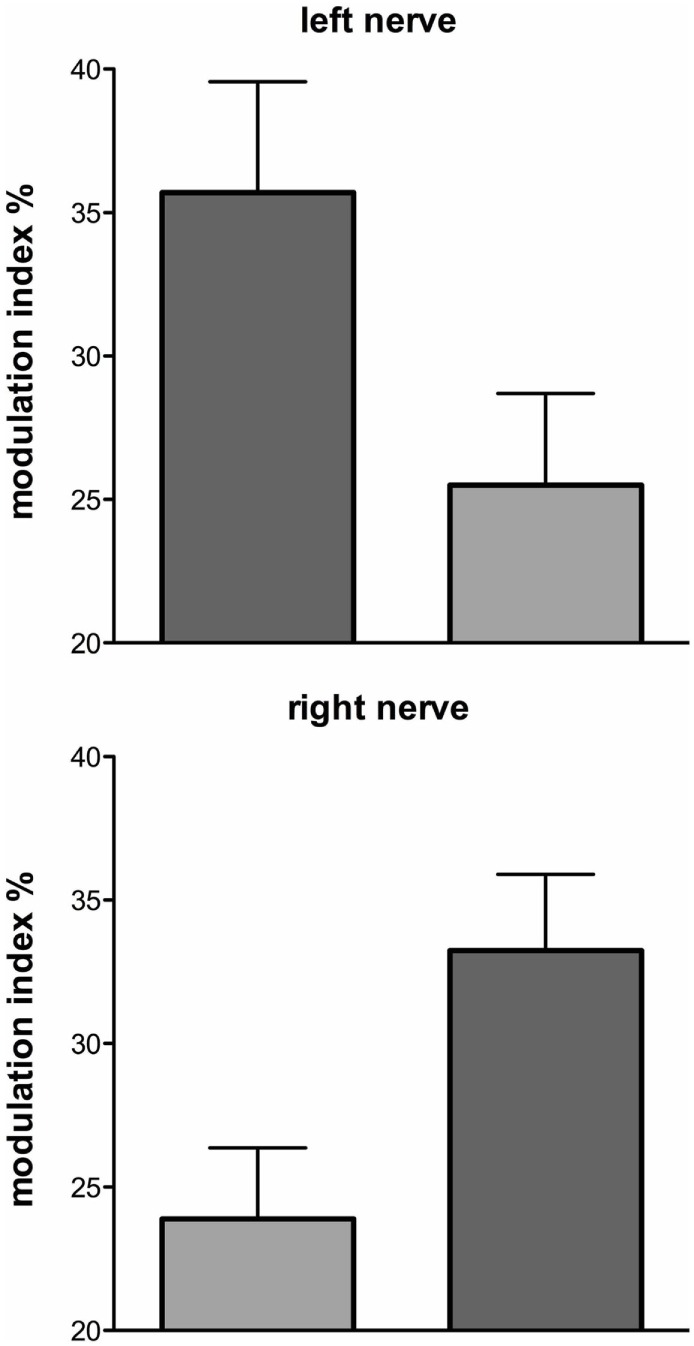
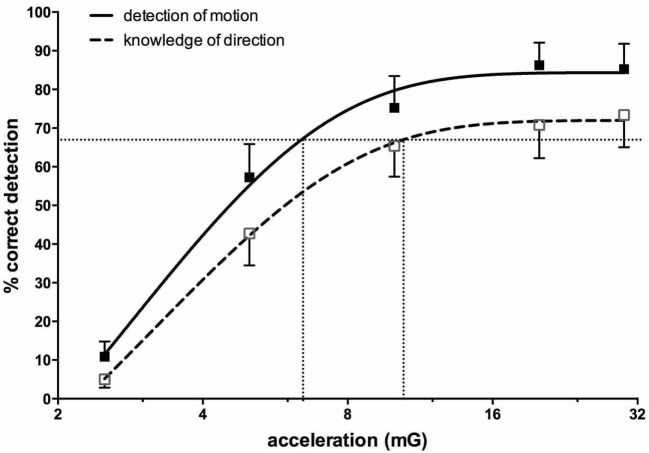
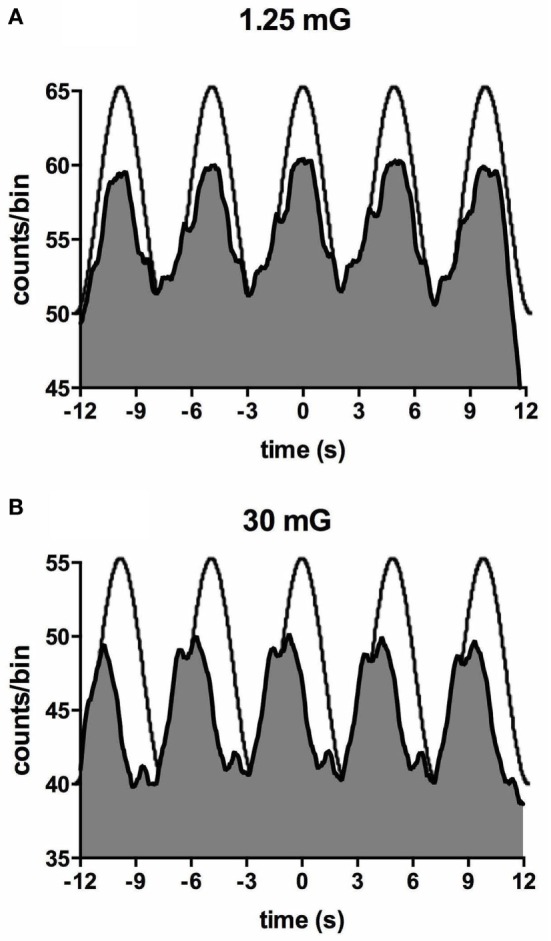
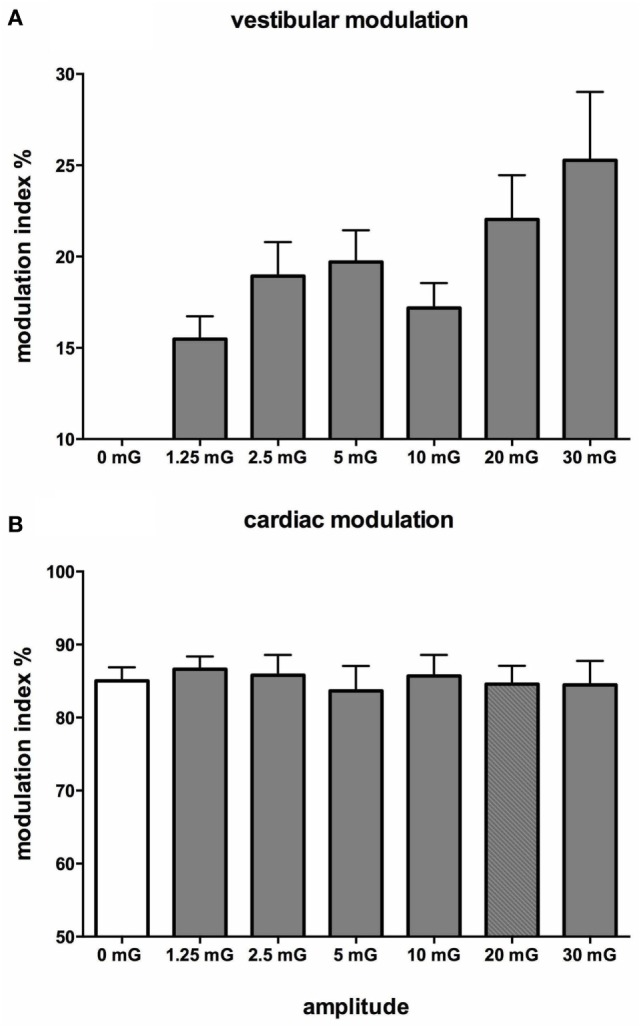
We review the existence of vestibulosympathetic reflexes in humans. While several methods to activate the human vestibular apparatus have been used, galvanic vestibular stimulation (GVS) is a means of selectively modulating vestibular afferent activity electrodes over the mastoid processes, causing robust vestibular illusions of side-to-side movement. Sinusoidal GVS (sGVS) causes partial entrainment of sympathetic outflow to muscle and skin. Modulation of muscle sympathetic nerve activity (MSNA) from vestibular inputs competes with baroreceptor inputs, with stronger temporal coupling to the vestibular stimulus being observed at frequencies remote from the cardiac frequency; "super entrainment" was observed in some individuals. Low-frequency (<0.2 Hz) sGVS revealed two peaks of modulation per cycle, with bilateral recordings of MSNA or skin sympathetic nerve activity, providing evidence of lateralization of sympathetic outflow during vestibular stimulation. However, it should be noted that GVS influences the firing of afferents from the entire vestibular apparatus, including the semicircular canals. To identify the specific source of vestibular input responsible for the generation of vestibulosympathetic reflexes, we used low-frequency (<0.2 Hz) sinusoidal linear acceleration of seated or supine subjects to, respectively, target the utricular or saccular components of the otoliths. While others had discounted the semicircular canals, we showed that the contributions of the utricle and saccule to the vestibular modulation of MSNA are very similar. Moreover, that modulation of MSNA occurs at accelerations well below levels at which subjects are able to perceive any motion indicates that, like vestibulospinal control of posture, the vestibular system contributes to the control of blood pressure through potent reflexes in humans.
我们回顾了人类前庭交感反射的存在情况。虽然已经使用了多种激活人类前庭器官的方法,但电刺激前庭(GVS)是一种选择性调节前庭传入活动的手段,通过在乳突上放置电极,可引发强烈的左右移动的前庭错觉。正弦电刺激前庭(sGVS)会使交感神经向肌肉和皮肤的输出产生部分同步。来自前庭输入对肌肉交感神经活动(MSNA)的调节与压力感受器输入相互竞争,在远离心脏频率的频率下,观察到与前庭刺激的时间耦合更强;在一些个体中观察到了“超级同步”。低频(<0.2 Hz)的sGVS在每个周期显示出两个调节峰值,通过对MSNA或皮肤交感神经活动进行双侧记录,为前庭刺激期间交感神经输出的侧向化提供了证据。然而,应该注意的是,GVS会影响整个前庭器官(包括半规管)传入神经的放电。为了确定负责产生前庭交感反射的前庭输入的具体来源,我们对坐位或仰卧位受试者使用低频(<0.2 Hz)正弦线性加速度,分别针对耳石的椭圆囊或球囊部分。虽然其他人对半规管的作用持怀疑态度,但我们表明椭圆囊和球囊对MSNA前庭调节的贡献非常相似。此外,MSNA的调节发生在加速度远低于受试者能够感知任何运动的水平,这表明,与前庭对姿势的控制一样,前庭系统通过强大的反射在人类中对血压控制有贡献。