Department of Pharmaceutics and Pharmaceutical Chemistry/CCCD, University of Utah, Salt Lake City, UT, 84112, USA.
Department of Bioengineering, University of Utah, Salt Lake City, UT, 84112, USA.
Macromol Biosci. 2018 Jan;18(1). doi: 10.1002/mabi.201700196. Epub 2017 Aug 14.
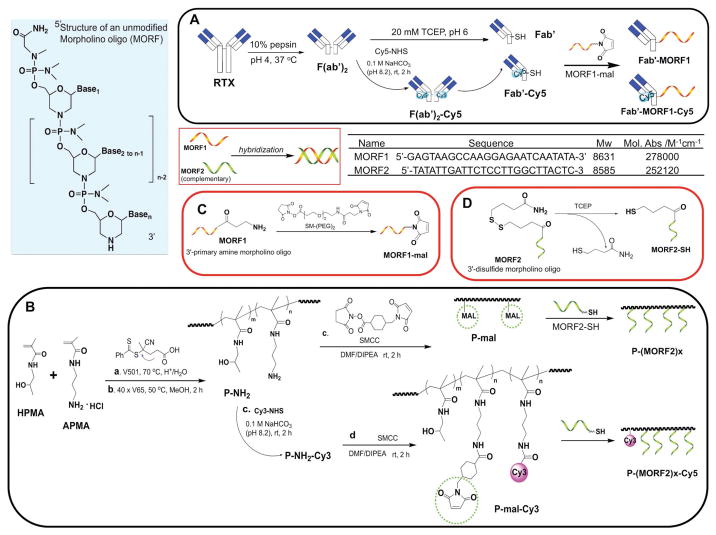
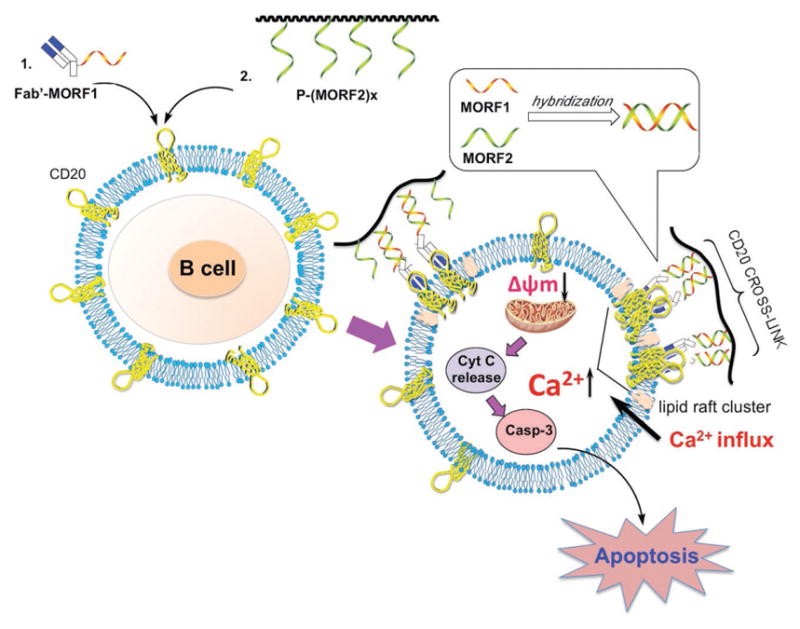
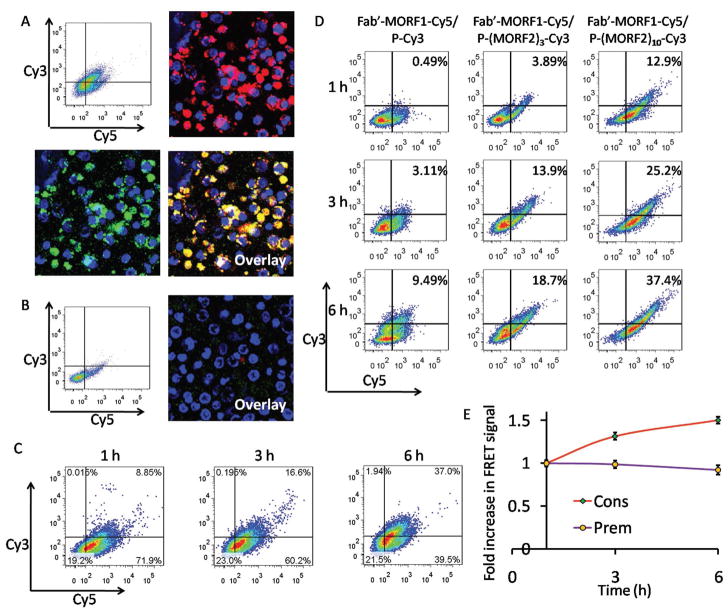
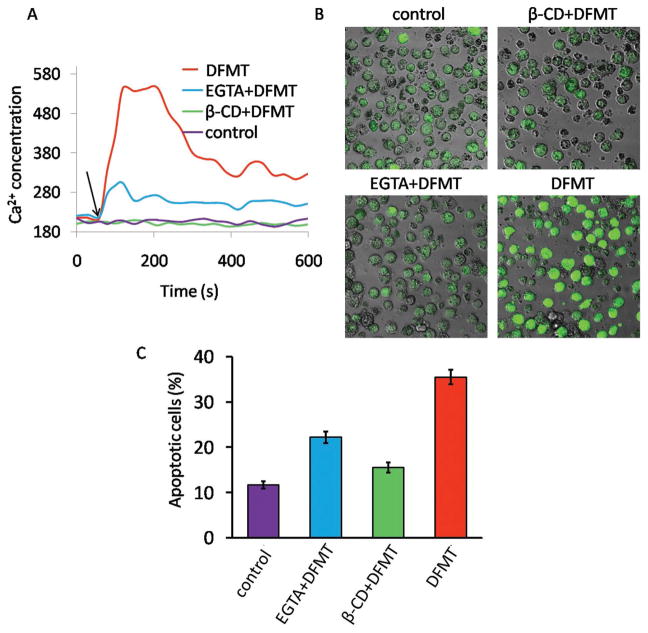
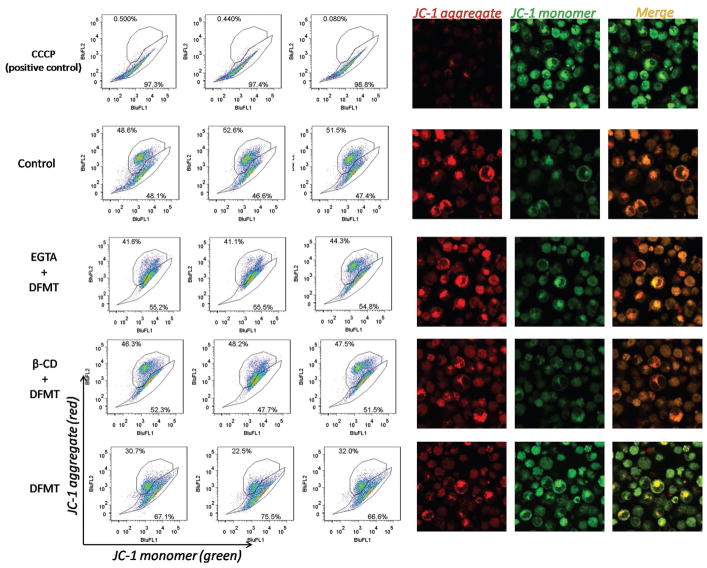
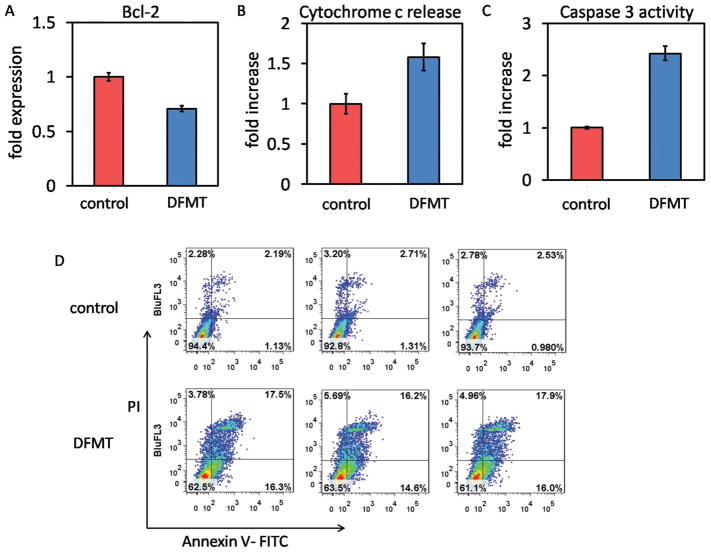
Recently, an innovative paradigm has been proposed in macromolecular therapeutics for treatment of B-cell lymphomas that can specifically kill cancer cells without a drug. The design rationale of this drug-free macromolecular therapeutic (DFMT) system is crosslinking the cell surface receptor to initiate apoptosis. However, how the apoptosis signal is triggered after receptor hyper-crosslinking remains to be elucidated. Here, two pathways, calcium influx dependent pathway and mitochondrial signal pathway, are identified to play major roles in triggering the programmed cell death. With the first step pretargeting and second step multiple binding, receptor hyper-crosslinking is achieved in a highly specific, time-dependent manner and largely mediated by multivalence. As a consequence, extracellular calcium influx is triggered, which subsequently decreases the mitochondrial membrane potential and induces apoptosis. The mitochondrial depolarization also stems from the Bcl-2 inhibition mediated by DFMT, followed by the cytochrome c release that activates caspase signaling. With the participation of the two-pronged mechanism, a programmed apoptosis is induced in response to DFMT treatment. The current findings can offer important implications to optimize the anti-CD20 strategies to treat B-cell non-Hodgkin lymphomas.
最近,在治疗 B 细胞淋巴瘤的大分子治疗学中提出了一种创新的范例,可以特异性地杀死癌细胞而无需药物。这种无药物大分子治疗(DFMT)系统的设计原理是交联细胞表面受体以启动细胞凋亡。然而,受体超交联后凋亡信号如何被触发仍有待阐明。在这里,确定了两条途径,即钙离子内流依赖途径和线粒体信号途径,在触发程序性细胞死亡中起主要作用。通过预靶向的第一步和多价结合的第二步,实现了受体的高度特异性、时间依赖性的超交联。因此,引发细胞外钙离子内流,随后降低线粒体膜电位并诱导细胞凋亡。线粒体去极化也源于 DFMT 介导的 Bcl-2 抑制,随后细胞色素 c 释放激活 caspase 信号。通过双管齐下的机制,DFMT 治疗会引发程序性凋亡。目前的研究结果可为优化抗 CD20 策略以治疗 B 细胞非霍奇金淋巴瘤提供重要启示。