Department of Neuroscience, Weill Cornell Medicine of Cornell University, New York, USA.
Department of Radiology, Weill Cornell Medicine of Cornell University, New York, USA.
Acta Neuropathol Commun. 2017 Aug 14;5(1):61. doi: 10.1186/s40478-017-0459-z.
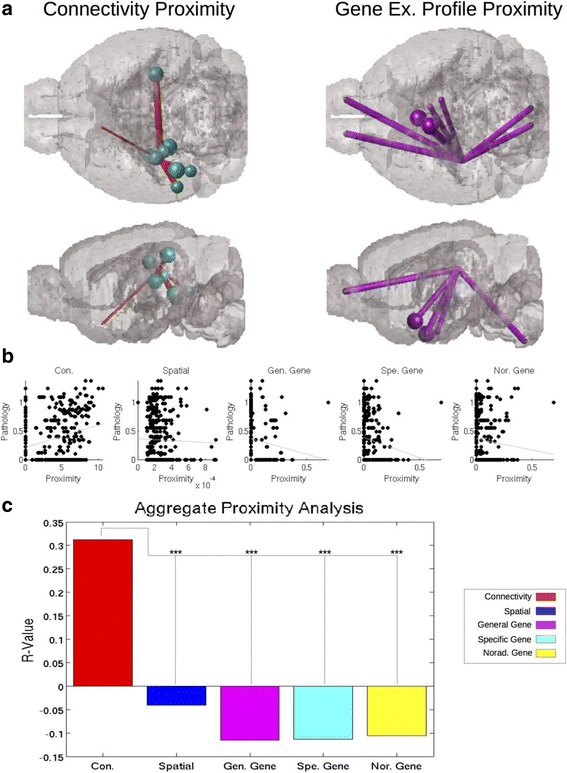
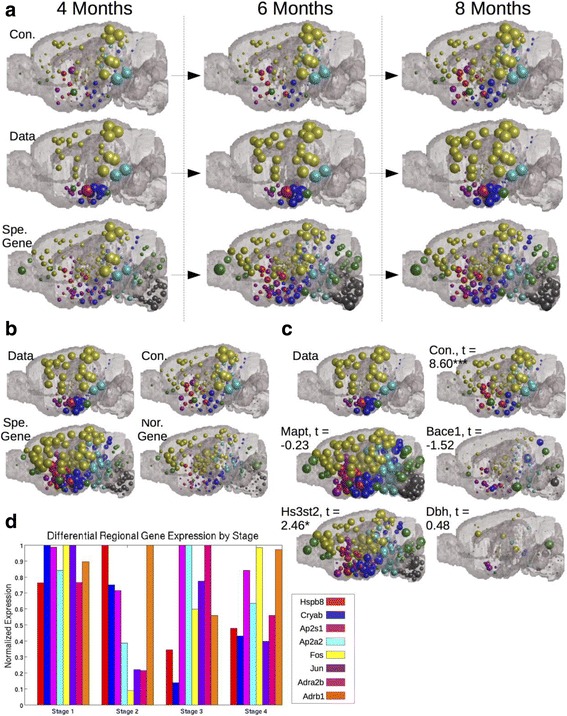
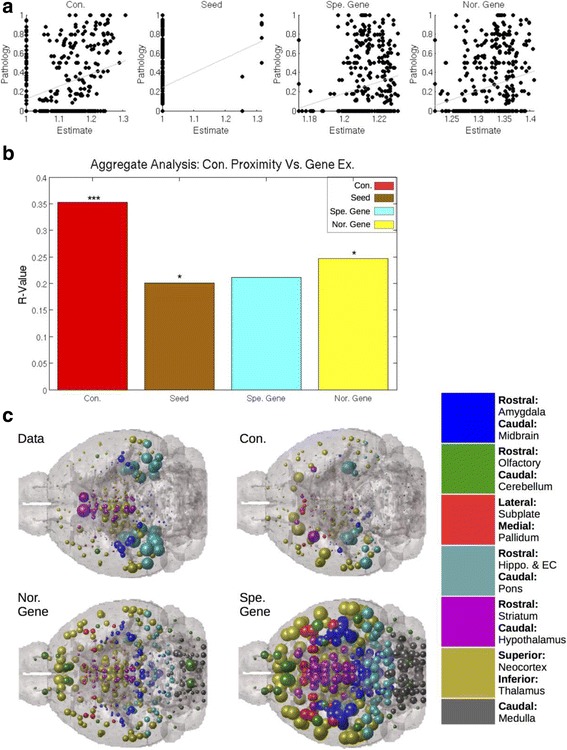
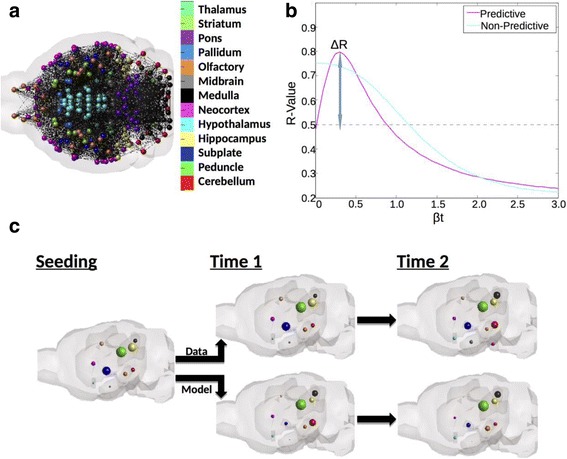
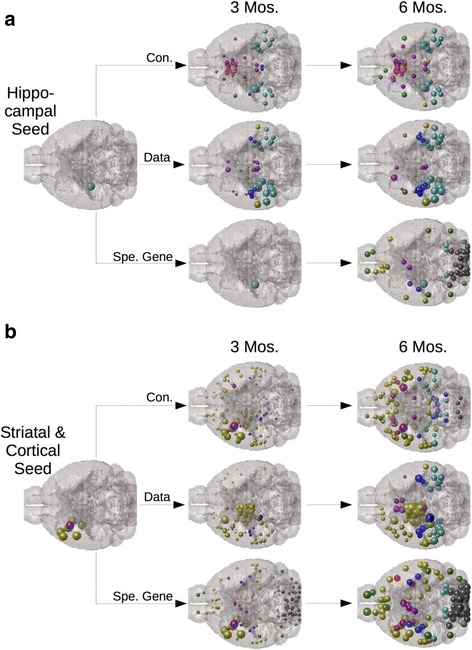
Spatiotemporal tau pathology progression is regarded as highly stereotyped within each type of degenerative condition. For instance, AD has a progression of tau pathology consistently beginning in the entorhinal cortex, the locus coeruleus, and other nearby noradrenergic brainstem nuclei, before spreading to the rest of the limbic system as well as the cingulate and retrosplenial cortices. Proposed explanations for the consistent spatial patterns of tau pathology progression, as well as for why certain regions are selectively vulnerable to exhibiting pathology over the course of disease generally focus on transsynaptic spread proceeding via the brain's anatomic connectivity network in a cell-independent manner or on cell-intrinsic properties that might render some cell populations or regions uniquely vulnerable. We test connectivity based explanations of spatiotemporal tau pathology progression and regional vulnerability against cell-intrinsic explanation, using regional gene expression profiles as a proxy. We find that across both exogenously seeded and non-seeded tauopathic mouse models, the connectivity network provides a better explanation than regional gene expression profiles, even when such profiles are limited to specific sets of tau risk-related genes only. Our results suggest that, regardless of the location of pathology initiation, tau pathology progression is well characterized by a model positing entirely cell-type and molecular environment independent transsynaptic spread via the mouse brain's connectivity network. These results further suggest that regional vulnerability to tau pathology is mainly governed by connectivity with regions already exhibiting pathology, rather than by cell-intrinsic factors.
时空tau 病理学进展在每种退行性疾病类型中都被认为是高度刻板的。例如,AD 的 tau 病理学进展始终从内嗅皮层开始,蓝斑核和其他附近的去甲肾上腺素能脑干核,然后扩散到边缘系统的其余部分以及扣带回和后扣带回皮质。tau 病理学进展的一致空间模式以及为什么某些区域在疾病过程中会选择性地容易出现病理学的原因的建议解释,通常集中在通过大脑的解剖连通性网络以细胞独立的方式进行的突触间传播,或者在细胞内在特性上,这些特性可能使某些细胞群体或区域特别容易受到影响。我们使用区域基因表达谱作为替代物,针对细胞内在解释,测试时空 tau 病理学进展和区域易感性的连通性解释。我们发现,在两种外源性接种和非接种 tau 病变小鼠模型中,即使此类图谱仅限于特定的 tau 风险相关基因集,连通性网络也比区域基因表达图谱提供了更好的解释。我们的研究结果表明,无论病理学起始的位置如何,tau 病理学的进展都可以通过一种模型很好地描述,该模型假设通过老鼠大脑的连通性网络进行完全与细胞类型和分子环境无关的突触间传播。这些结果进一步表明,tau 病理学的区域易感性主要由与已经表现出病理学的区域的连通性决定,而不是由细胞内在因素决定。