Le Thuc M, Poddar Soumya, Capri Joseph R, Abt Evan R, Kim Woosuk, Wei Liu, Uong Nhu T, Cheng Chloe M, Braas Daniel, Nikanjam Mina, Rix Peter, Merkurjev Daria, Zaretsky Jesse, Kornblum Harley I, Ribas Antoni, Herschman Harvey R, Whitelegge Julian, Faull Kym F, Donahue Timothy R, Czernin Johannes, Radu Caius G
Department of Molecular and Medical Pharmacology, University of California, Los Angeles, Los Angeles, CA, 90095, USA.
Ahmanson Translational Imaging Division, University of California, Los Angeles, Los Angeles, CA, 90095, USA.
Nat Commun. 2017 Aug 14;8(1):241. doi: 10.1038/s41467-017-00221-3.
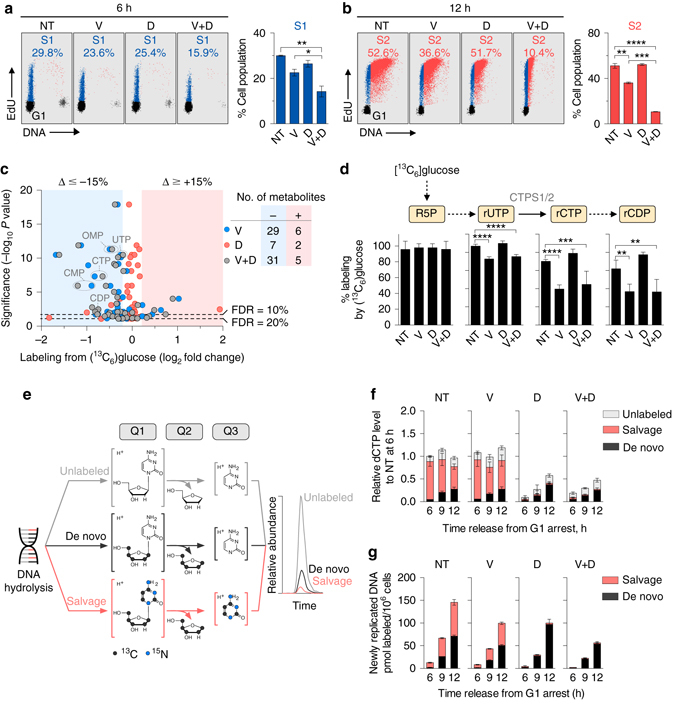
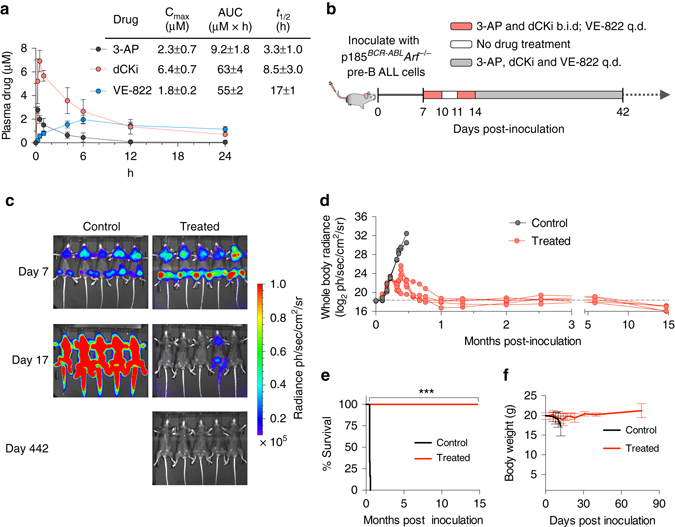
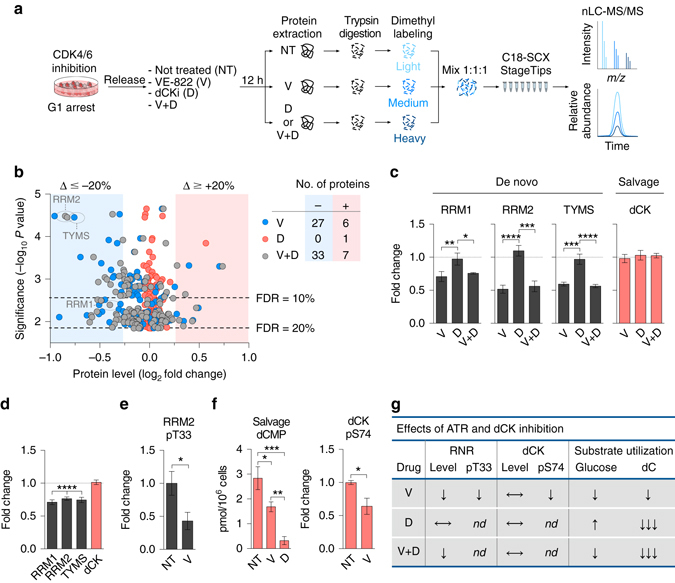
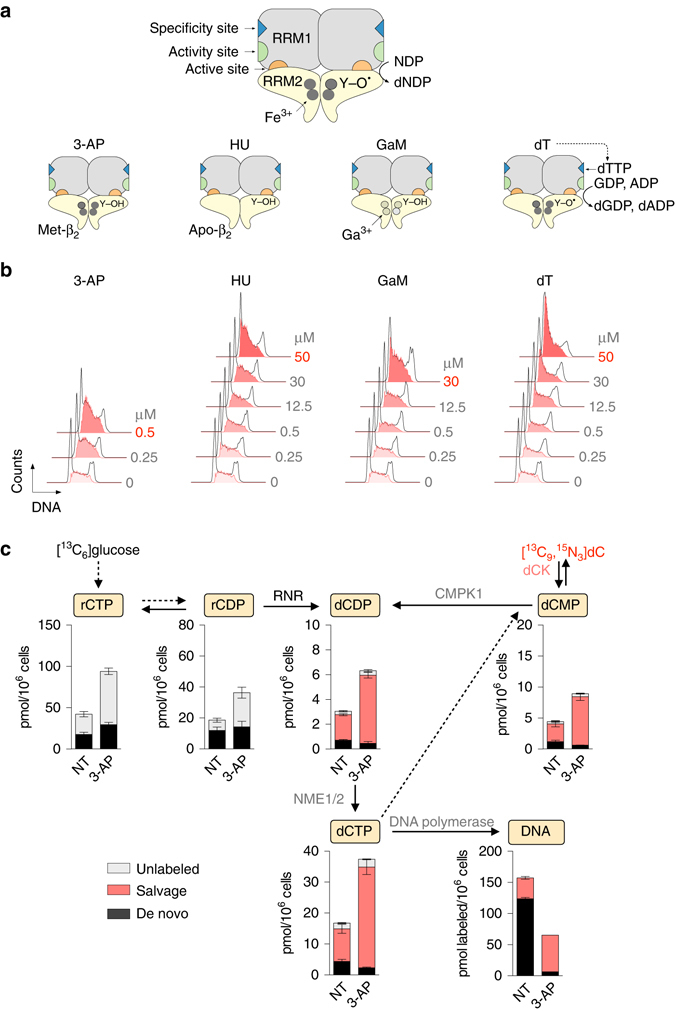
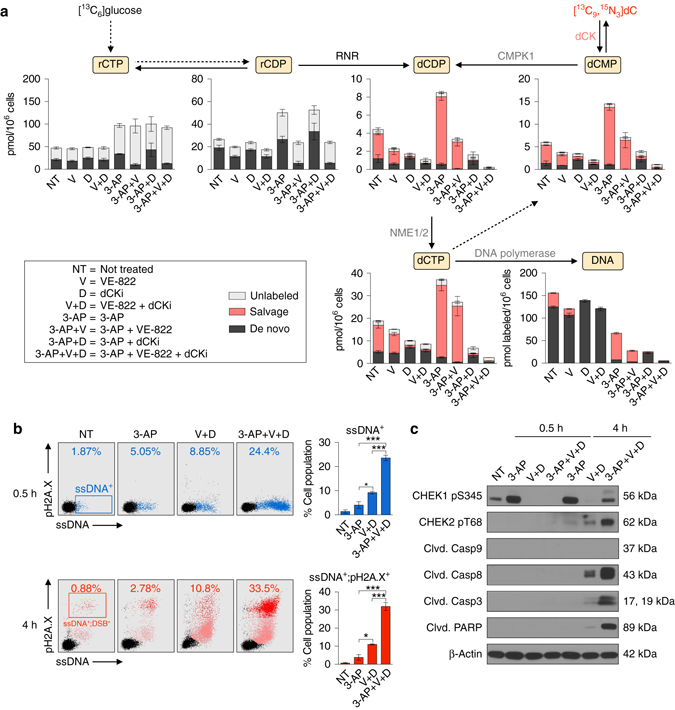
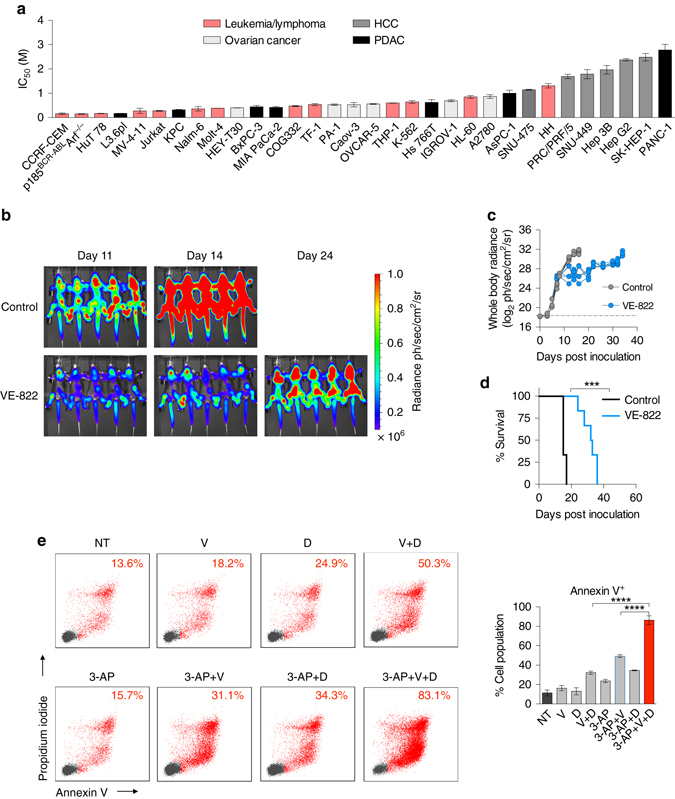
Leukemia cells rely on two nucleotide biosynthetic pathways, de novo and salvage, to produce dNTPs for DNA replication. Here, using metabolomic, proteomic, and phosphoproteomic approaches, we show that inhibition of the replication stress sensing kinase ataxia telangiectasia and Rad3-related protein (ATR) reduces the output of both de novo and salvage pathways by regulating the activity of their respective rate-limiting enzymes, ribonucleotide reductase (RNR) and deoxycytidine kinase (dCK), via distinct molecular mechanisms. Quantification of nucleotide biosynthesis in ATR-inhibited acute lymphoblastic leukemia (ALL) cells reveals substantial remaining de novo and salvage activities, and could not eliminate the disease in vivo. However, targeting these remaining activities with RNR and dCK inhibitors triggers lethal replication stress in vitro and long-term disease-free survival in mice with B-ALL, without detectable toxicity. Thus the functional interplay between alternative nucleotide biosynthetic routes and ATR provides therapeutic opportunities in leukemia and potentially other cancers.Leukemic cells depend on the nucleotide synthesis pathway to proliferate. Here the authors use metabolomics and proteomics to show that inhibition of ATR reduced the activity of these pathways thus providing a valuable therapeutic target in leukemia.
白血病细胞依靠从头合成和补救合成这两条核苷酸生物合成途径来产生用于DNA复制的脱氧核糖核苷酸三磷酸(dNTPs)。在此,我们运用代谢组学、蛋白质组学和磷酸化蛋白质组学方法表明,抑制复制应激感应激酶共济失调毛细血管扩张症突变基因(ATM)和Rad3相关蛋白(ATR),可通过不同分子机制调节各自限速酶核糖核苷酸还原酶(RNR)和脱氧胞苷激酶(dCK)的活性,从而降低从头合成和补救合成途径的产出。对ATR抑制的急性淋巴细胞白血病(ALL)细胞中的核苷酸生物合成进行定量分析发现,仍存在大量的从头合成和补救合成活性,且无法在体内消除疾病。然而,用RNR和dCK抑制剂靶向这些剩余活性,在体外引发致命的复制应激,并使B-ALL小鼠实现长期无病生存,且未检测到毒性。因此,替代性核苷酸生物合成途径与ATR之间的功能相互作用为白血病及其他潜在癌症提供了治疗机会。白血病细胞依靠核苷酸合成途径进行增殖。在此,作者运用代谢组学和蛋白质组学表明,抑制ATR可降低这些途径的活性,从而为白血病提供了一个有价值的治疗靶点。