Institute for Science and Technology in Medicine, Guy Hilton Research Centre, Keele University, Thornborrow Drive, Stoke-on-Trent, UK.
School of Pharmacy, Keele University, Keele, United Kingdom.
Sci Rep. 2017 Aug 14;7(1):8090. doi: 10.1038/s41598-017-08649-9.
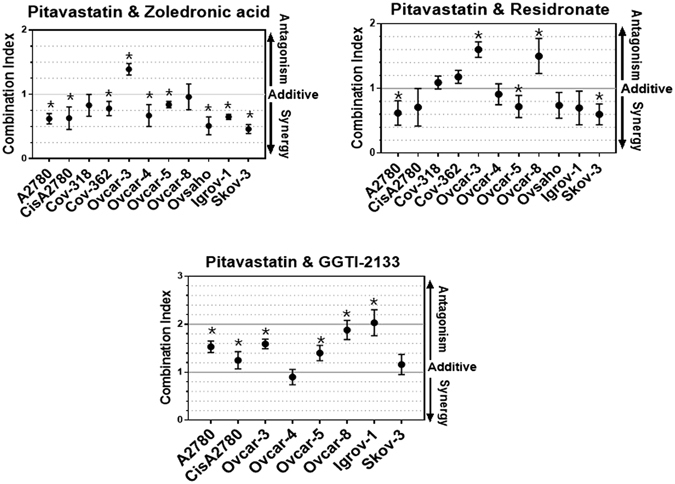
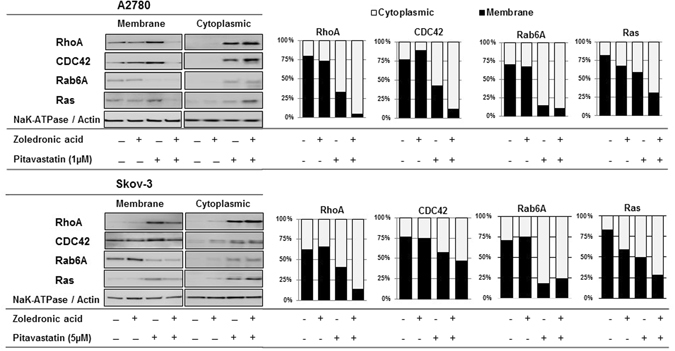
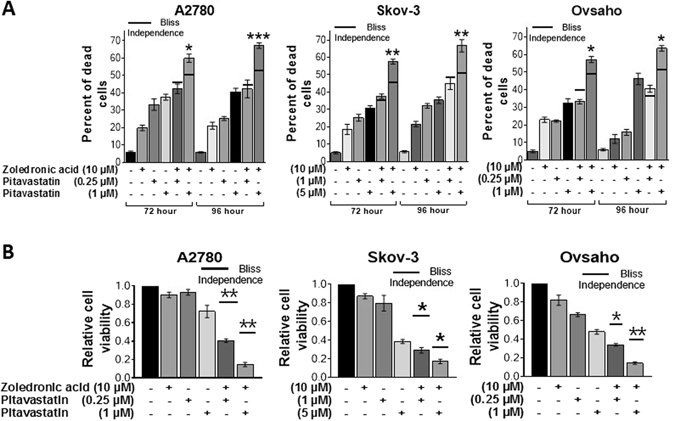
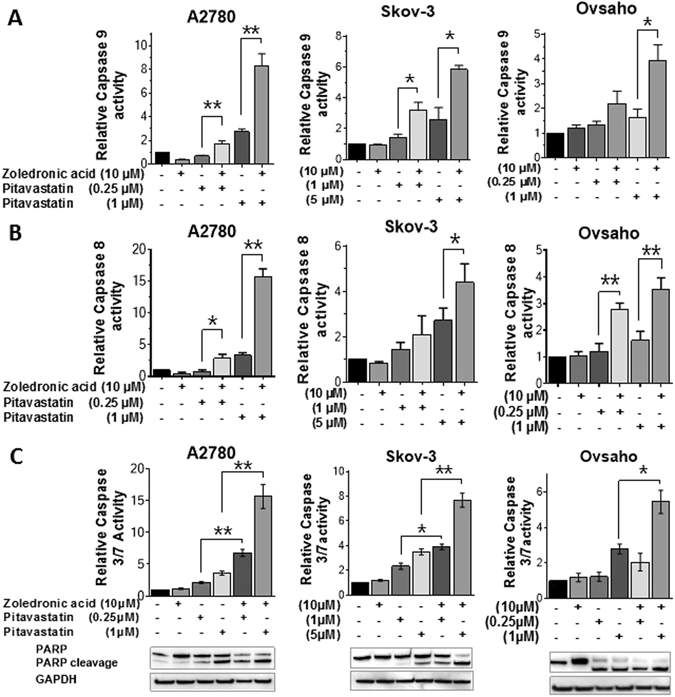
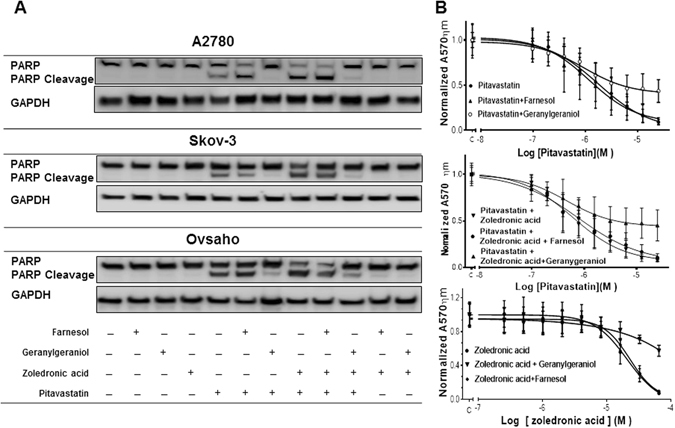
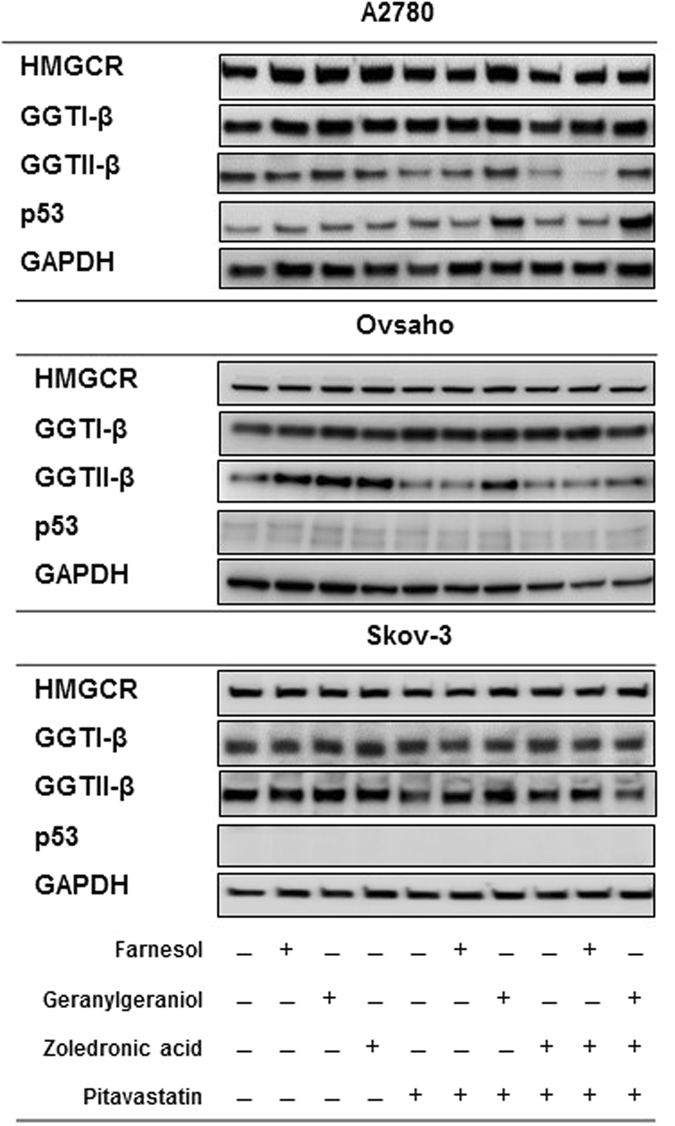
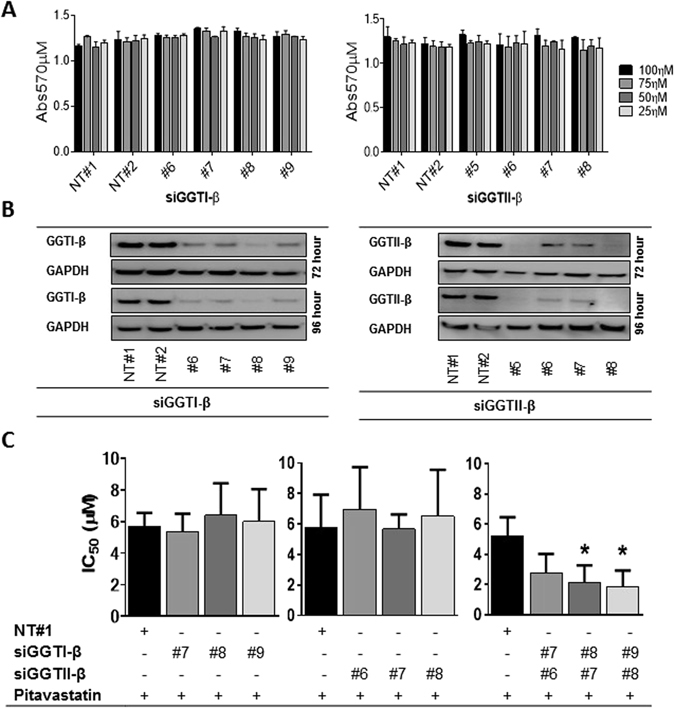
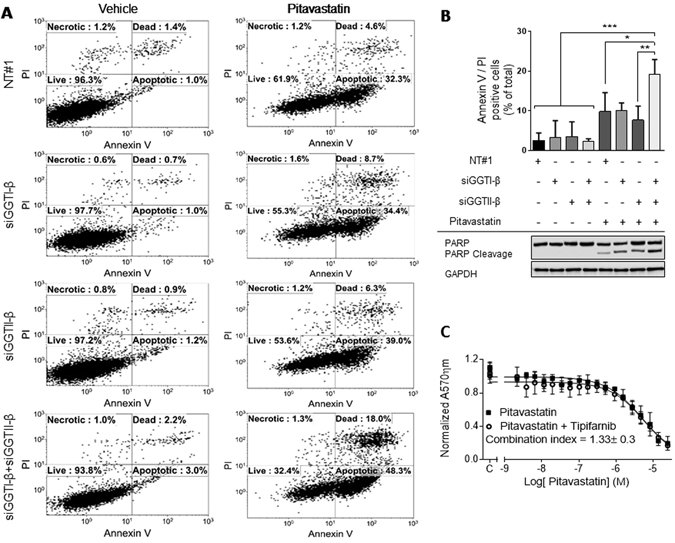
Only 40% of patients with advanced ovarian cancer survive more than 5 years. We have previously shown that pitavastatin induces regression of ovarian cancer xenografts in mice. To evaluate whether the response of ovarian cancer cells to pitavastatin is potentiated by farnesyl diphosphate synthase inhibitors or geranylgeraniol transferase I inhibitors, we evaluated combinations of pitavastatin with zoledronic acid, risedronate and GGTI-2133 in a panel of ovarian cancer cells. Pitavastatin (IC = 0.6-14 μM), zoledronic acid (IC = 21-57 μM), risedronate (IC > 100 μM) or GGTI-2133 (IC > 25 μM) inhibited the growth of ovarian cancer cell cultures. Combinations of pitavastatin with zoledronic acid displayed additive or synergistic effects in cell growth assays in 10 of 11 cell lines evaluated as well as in trypan blue exclusion, cellular ATP or caspase 3/7, 8 and 9 assays. Pitavastatin reduced levels of GGT-IIβ and the membrane localization of several small GTPases and this was potentiated by zoledronic acid. siRNA to GGT-Iβ and GGT-IIβ used in combination, but not when used individually, significantly increased the sensitivity of cells to pitavastatin. These data suggest that zoledronic acid, a drug already in clinical use, may be usefully combined with pitavastatin in the treatment of ovarian cancer.
仅有 40%的晚期卵巢癌患者的存活时间超过 5 年。我们之前已经表明,匹伐他汀可诱导小鼠卵巢癌异种移植物消退。为了评估法呢基二磷酸合酶抑制剂或香叶基香叶基转移酶 I 抑制剂是否增强了卵巢癌细胞对匹伐他汀的反应,我们在一组卵巢癌细胞中评估了匹伐他汀与唑来膦酸、利塞膦酸和 GGTI-2133 的联合用药。匹伐他汀(IC = 0.6-14 μM)、唑来膦酸(IC = 21-57 μM)、利塞膦酸(IC > 100 μM)或 GGTI-2133(IC > 25 μM)抑制卵巢癌细胞培养物的生长。在 11 个细胞系中的 10 个细胞系以及台盼蓝排斥、细胞 ATP 或 caspase 3/7、8 和 9 测定中,匹伐他汀与唑来膦酸联合使用显示出相加或协同作用。匹伐他汀降低了 GGT-IIβ 的水平和几种小 GTPases 的膜定位,这被唑来膦酸增强。与单独使用相比,联合使用 GGT-Iβ 和 GGT-IIβ 的 siRNA 显著增加了细胞对匹伐他汀的敏感性。这些数据表明,唑来膦酸,一种已在临床使用的药物,可能与匹伐他汀联合用于治疗卵巢癌。