Cancer Centre, Faculty of Health Sciences, University of Macau, Macau SAR 999078, China.
Int J Biol Sci. 2017 Jul 6;13(7):852-867. doi: 10.7150/ijbs.19370. eCollection 2017.
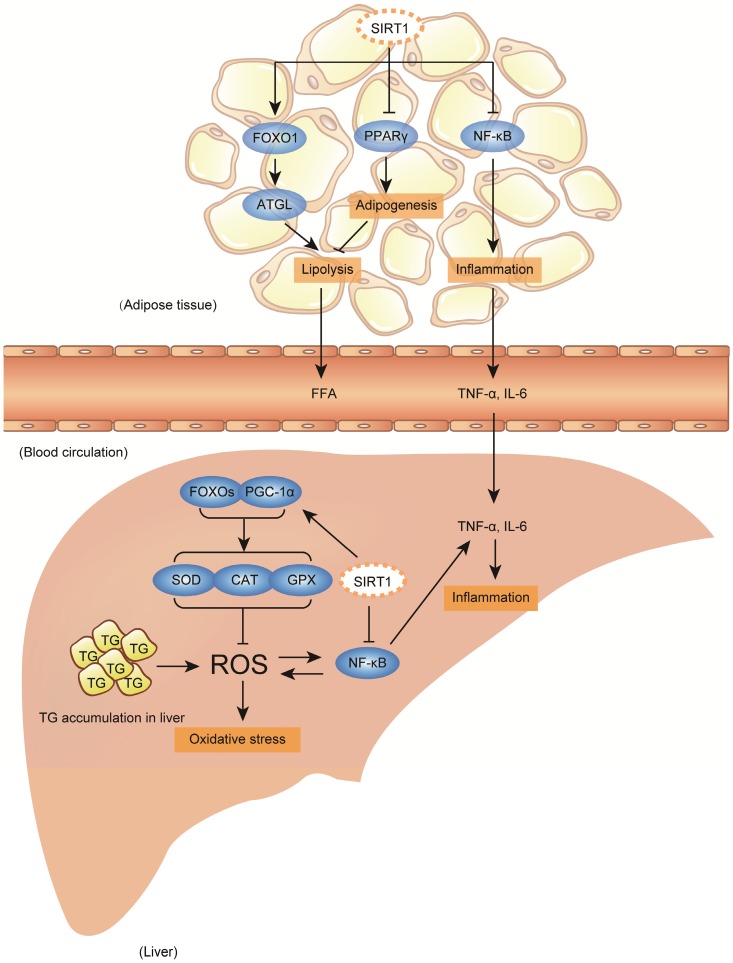
Fatty liver diseases, which are commonly associated with high-fat/calorie diet, heavy alcohol consumption and/or other metabolic disorder causes, lead to serious medical concerns worldwide in recent years. It has been demonstrated that metabolic homeostasis disruption is most likely to be responsible for this global epidemic. Sirtuins are a group of conserved nicotinamide adenine dinucleotide (NAD) dependent histone and/or protein deacetylases belonging to the silent information regulator 2 (Sir2) family. Among seven mammalian sirtuins, sirtuin 1 (SIRT 1) is the most extensively studied one and is involved in both alcoholic and nonalcoholic fatty liver diseases. SIRT1 plays beneficial roles in regulating hepatic lipid metabolism, controlling hepatic oxidative stress and mediating hepatic inflammation through deacetylating some transcriptional regulators against the progression of fatty liver diseases. Here we summarize the latest advances of the biological roles of SIRT1 in regulating lipid metabolism, oxidative stress and inflammation in the liver, and discuss the potential of SIRT1 as a therapeutic target for treating alcoholic and nonalcoholic fatty liver diseases.
近年来,脂肪性肝病与高脂肪/高热量饮食、大量饮酒和/或其他代谢紊乱有关,在全球范围内引起了严重的医学关注。研究表明,代谢平衡的破坏很可能是导致这种全球流行疾病的原因。Sirtuins 是一组保守的烟酰胺腺嘌呤二核苷酸 (NAD) 依赖性组蛋白和/或蛋白去乙酰化酶,属于沉默信息调节因子 2 (Sir2) 家族。在哺乳动物的 7 种 Sirtuins 中,Sirtuin 1 (SIRT1) 是研究最广泛的一种,它与酒精性和非酒精性脂肪性肝病都有关。SIRT1 通过去乙酰化某些转录调节剂来调节肝脏脂质代谢、控制肝脏氧化应激和介导肝脏炎症,从而在调节脂肪性肝病的进展中发挥有益作用。本文总结了 SIRT1 在调节肝脏脂质代谢、氧化应激和炎症中的生物学作用的最新进展,并讨论了 SIRT1 作为治疗酒精性和非酒精性脂肪性肝病的治疗靶点的潜力。