Schmid Markus, Hinz Lesley-Virgina, Wild Florian, Noller Klaus
Fraunhofer-Institute for Process Engineering and Packaging IVV, Giggenhauser Strasse 35, Freising 85354, Germany.
Chair of Food Packaging Technology, Technische Universität München, Weihenstephaner Steig 22, Freising 85354, Germany.
Materials (Basel). 2013 Mar 7;6(3):927-940. doi: 10.3390/ma6030927.
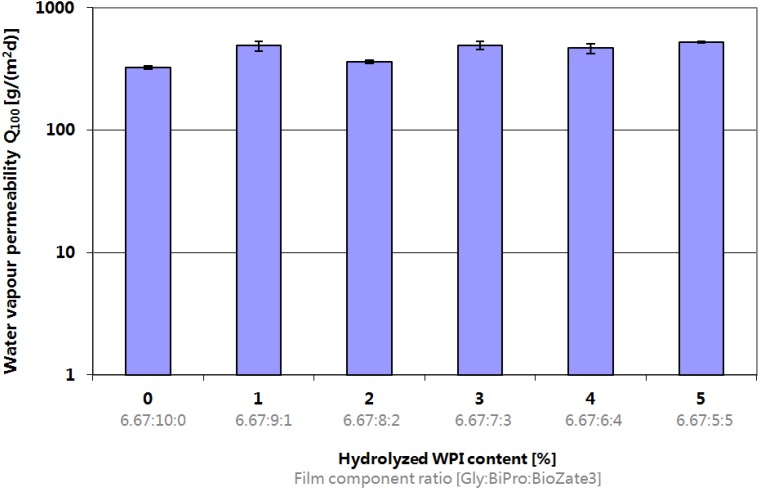
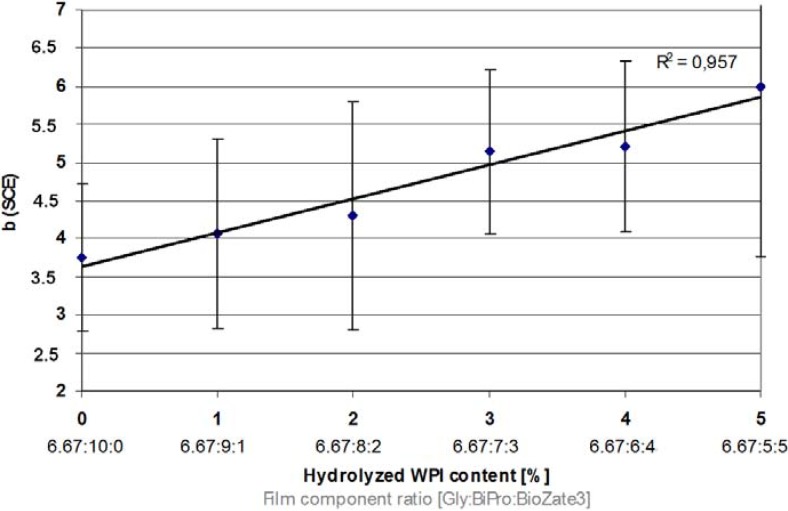
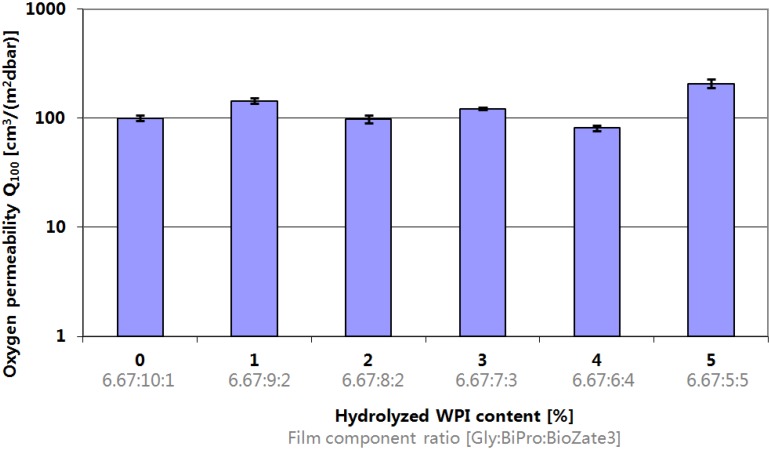
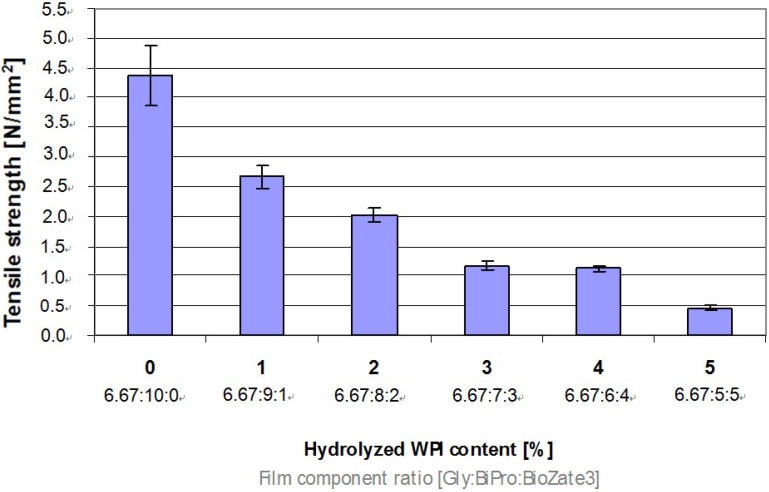
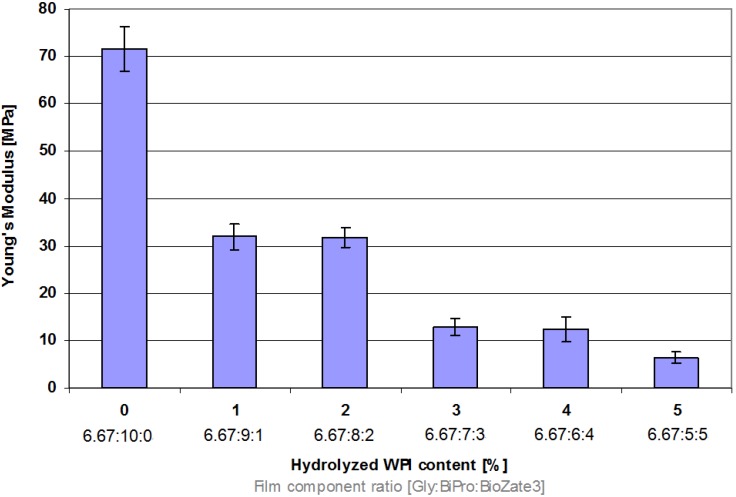
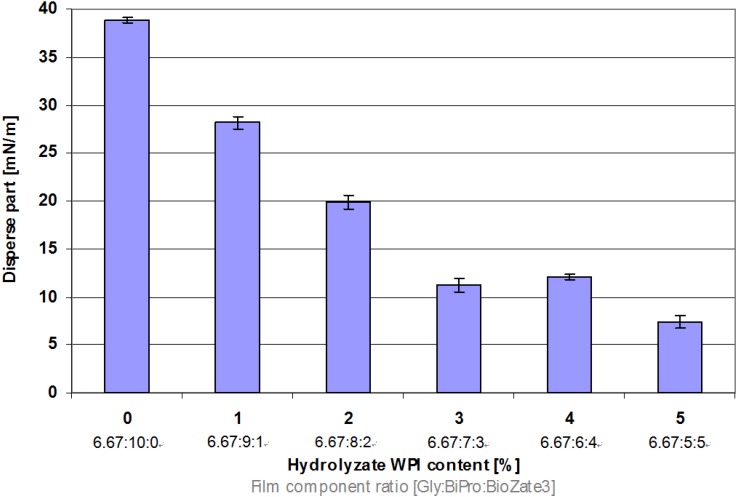
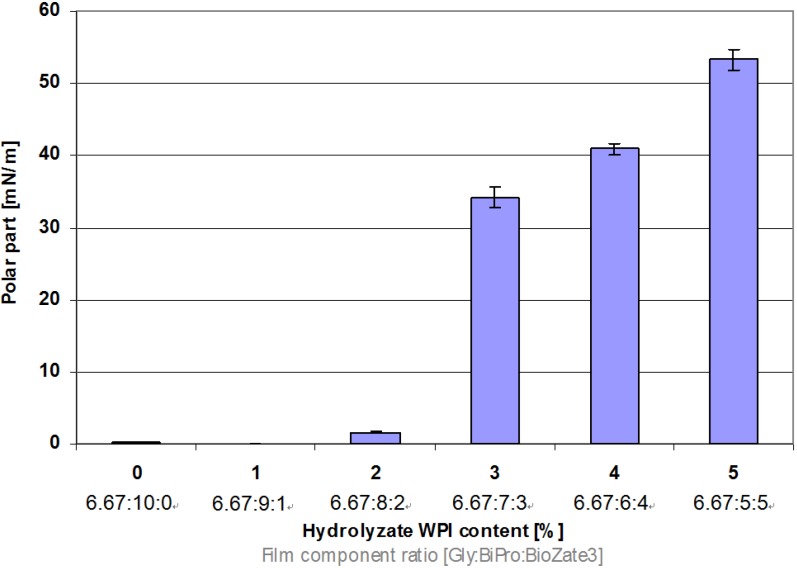
Pure whey protein isolate (WPI)-based cast films are very brittle due to its strong formation of protein cross-linking of disulphide bonding, hydrogen bonding as well as hydrophobic and electrostatic interactions. However, this strong cross-linking is the reason for its final barrier performance. To overcome film brittleness of whey protein layers, plasticisers like glycerol are used. It reduces intermolecular interactions, increases the mobility of polymer chains and thus film flexibility can be achieved. The objective of this study was to investigate the influence of hydrolysed whey protein isolate (WPI) in whey protein isolate-based cast films on their techno-functional properties. Due to the fact, that the addition of glycerol is necessary but at the same time increases the free volume in the film leading to higher oxygen and water vapour permeability, the glycerol concentration was kept constant. Cast films with different ratios of hydrolysed and not hydrolysed WPI were produced. They were characterised in order to determine the influence of the lower molecular weight caused by the addition of hydrolysed WPI on the techno-functional properties. This study showed that increasing hydrolysed WPI concentrations significantly change the mechanical properties while maintaining the oxygen and water vapour permeability. The tensile and elastic film properties decreased significantly by reducing the average molecular weight whereas the yellowish coloration and the surface tension considerably increased. This study provided new data which put researchers and material developers in a position to tailor the characteristics of whey protein based films according to their intended application and further processing.
基于纯乳清蛋白分离物(WPI)的流延膜非常脆,这是因为其通过二硫键、氢键以及疏水和静电相互作用形成了很强的蛋白质交联。然而,这种强交联是其最终阻隔性能的原因。为了克服乳清蛋白层的膜脆性,使用了甘油等增塑剂。它减少了分子间相互作用,增加了聚合物链的流动性,从而实现了膜的柔韧性。本研究的目的是研究水解乳清蛋白分离物(WPI)在基于乳清蛋白分离物的流延膜中对其技术功能特性的影响。由于添加甘油是必要的,但同时会增加膜中的自由体积,导致更高的氧气和水蒸气渗透性,因此甘油浓度保持恒定。制备了具有不同水解和未水解WPI比例的流延膜。对它们进行表征,以确定添加水解WPI导致的较低分子量对技术功能特性的影响。这项研究表明,增加水解WPI浓度会显著改变机械性能,同时保持氧气和水蒸气渗透性。通过降低平均分子量,拉伸和弹性膜性能显著下降,而泛黄和表面张力则显著增加。这项研究提供了新的数据,使研究人员和材料开发人员能够根据预期应用和进一步加工来定制基于乳清蛋白的膜的特性。