Department of Environmental Science and Engineering, Fudan University, Shanghai, 200433, China.
Zhumadian City Bureau of Environmental Protection, Zhumadian, 463000, China.
Sci Rep. 2017 Aug 16;7(1):8318. doi: 10.1038/s41598-017-08254-w.
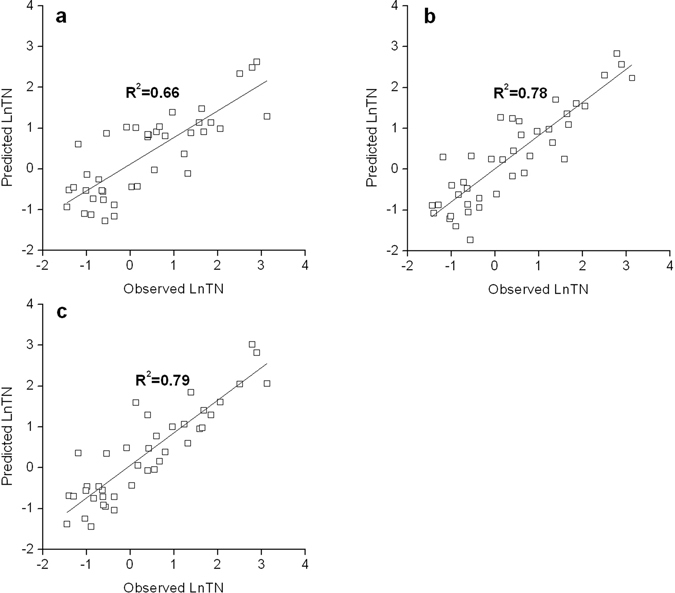
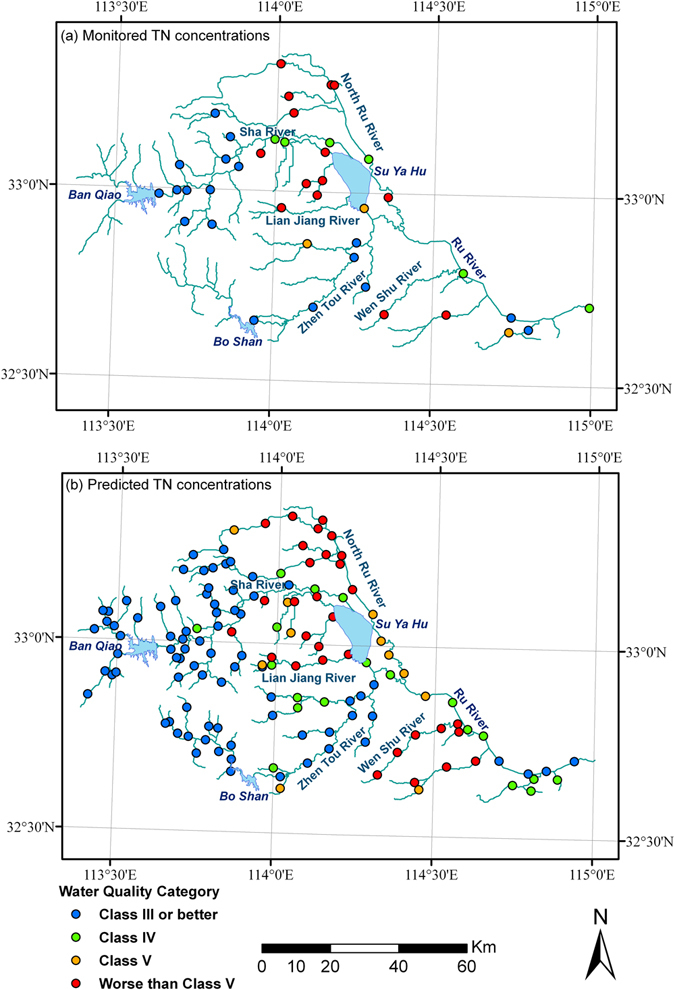
Fast economic development, burgeoning population growth, and rapid urbanization have led to complex pollution sources contributing to water quality deterioration simultaneously in many developing countries including China. This paper explored the use of spatial regression to evaluate the impacts of watershed characteristics on ambient total nitrogen (TN) concentration in a heavily polluted watershed and make predictions across the region. Regression results have confirmed the substantial impact on TN concentration by a variety of point and non-point pollution sources. In addition, spatial regression has yielded better performance than ordinary regression in predicting TN concentrations. Due to its best performance in cross-validation, the river distance based spatial regression model was used to predict TN concentrations across the watershed. The prediction results have revealed a distinct pattern in the spatial distribution of TN concentrations and identified three critical sub-regions in priority for reducing TN loads. Our study results have indicated that spatial regression could potentially serve as an effective tool to facilitate water pollution control in watersheds under diverse physical and socio-economical conditions.
快速的经济发展、人口的迅速增长和快速的城市化进程,导致许多发展中国家(包括中国)的水污染同时受到复杂的污染源的影响,水质不断恶化。本文探讨了利用空间回归来评估流域特征对污染严重的流域中环境总氮(TN)浓度的影响,并对整个区域进行预测。回归结果证实了各种点源和非点源污染对 TN 浓度的重大影响。此外,空间回归在预测 TN 浓度方面的表现优于普通回归。由于基于河流距离的空间回归模型在交叉验证中表现最佳,因此被用于预测整个流域的 TN 浓度。预测结果揭示了 TN 浓度的空间分布模式,并确定了三个需要优先减少 TN 负荷的关键子区域。我们的研究结果表明,空间回归可能是一种有效的工具,可在不同的自然和社会经济条件下促进流域的水污染控制。