Nicolao María Celeste, Loos Julia A, Rodriguez Rodrigues Christian, Beas Viviana, Cumino Andrea C
Laboratorio de Zoonosis Parasitarias, Departamento de Biología, Facultad de Ciencias Exactas y Naturales, Universidad Nacional de Mar del Plata (UNMdP), Funes, Nivel Cero, Mar del Plata, Argentina.
Consejo Nacional de Investigaciones Científicas y Técnicas (CONICET), Argentina.
PLoS One. 2017 Aug 17;12(8):e0181528. doi: 10.1371/journal.pone.0181528. eCollection 2017.
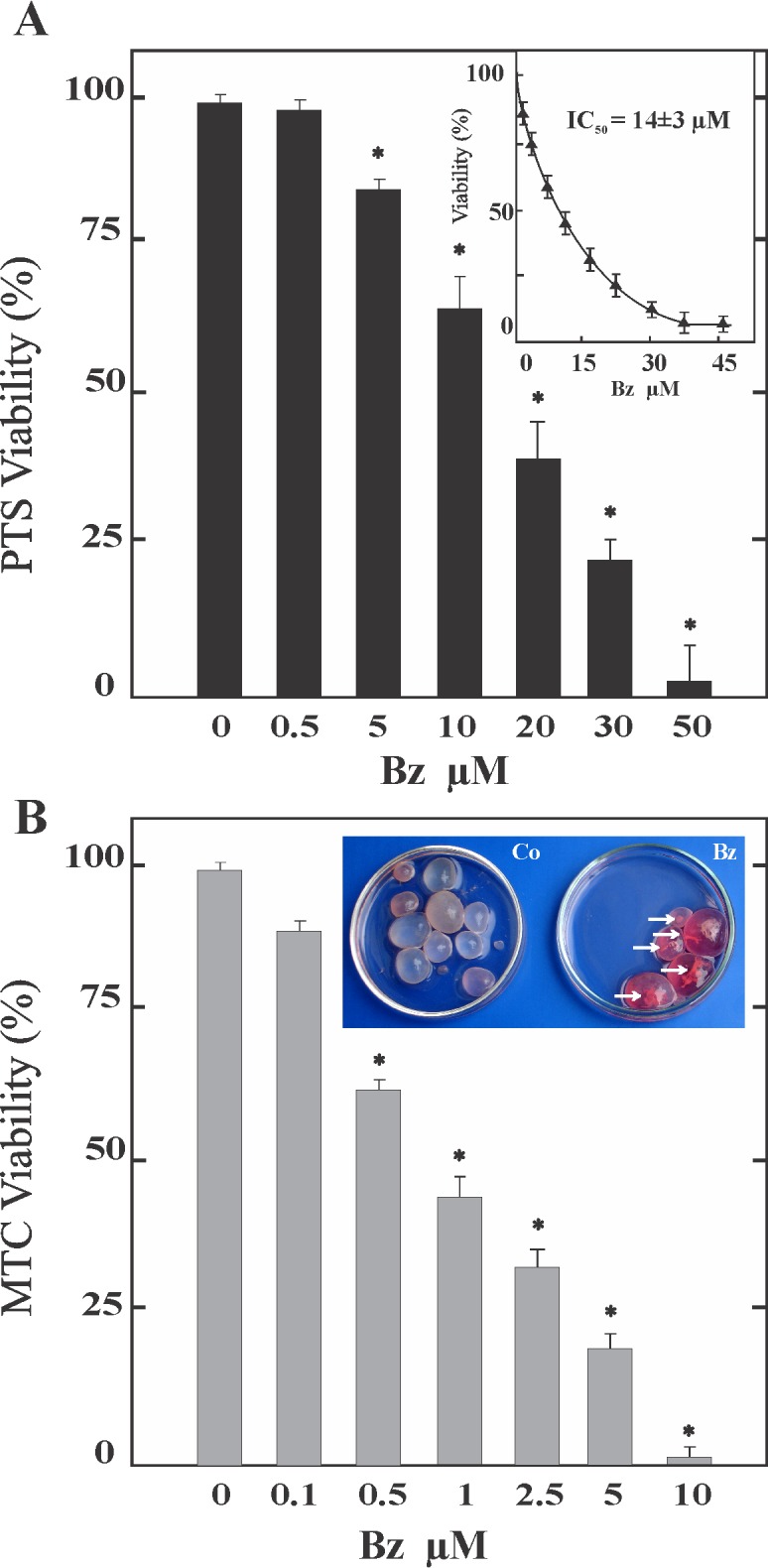
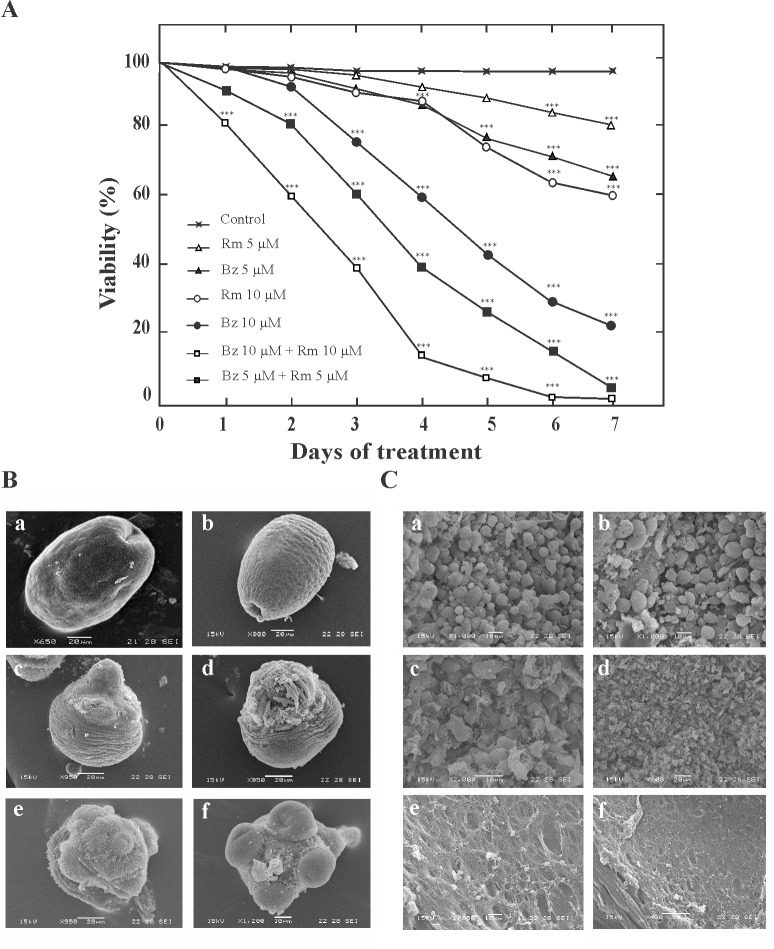
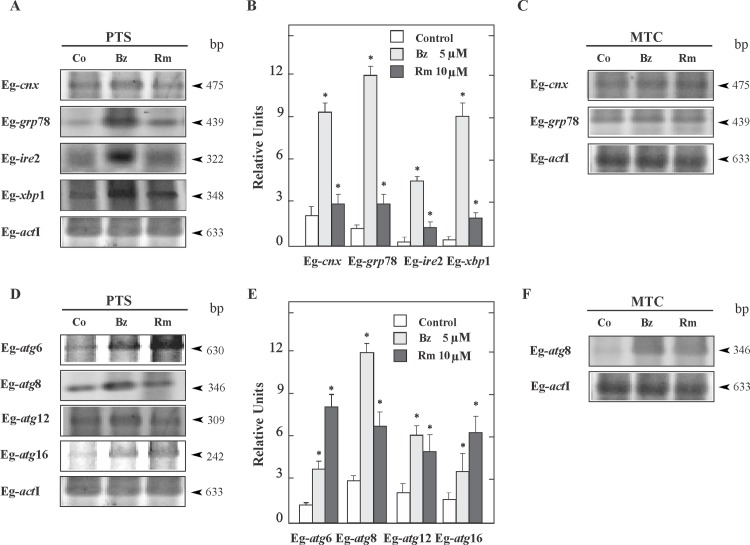
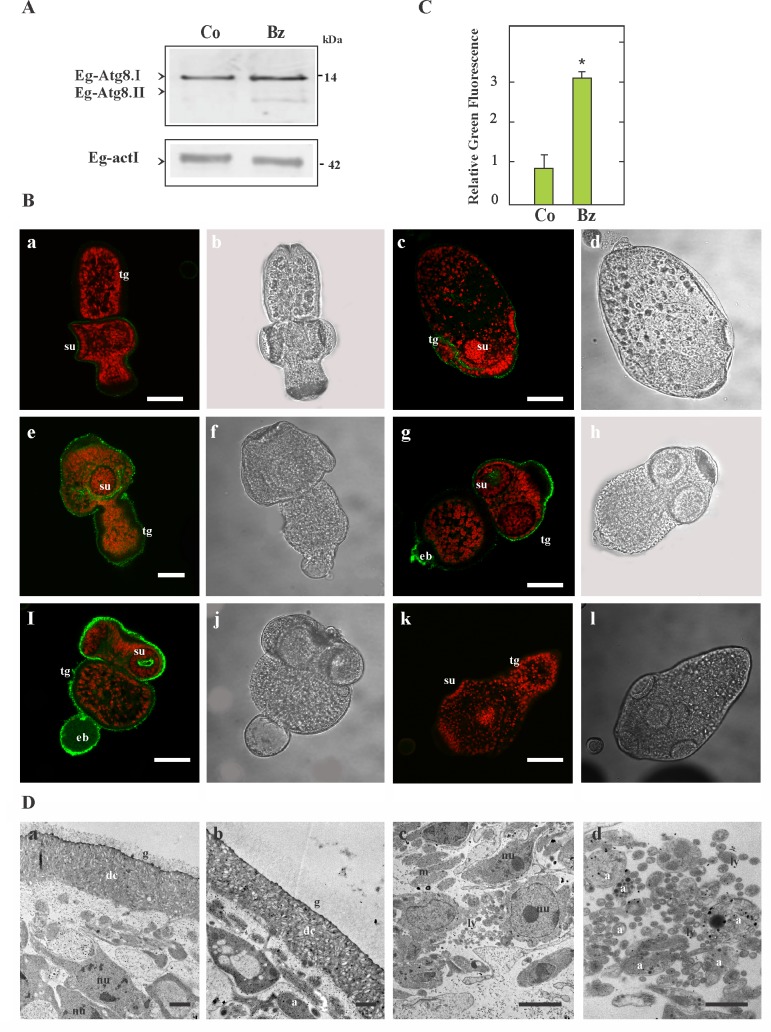
Cystic echinococcosis (CE) is a worldwide distributed helminthic zoonosis caused by Echinococcus granulosus. Benzimidazole derivatives are currently the only drugs for chemotherapeutic treatment of CE. However, their low efficacy and the adverse effects encourage the search for new therapeutic targets. We evaluated the in vitro efficacy of Bortezomib (Bz), a proteasome inhibitor, in the larval stage of the parasite. After 96 h, Bz showed potent deleterious effects at a concentration of 5 μM and 0.5 μM in protoscoleces and metacestodes, respectively (P < 0.05). After 48 h of exposure to this drug, it was triggered a mRNA overexpression of chaperones (Eg-grp78 and Eg-calnexin) and of Eg-ire2/Eg-xbp1 (the conserved UPR pathway branch) in protoscoleces. No changes were detected in the transcriptional expression of chaperones in Bz-treated metacestodes, thus allowing ER stress to be evident and viability to highly decrease in comparison with protoscoleces. We also found that Bz treatment activated the autophagic process in both larval forms. These facts were evidenced by the increase in the amount of transcripts of the autophagy related genes (Eg-atg6, Eg-atg8, Eg-atg12, Eg-atg16) together with the increase in Eg-Atg8-II detected by western blot and by in toto immunofluorescence labeling. It was further confirmed by direct observation of autophagic structures by electronic microscopy. Finally, in order to determine the impact of autophagy induction on Echinococcus cell viability, we evaluated the efficacy of Bz in combination with rapamycin and a synergistic cytotoxic effect on protoscolex viability was observed when both drugs were used together. In conclusion, our findings demonstrated that Bz induced endoplasmic reticulum stress, autophagy and subsequent death allowing to identify unstudied parasite-host pathways that could provide a new insight for control of parasitic diseases.
囊型包虫病(CE)是一种由细粒棘球绦虫引起的呈全球分布的蠕虫性人畜共患病。苯并咪唑衍生物是目前用于CE化疗的唯一药物。然而,它们的低疗效和不良反应促使人们寻找新的治疗靶点。我们评估了蛋白酶体抑制剂硼替佐米(Bz)对该寄生虫幼虫期的体外疗效。96小时后,Bz分别在原头节和囊尾蚴中浓度为5μM和0.5μM时显示出强效的有害作用(P<0.05)。在原头节中,暴露于该药物48小时后,引发了伴侣蛋白(Eg-grp78和Eg-calnexin)以及Eg-ire2/Eg-xbp1(保守的未折叠蛋白反应途径分支)的mRNA过表达。在Bz处理的囊尾蚴中未检测到伴侣蛋白转录表达的变化,因此与原头节相比,内质网应激明显且活力大幅下降。我们还发现Bz处理激活了两种幼虫形式的自噬过程。自噬相关基因(Eg-atg6、Eg-atg8、Eg-atg12、Eg-atg16)转录本数量的增加,以及通过蛋白质印迹法和全组织免疫荧光标记检测到的Eg-Atg8-II的增加,证明了这些事实。通过电子显微镜直接观察自噬结构进一步证实了这一点。最后,为了确定自噬诱导对棘球绦虫细胞活力的影响,我们评估了Bz与雷帕霉素联合使用的疗效,当两种药物一起使用时,观察到对原头节活力有协同细胞毒性作用。总之,我们的研究结果表明,Bz诱导内质网应激、自噬及随后的死亡,从而能够识别未被研究的寄生虫-宿主途径,这可能为控制寄生虫病提供新的见解。