Harttrampf Anne C, Chen Qingrong, Jüttner Eva, Geiger Julia, Vansant Gordon, Khan Javed, Kontny Udo
Division of Pediatric Hematology and Oncology, Department of Pediatrics and Adolescent Medicine, Faculty of Medicine, Medical Center-University of Freiburg, Mathildenstr. 1, Freiburg, Germany.
Center for Biomedical Informatics and Information Technology, National Cancer Institute, NIH, Bethesda, MD, 20892, USA.
BMC Res Notes. 2017 Aug 17;10(1):413. doi: 10.1186/s13104-017-2724-4.
Nephroblastoma and neuroblastoma belong to the most common abdominal malignancies in childhood. Similarities in the initial presentation may provide difficulties in distinguishing between these two entities, especially if unusual variations to prevalent patterns of disease manifestation occur. Because of the risk of tumor rupture, European protocols do not require biopsy for diagnosis, which leads to misdiagnosis in some cases.
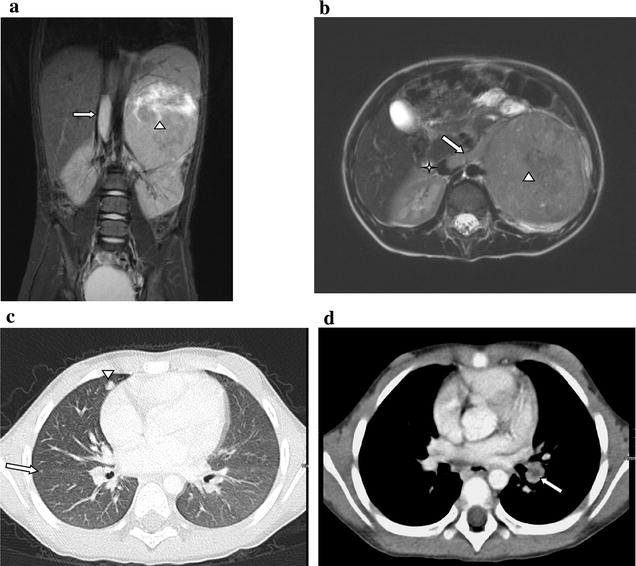
We report on a 4½-year-old girl with a renal tumor displaying radiological and laboratory characteristics supporting the diagnosis of nephroblastoma. Imaging studies showed tumor extension into the inferior vena cava and bilateral lung metastases while urine catecholamines and MIBG-scintigraphy were negative. Preoperative chemotherapy with vincristine, actinomycine D and adriamycin according to the SIOP2001/GPOH protocol for the treatment of nephroblastoma was initiated and followed by surgical tumor resection. Histopathology revealed an undifferentiated tumor with expression of neuronal markers, suggestive of neuroblastoma. MYCN amplification could not be detected. DNA-microarray analysis was performed using Affymetrix genechip human genome U133 plus 2.0 and artificial neural network analysis. Results were confirmed by multiplex RT-PCR.
Principal component analysis using 84 genes showed that the patient sample was clearly clustering with neuroblastoma tumors. This was confirmed by hierarchical clustering of the multiplex RT-PCR data. The patient underwent treatment for high-risk neuroblastoma comprising chemotherapy including cisplatin, etoposide, vindesine, dacarbacine, ifosfamide, vincristine, adriamycine and autologous stem cell transplantation followed by maintenance therapy with 13-cis retinoic acid (GPOH NB2004 High Risk Trial Protocol) and is in complete long-term remission.
The use of gene expression profiling in an individual patient strongly contributed to clarification in a diagnostic dilemma which finally led to a change of diagnosis from nephroblastoma to neuroblastoma. This case underlines the importance of gene-expression profiling in the correct diagnosis of childhood neoplasms with atypical presentation to ensure that adequate treatment regimens can be applied.
肾母细胞瘤和神经母细胞瘤是儿童期最常见的腹部恶性肿瘤。初始表现的相似性可能给区分这两种疾病带来困难,尤其是当疾病表现出现不常见的变异时。由于存在肿瘤破裂的风险,欧洲的诊疗方案不要求进行活检来诊断,这在某些情况下会导致误诊。
我们报告了一名4岁半的患有肾肿瘤的女孩,其影像学和实验室检查特征支持肾母细胞瘤的诊断。影像学检查显示肿瘤延伸至下腔静脉并伴有双侧肺转移,而尿儿茶酚胺和间碘苄胍闪烁扫描均为阴性。按照治疗肾母细胞瘤的SIOP2001/GPOH方案,开始使用长春新碱、放线菌素D和阿霉素进行术前化疗,随后进行肿瘤手术切除。组织病理学显示为未分化肿瘤,伴有神经元标志物表达,提示为神经母细胞瘤。未检测到MYCN扩增。使用Affymetrix基因芯片人类基因组U133 plus 2.0进行DNA微阵列分析,并进行人工神经网络分析。结果通过多重逆转录聚合酶链反应得到证实。
使用84个基因进行的主成分分析表明,患者样本明显与神经母细胞瘤肿瘤聚类。多重逆转录聚合酶链反应数据的层次聚类证实了这一点。该患者接受了高危神经母细胞瘤的治疗,包括化疗(顺铂、依托泊苷、长春地辛、达卡巴嗪、异环磷酰胺、长春新碱、阿霉素)和自体干细胞移植,随后用13 - 顺式维甲酸进行维持治疗(GPOH NB2004高危试验方案),目前处于长期完全缓解状态。
在个体患者中使用基因表达谱分析对解决诊断难题有很大帮助,最终导致诊断从肾母细胞瘤改为神经母细胞瘤。该病例强调了基因表达谱分析在正确诊断具有非典型表现的儿童肿瘤中的重要性,以确保能够应用适当的治疗方案。