Neuro-Gastroenterology and Nutrition Team, UMR 1331, INRA Toxalim, INP-EI-Purpan, Université de Toulouse, Toulouse, France.
Sci Rep. 2017 Aug 17;7(1):8527. doi: 10.1038/s41598-017-08938-3.
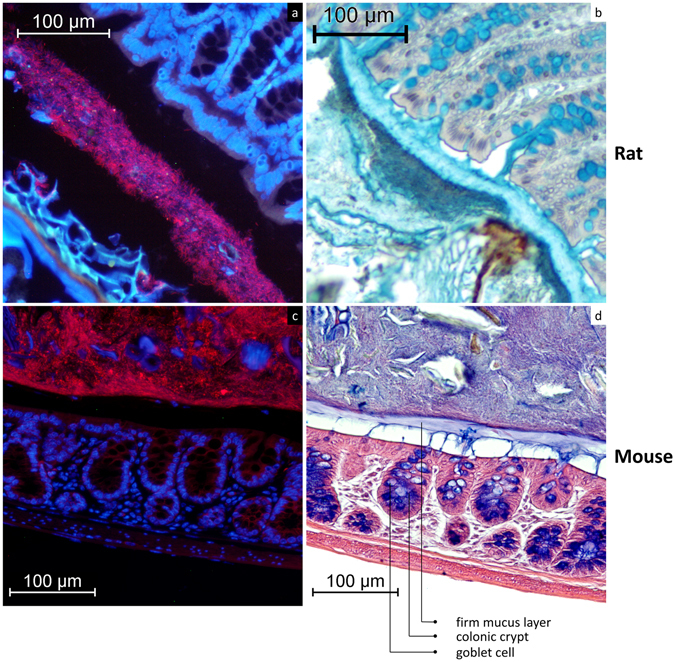
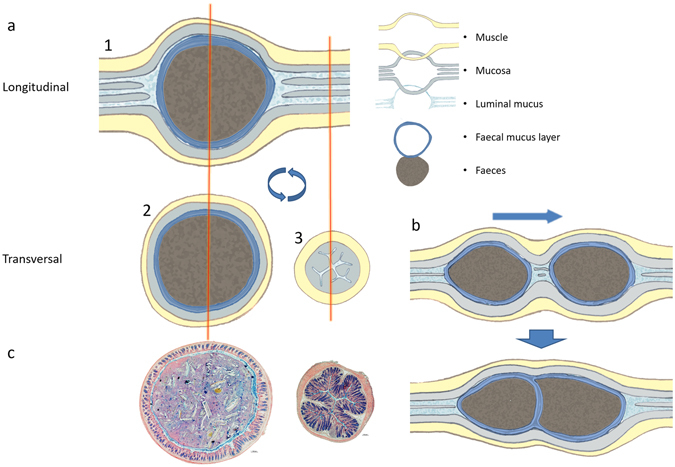
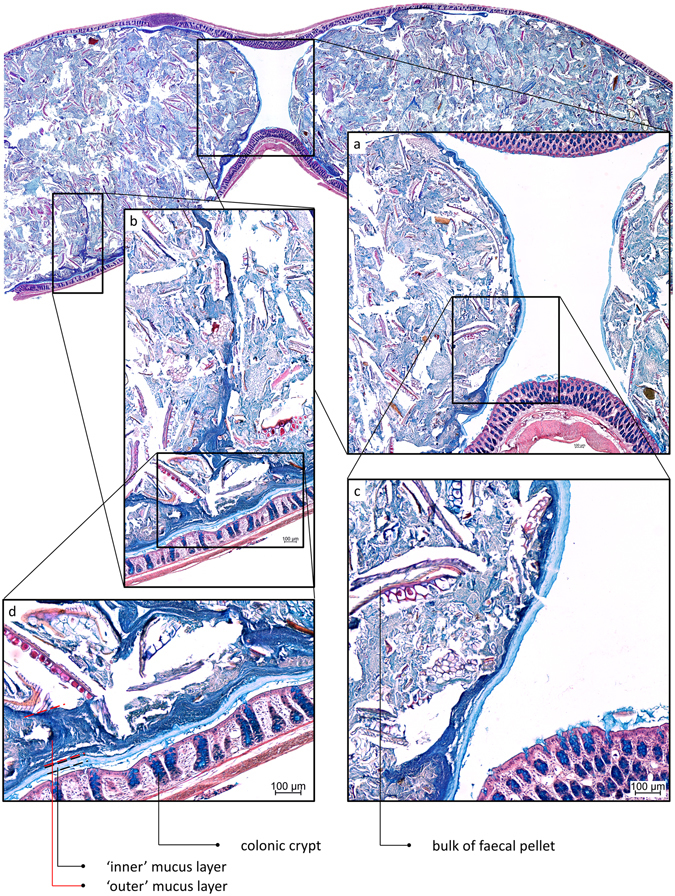
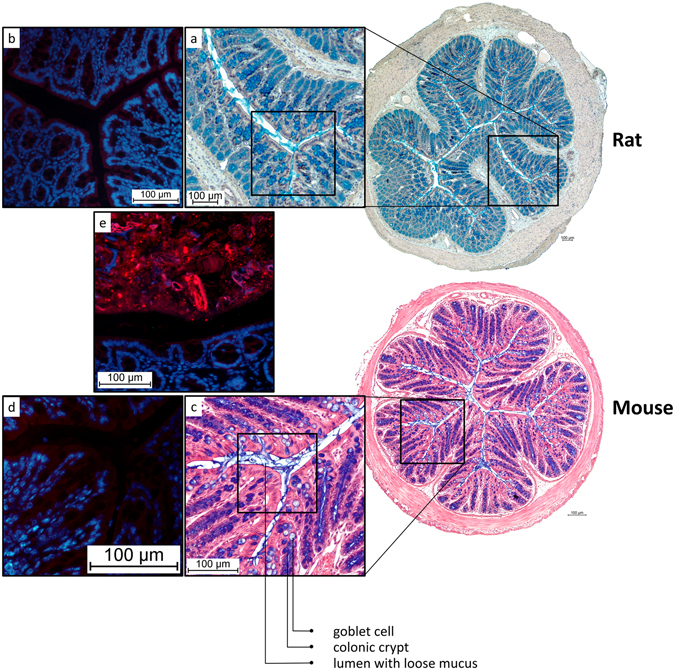
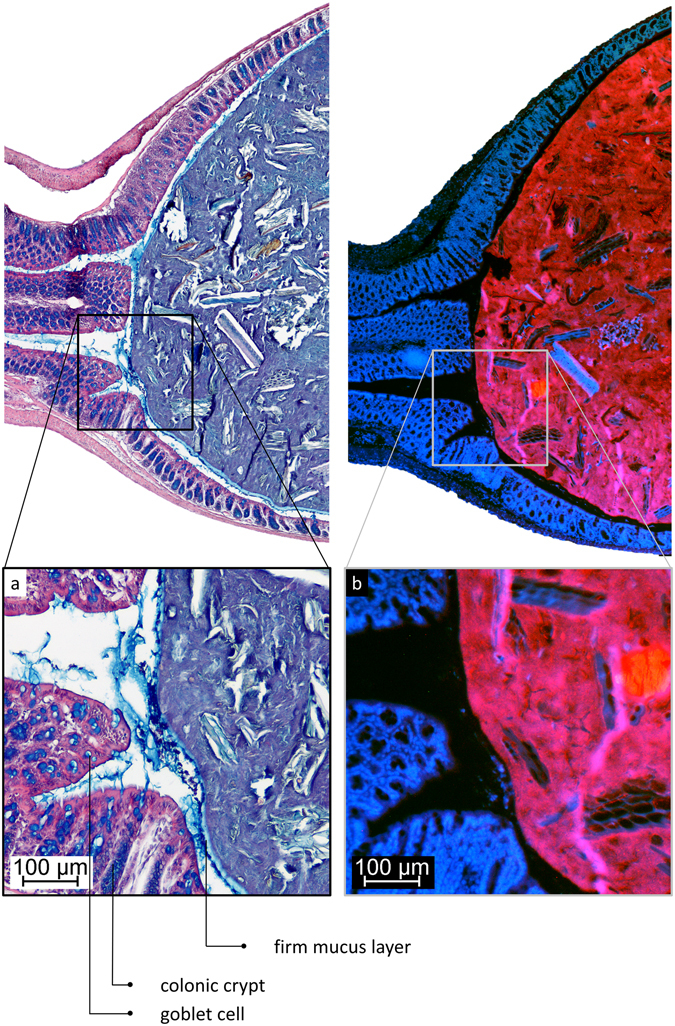
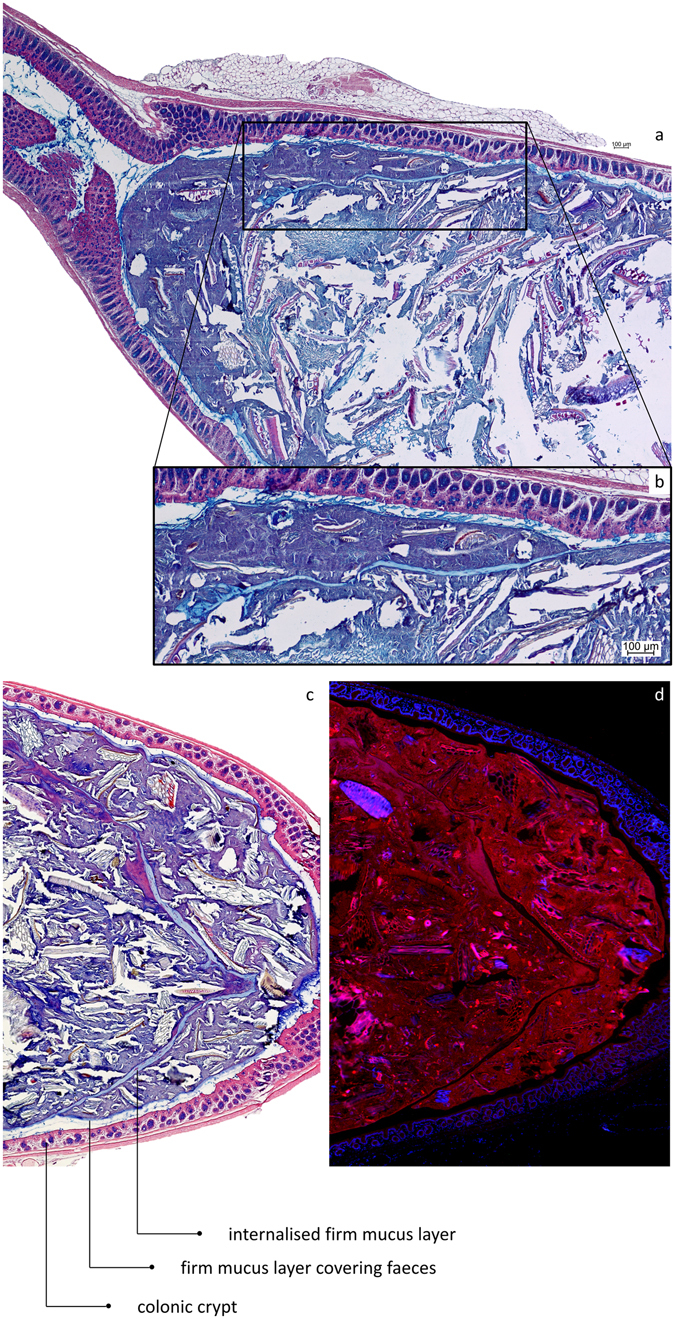
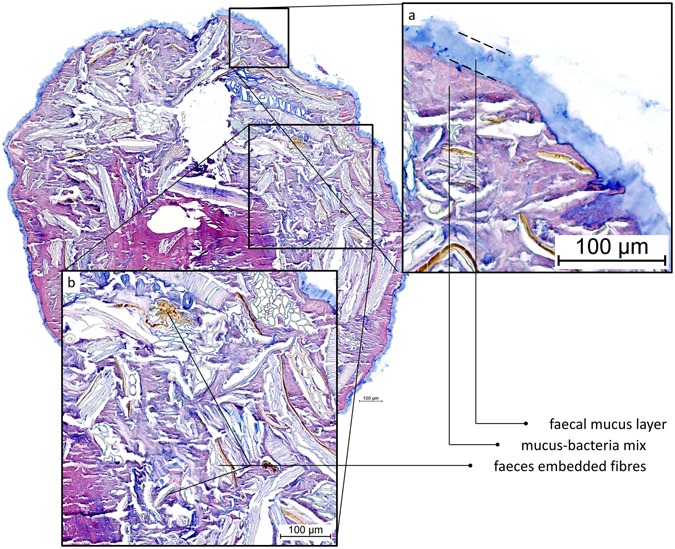
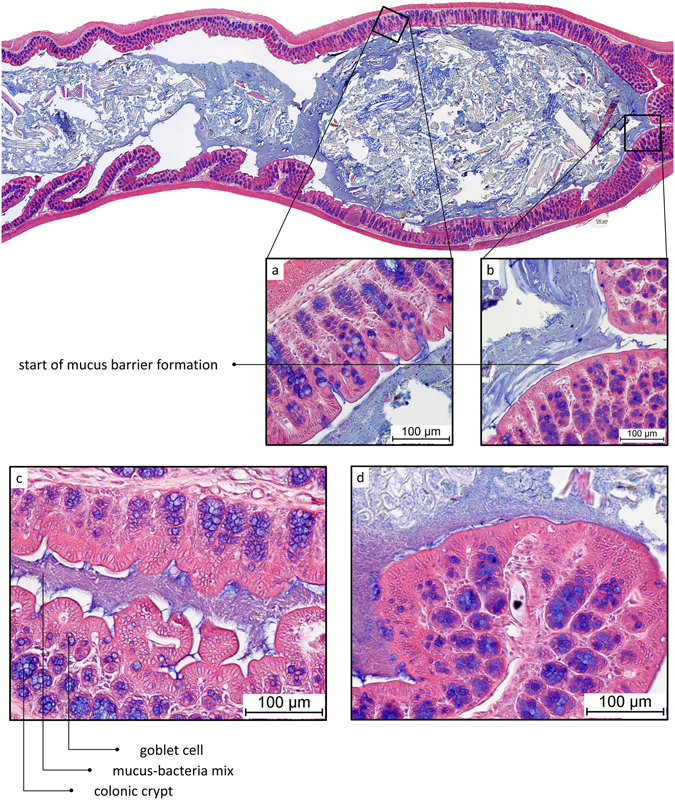
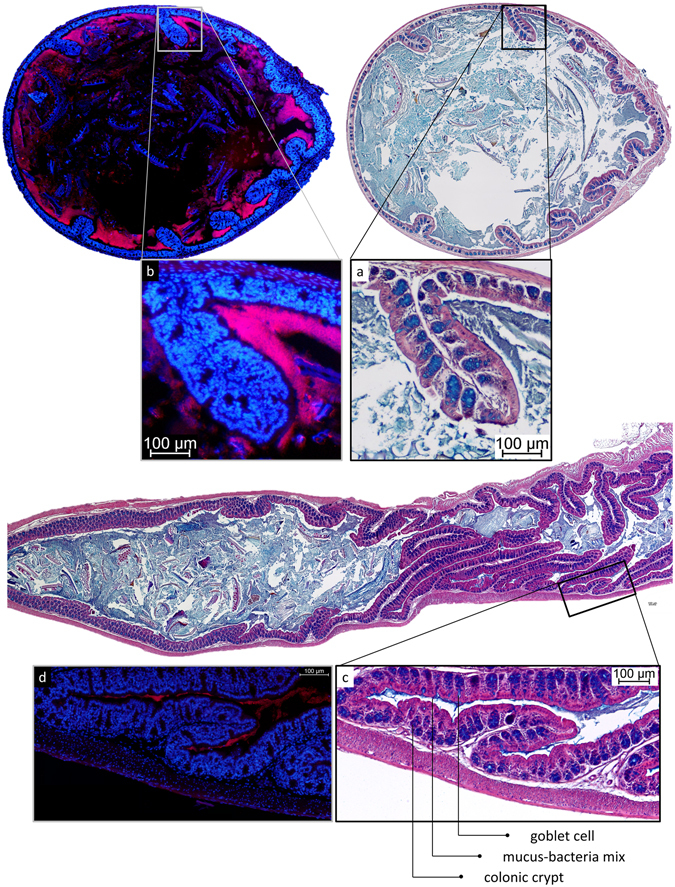
The colonic mucus barrier is commonly described as a continuous double layer covering the epithelium, separating the microbiota from the intestinal tissue. This model is currently considered valid throughout the colon. The colon is characterised by regional anatomo-functional specificities such as presence and consistency of contents and location. In this study, we characterised the organisation of the colonic mucus barrier in proximal and distal colon of rodents by histological and FISH staining, taking into account aforementioned specificities. By using longitudinal sections and imaging extensive areas of tissue with and without colonic contents, we have obtained a spatiotemporal overview of mucus organisation in the colon. We describe for the first time that the colonic mucus layer covers the faeces instead of the epithelium in the distal colon. This faecal mucus layer confines the microbiota to the faeces and prevents it from remaining in empty distal colon. In the proximal colon, the mucus did not form a separating layer between bacteria and epithelium. We conclude that the organisation of colonic mucus is reliant on the presence of the colonic content, and the location within the colon. Our findings reopen the discussion on the nature of the colonic mucus barrier.
结肠黏液屏障通常被描述为覆盖在上皮表面的连续双层结构,将微生物群与肠道组织分隔开来。目前,这一模型被认为在整个结肠中都是有效的。结肠具有区域性的解剖学和功能特异性,例如内容物的存在和一致性以及位置。在这项研究中,我们通过组织学和 FISH 染色来研究啮齿动物近端和远端结肠的结肠黏液屏障的组织方式,同时考虑到上述特异性。通过使用纵向切片和对有和没有结肠内容物的组织进行广泛成像,我们获得了结肠黏液组织的时空全景图。我们首次描述了在远端结肠中,结肠黏液层覆盖在粪便上,而不是覆盖在上皮上。这种粪便黏液层将微生物群限制在粪便中,防止其残留在空的远端结肠中。在近端结肠中,黏液并没有在细菌和上皮之间形成分离层。我们得出的结论是,结肠黏液的组织方式依赖于结肠内容物的存在以及结肠内的位置。我们的发现重新引发了关于结肠黏液屏障性质的讨论。