Zhang Pei-Pei, Wang Yi-Qin, Weng Wei-Wei, Nie Wei, Wu Yong, Deng Yu, Wei Ping, Xu Mi-Die, Wang Chao-Fu
Department of Pathology, Fudan University Shanghai Cancer Center, Shanghai 200032, China.
Department of Pathology, Obstetrics and Gynecology Hospital of Fudan University, Shanghai, 200011, China.
J Cancer. 2017 Jul 5;8(11):2042-2050. doi: 10.7150/jca.18852. eCollection 2017.
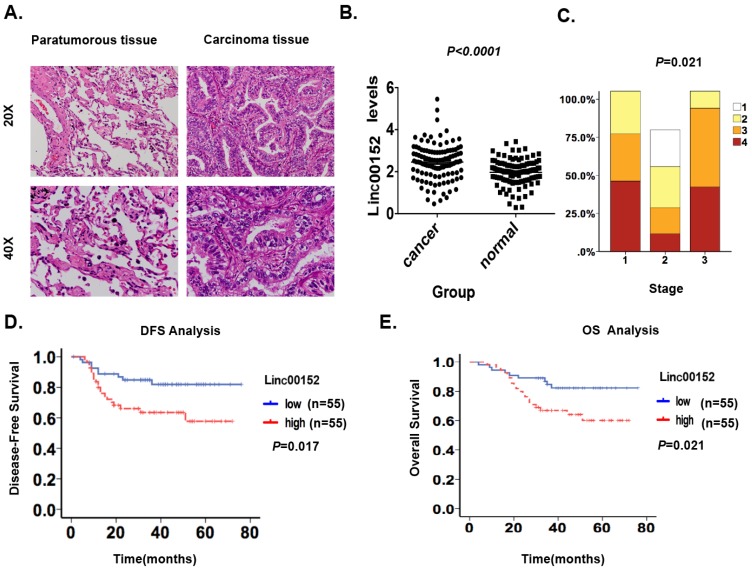
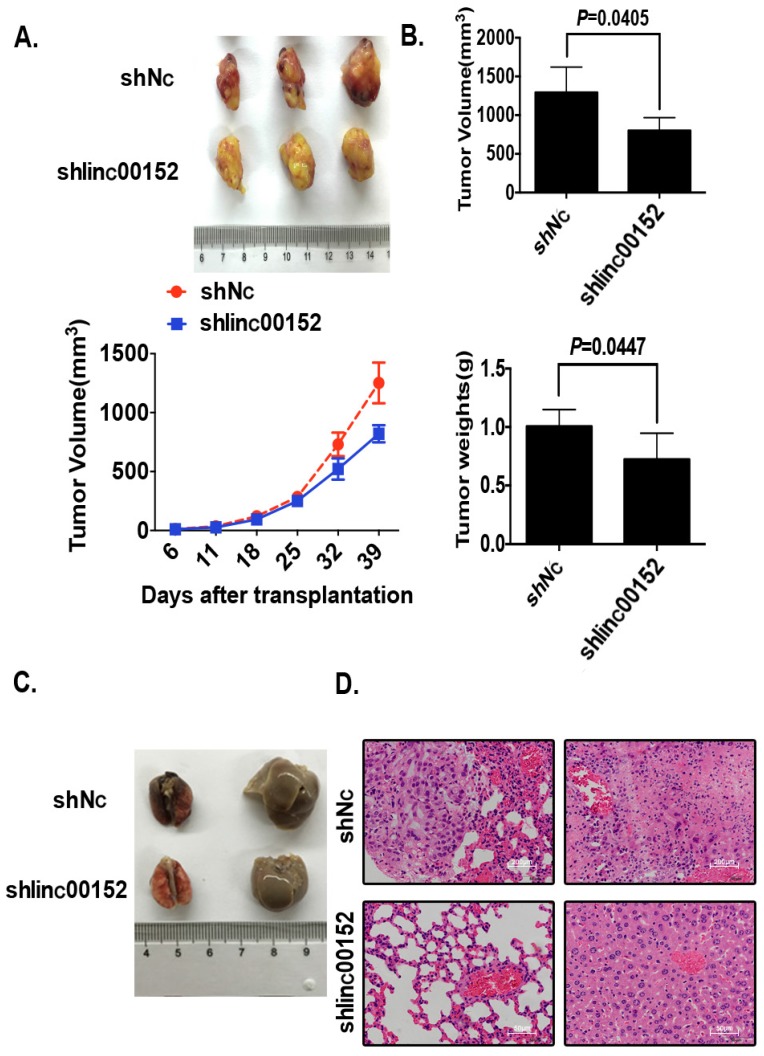
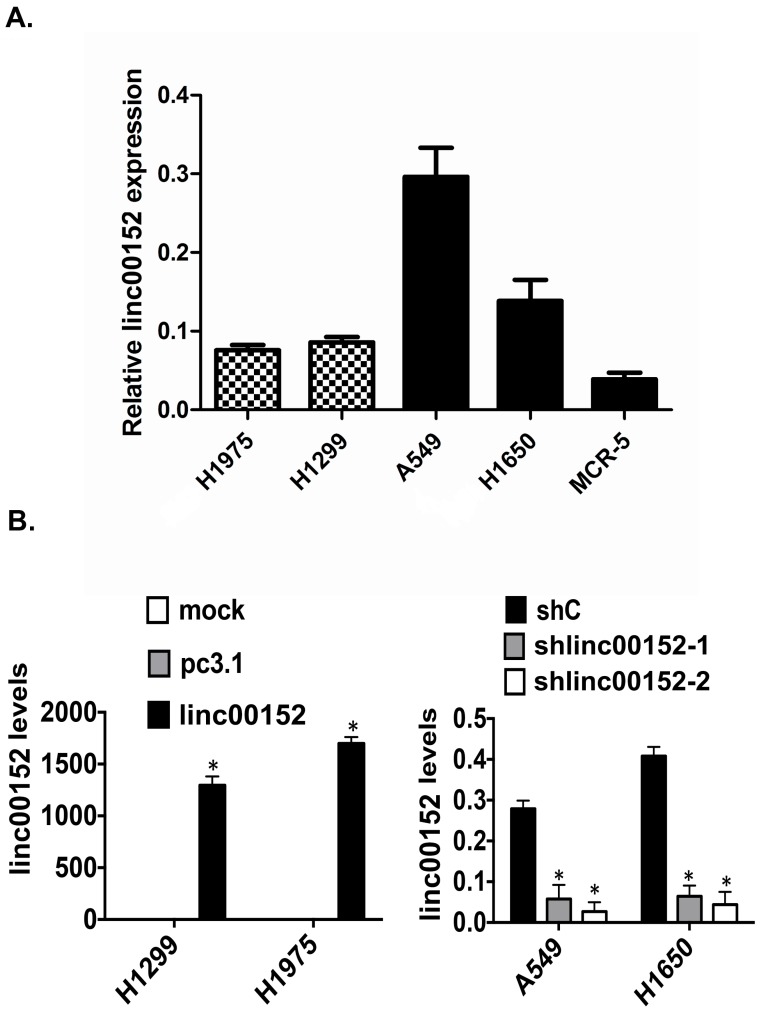
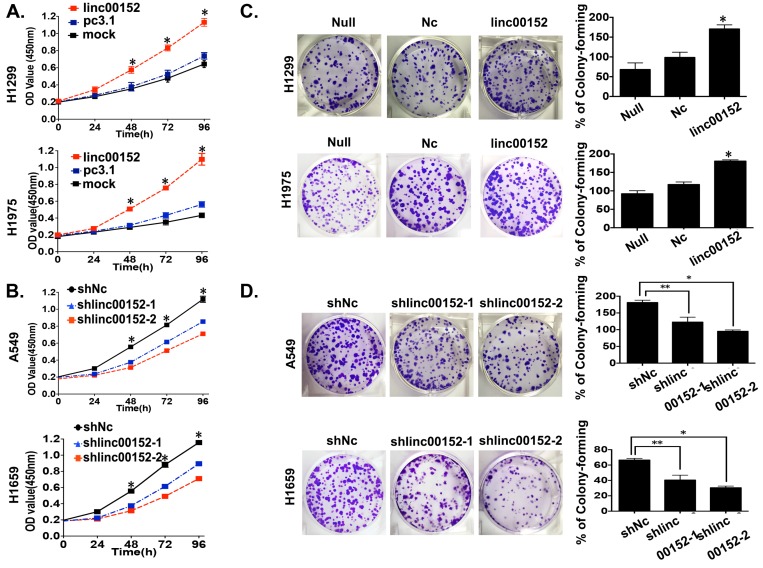
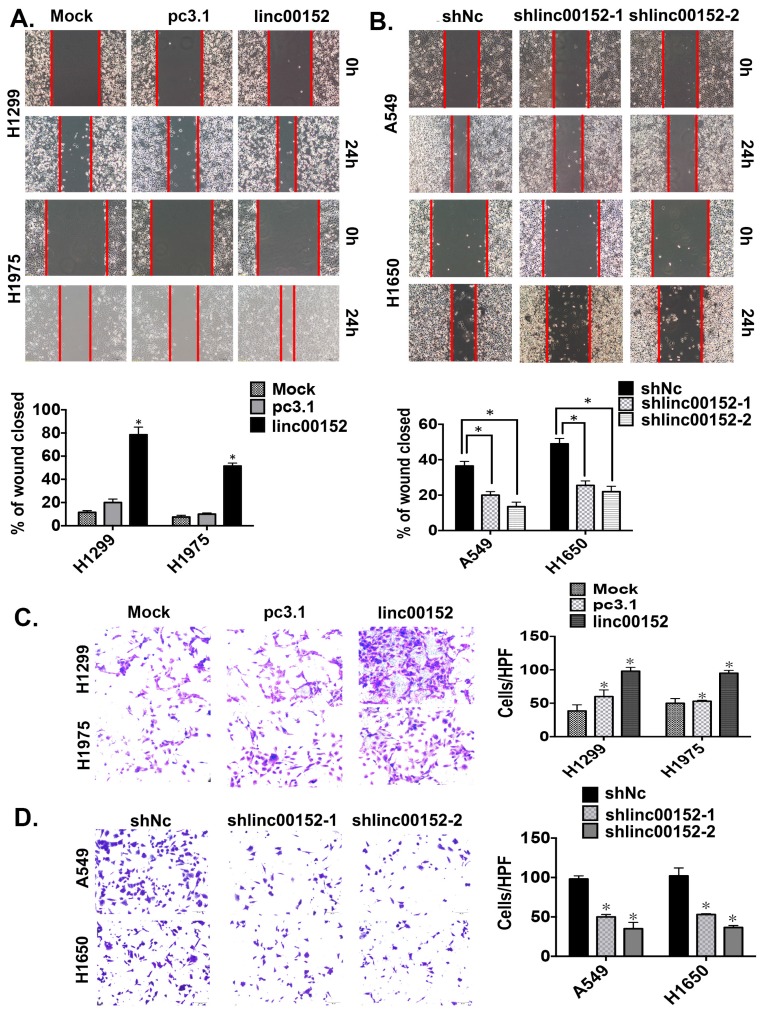
The long non-coding RNA Linc00152 stimulates tumor progression in cancer. However, its clinical significance and biological functions in lung adenocarcinoma remains unknown. We evaluate the expression of Linc00152 in lung adenocarcinoma and its possible correlation with clinicopathologic features and patient survival to reveal its biological effects in cancer progression and prognosis. Total RNA extraction was performed on 110 pairs of lung adenocarcinoma and adjacent normal tissue samples, and then RT-qPCR was conducted. Chi-square test analysis was used to calculate the correlation between pathological parameters and the Linc00152 mRNA levels. Kaplan-Meier and Cox proportional hazards analyses were used to analyze the overall survival (OS) and disease-free survival (DFS) rates. We also detected the potential functional effects of overexpression and knockdown of Linc00152 cell proliferation, tumor cell invasion and migration, as well as nude mouse xenograft and metastasis models. The Linc00152 expression levels were higher in lung adenocarcinoma samples than in the adjacent normal tissues. Linc00152 expression levels tightly correlated with lymph node metastasis station, remote metastasis and TNM staging. The Kaplan-Meier analysis suggested that high Linc00152 expression caused significantly poorer OS and DFS rates, and a multivariate analysis revealed that Linc00152 was an independent risk factor for both DFS and OS. Overexpression of Linc00152 in lung cancer cells stimulated proliferation, tumor cell invasion and migration. Knockdown of Linc00152 inhibited cell growth and cell invasion and migration. Finally, Linc00152 knockdown inhibited lung tumor growth and tumor metastasis in nude mice models. Our study suggests that Linc00152 independently predicts poor prognosis and promotes tumor progression in lung adenocarcinoma. Linc00152 needs to be considered as a potential molecular target in future cancer pharmacology.
长链非编码RNA Linc00152促进癌症中的肿瘤进展。然而,其在肺腺癌中的临床意义和生物学功能仍不清楚。我们评估Linc00152在肺腺癌中的表达及其与临床病理特征和患者生存的可能相关性,以揭示其在癌症进展和预后中的生物学作用。对110对肺腺癌及相邻正常组织样本进行总RNA提取,然后进行RT-qPCR。采用卡方检验分析计算病理参数与Linc00152 mRNA水平之间的相关性。采用Kaplan-Meier和Cox比例风险分析来分析总生存期(OS)和无病生存期(DFS)率。我们还检测了Linc00152过表达和敲低对细胞增殖、肿瘤细胞侵袭和迁移的潜在功能影响,以及裸鼠异种移植和转移模型。肺腺癌样本中Linc00152的表达水平高于相邻正常组织。Linc00152表达水平与淋巴结转移站、远处转移和TNM分期密切相关。Kaplan-Meier分析表明,Linc00152高表达导致OS和DFS率显著降低,多变量分析显示Linc00152是DFS和OS的独立危险因素。肺癌细胞中Linc00152的过表达刺激了增殖、肿瘤细胞侵袭和迁移。Linc00152的敲低抑制了细胞生长以及细胞侵袭和迁移。最后,Linc00152敲低抑制了裸鼠模型中的肺肿瘤生长和肿瘤转移。我们的研究表明,Linc00152独立预测肺腺癌的不良预后并促进肿瘤进展。在未来的癌症药理学中,需要将Linc00152视为一个潜在的分子靶点。