Orzechowska Beata Urszula, Jędryka Marcin, Zwolińska Katarzyna, Matkowski Rafał
Laboratory of Virology, Ludwik Hirszfeld Institute of Immunology and Experimental Therapy, Polish Academy of Sciences, Weigla 12, 53-114, Wroclaw, Poland.
Division of Surgical Oncology, Gynaecological Oncology, Chemotherapy and Department of Oncology, Wroclaw Medical University, Plac Hirszfelda 12, 53-413 Wrocław, Poland.
J Cancer. 2017 Jul 22;8(12):2369-2383. doi: 10.7150/jca.19473. eCollection 2017.
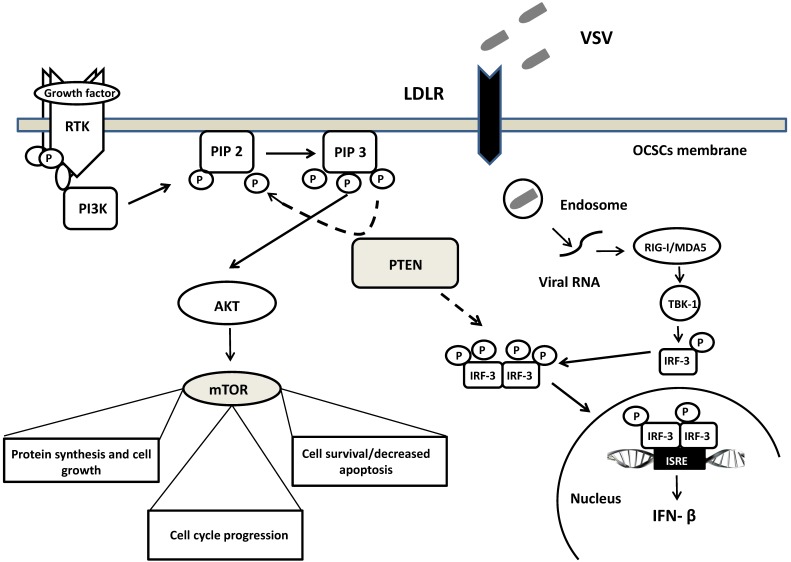
The standard approach to treating patients with advanced epithelial ovarian cancer (EOC) after primary debulking surgery remains taxane and platinum-based chemotherapy. Despite treatment with this strategy, the vast majority of patients relapse and develop drug-resistant metastatic disease that may be driven by cancer stem cells (CSCs) or cancer initiating cells (CICs). Oncolytic viruses circumvent typical drug-resistance mechanisms, therefore they may provide a safe and effective alternative treatment for chemotherapy-resistant CSCs/CICs. Among oncolytic viruses vesicular stomatitis virus (VSV) has demonstrated oncolysis and preferential replication in cancer cells. In this review, we summarize the recent findings regarding existing knowledge on biology of the ovarian cancer and the role of ovarian CSCs (OCSCs) in tumor dissemination and chemoresistance. In addition we also present an overview of recent advances in ovarian cancer therapies with oncolytic viruses (OV). We focus particularly on key genetic or immune response pathways involved in tumorigenesis in ovarian cancer which facilitate oncolytic activity of vesicular stomatitis virus (VSV). We highlight the prospects of targeting OCSCs with VSV. The importance of testing an emerging ovarian cancer animal models and ovarian cancer cell culture conditions influencing oncolytic efficacy of VSV is also addressed.
对于晚期上皮性卵巢癌(EOC)患者,初次肿瘤细胞减灭术后的标准治疗方法仍然是紫杉烷类和铂类化疗。尽管采用这种策略进行治疗,但绝大多数患者会复发并发展为耐药转移性疾病,这可能由癌症干细胞(CSCs)或癌症起始细胞(CICs)驱动。溶瘤病毒可规避典型的耐药机制,因此它们可能为化疗耐药的CSCs/CICs提供一种安全有效的替代治疗方法。在溶瘤病毒中,水疱性口炎病毒(VSV)已证明在癌细胞中具有溶瘤作用和优先复制能力。在这篇综述中,我们总结了关于卵巢癌生物学的现有知识以及卵巢癌干细胞(OCSCs)在肿瘤播散和化疗耐药中的作用的最新研究结果。此外,我们还概述了溶瘤病毒(OV)在卵巢癌治疗方面的最新进展。我们特别关注卵巢癌发生过程中涉及的关键基因或免疫反应途径,这些途径有助于水疱性口炎病毒(VSV)的溶瘤活性。我们强调了用VSV靶向OCSCs的前景。还讨论了测试新兴的卵巢癌动物模型以及影响VSV溶瘤疗效的卵巢癌细胞培养条件的重要性。