Muringazuva Caroline, Chirundu Daniel, Mungati More, Shambira Gerald, Gombe Notion, Bangure Donewell, Juru Tsitsi, Tshimanga Mufuta
Department of Community Medicine, University of Zimbabwe.
City Health Department, Kadoma City Council.
Pan Afr Med J. 2017 May 24;27:55. doi: 10.11604/pamj.2017.27.55.11090. eCollection 2017.
Medicines have the potential to cause adverse drug reactions and because of this Zimbabwe monitor reactions to medicines through the Adverse Drug Reaction Surveillance System. The Medicines Control Authority of Zimbabwe monitors reactions to medicines through the Adverse Drugs Reactions Surveillance System. The system relies on health professionals to report adverse drug reactions to maximize patient safety. We report results of an evaluation of the Adverse Drugs Reactions Surveillance System in Kadoma District.
A descriptive cross-sectional study was conducted using the updated CDC guidelines in six health facilities in Kadoma City. Data were collected using a pretested interviewer administered questionnaire, checklists and records review. Data was analyzed using Epi Info to calculate frequencies and means. Qualitative data were analyzed manually. Written informed consent was obtained from all study participants.
The surveillance system did not meet up to its objectives as it failed to detect the adverse drug reactions and there was no monitoring of increases in known events. Fewer than half (43%) of the participants were aware of at least 2 objectives of the surveillance system but 83% of health workers willing to participate. However the system was not acceptable, 79% did not perceive the system to be necessary with the majority saying ''why should we fill in the forms when the reactions were already known or minor''. Though the system was supposed to identify potential patient risk factors for particular types of events health workers were reluctant to participate as evidenced by only one form filled out of 20 reactions experienced in the district. The system was simple as the notification form has 16 fields which require easily obtainable information from the patient records.
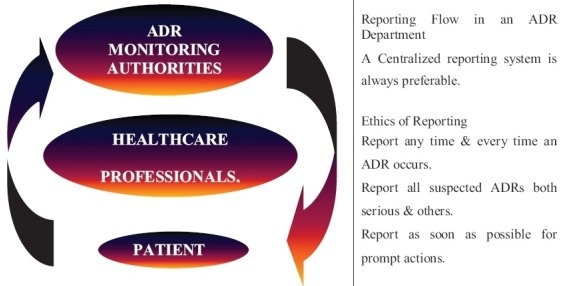
The surveillance system was not useful and was not acceptable to health workers but was simple and stable. Health workers lacked knowledge. Sharing of results with the Medicines Control Authority of Zimbabwe through the Matrons facilitated training of health workers in Kadoma City. Health workers were encouraged to notify any drug reaction and to completely fill in the notification forms. Patients were also encouraged to report any drug reaction to health care workers.
药物有可能引发药物不良反应,因此津巴布韦通过药物不良反应监测系统对药物反应进行监测。津巴布韦药品管理局通过药物不良反应监测系统监测药物反应。该系统依靠卫生专业人员报告药物不良反应,以最大限度地保障患者安全。我们报告了对卡多马区药物不良反应监测系统的评估结果。
采用美国疾病控制与预防中心(CDC)的最新指南,在卡多马市的六个卫生机构开展了一项描述性横断面研究。通过使用预先测试过的、由访谈员填写的问卷、清单和记录审查来收集数据。使用Epi Info软件分析数据,以计算频率和均值。定性数据采用人工分析。所有研究参与者均获得了书面知情同意。
该监测系统未达到其目标,因为它未能检测到药物不良反应,也未对已知事件的增加情况进行监测。不到一半(43%)的参与者知晓该监测系统的至少两个目标,但83%的卫生工作者愿意参与。然而,该系统并不被接受,79%的人认为该系统没有必要,大多数人表示“既然反应已经已知或轻微,我们为什么还要填写表格”。尽管该系统旨在识别特定类型事件的潜在患者风险因素,但卫生工作者却不愿参与,从该地区经历的20起反应中仅填写了一份表格就可见一斑。该系统很简单,因为通知表有16个字段,需要从患者记录中轻松获取信息。
该监测系统没有用处,卫生工作者也不接受,但它简单且稳定。卫生工作者缺乏相关知识。通过护士长与津巴布韦药品管理局分享结果,促进了对卡多马市卫生工作者的培训。鼓励卫生工作者报告任何药物反应并完整填写通知表。同时也鼓励患者向医护人员报告任何药物反应。